Clinical Report: Conversion of a Failed Fenestrated Anaconda Endograft
Overview
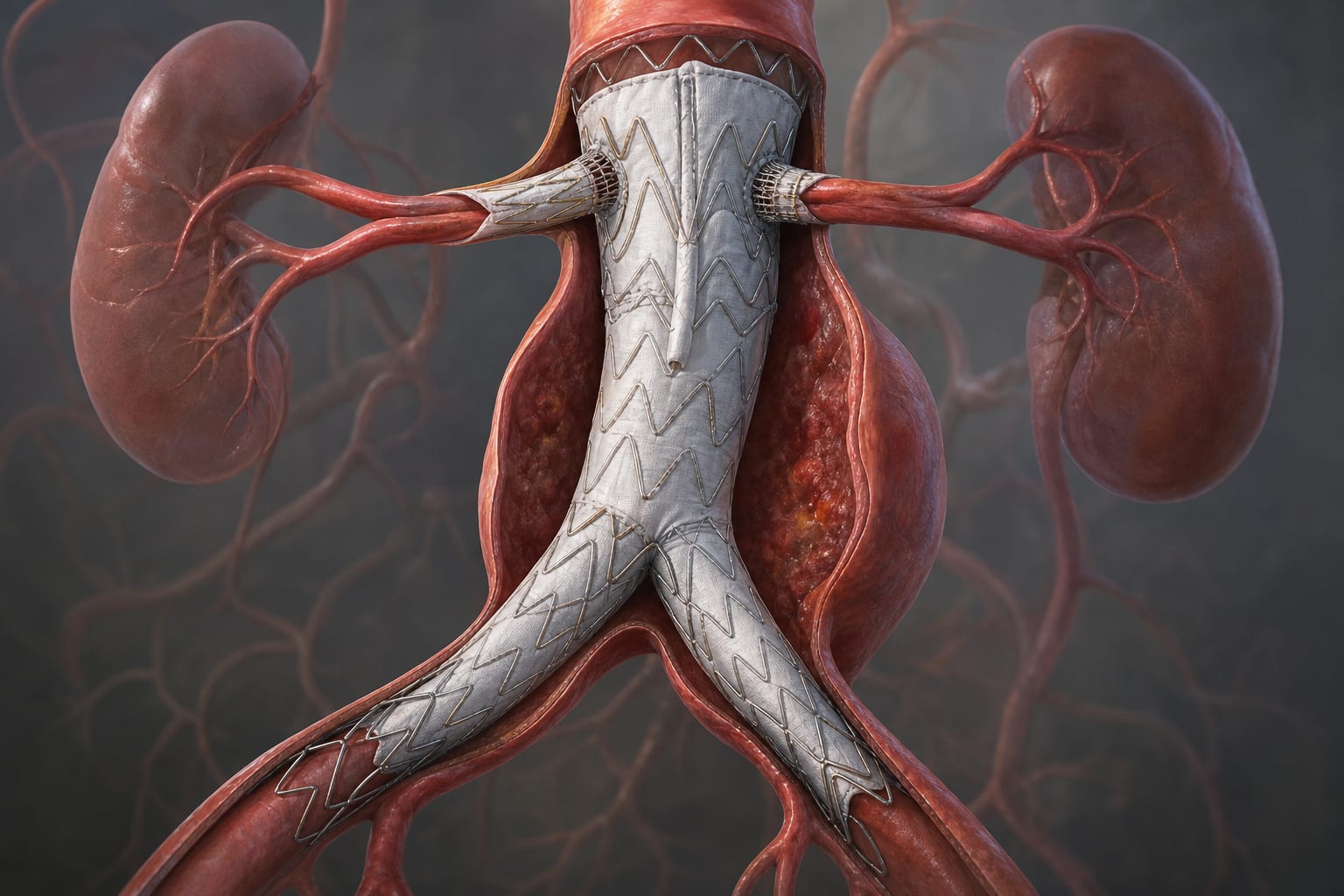
This report details the successful endovascular conversion of a failed fenestrated Anaconda endograft in a patient with a type Ia endoleak. A custom branched device was utilized to address the complex anatomical challenges presented by the patient's previous treatment.
Background
Fenestrated and branched endovascular aneurysm repair (f/bEVAR) is increasingly utilized for complex abdominal aortic pathologies, particularly in high-risk surgical patients. Despite improved short-term outcomes, the incidence of reinterventions remains a concern, necessitating careful follow-up and management strategies. The lack of established protocols for failed f/bEVAR cases underscores the need for innovative solutions in endovascular treatment.
Data Highlights
No numerical data or trial data was provided in the source material.
Key Findings
A 66-year-old male patient with a type Ia endoleak after fEVAR was treated with a custom branched device.
The patient had significant comorbidities, including coronary artery disease and chronic kidney disease, complicating surgical options.
The previously implanted Anaconda endograft had migrated, leading to challenges in the placement of renal bridging stent-grafts.
The multidisciplinary aortic board opted for an endovascular approach due to the patient's high surgical risk.
The custom-made device included branches for the celiac trunk and superior mesenteric artery, tailored to the patient's unique anatomy.
Clinical Implications
This case highlights the importance of individualized treatment strategies in managing complex aortic pathologies, particularly in patients with previous endovascular interventions. The use of custom devices may enhance procedural success and patient outcomes in challenging cases.
Conclusion
The successful conversion of a failed fenestrated endograft using a custom branched device demonstrates the potential for endovascular solutions in complex aortic repairs. Ongoing evaluation of such techniques is essential for optimizing patient care.