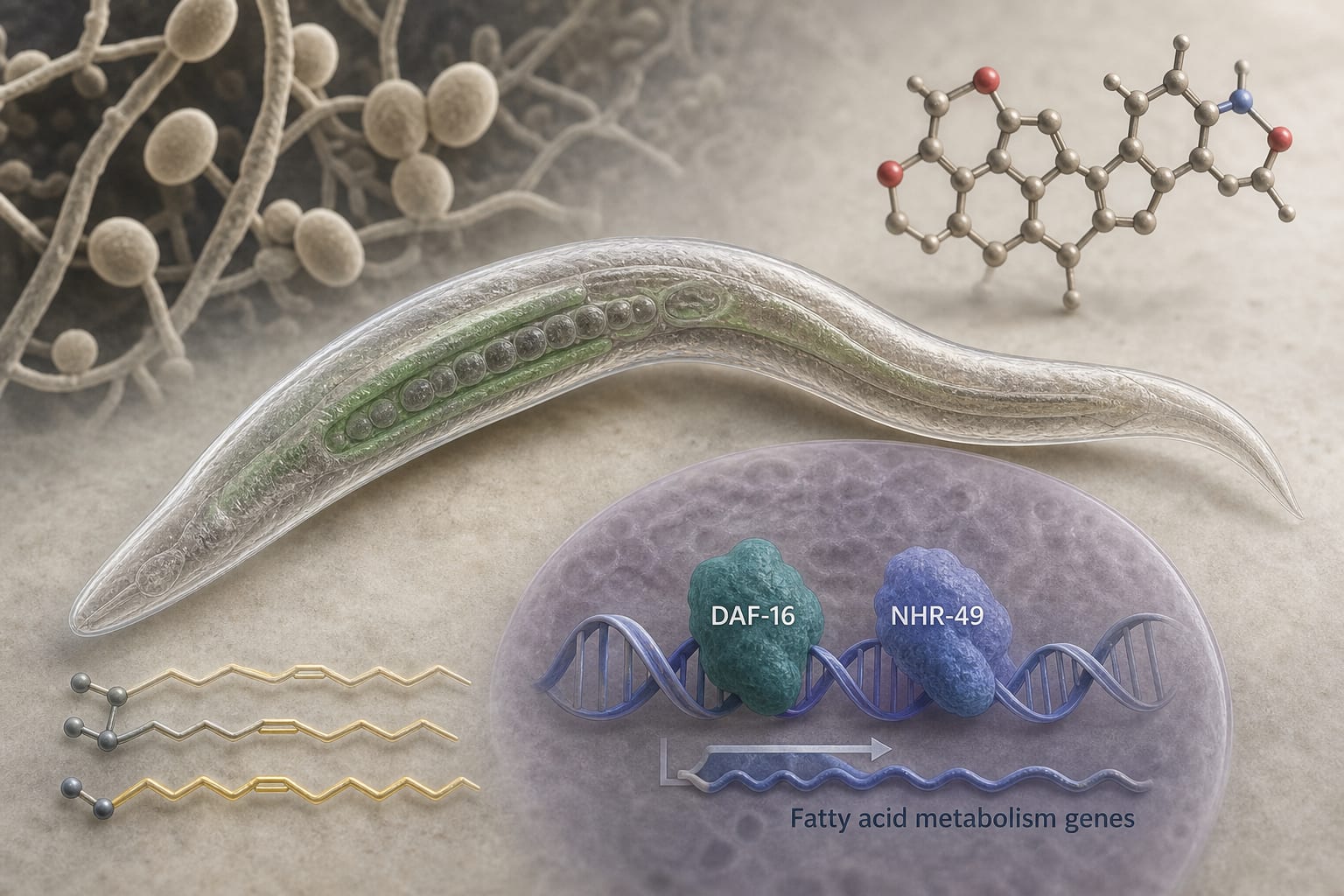
Chelerythrine Boosts Fungal Immunity in Caenorhabditis elegans
Overview
Revise to include direct attribution for claims about lifespan enhancement and C. albicans inhibition.
Background
Candidiasis, primarily caused by Candida albicans, poses a significant health threat, especially in immunocompromised populations. The rising resistance of C. albicans to existing antifungal treatments highlights the urgent need for new therapeutic strategies. Enhancing host innate immunity through pharmacological interventions represents a promising approach to combat this infection.
Data Highlights
Condition
Effect of Chelerythrine
10 μM Chelerythrine
Extended lifespan of C. elegans infected with C. albicans
DAF-16 and NHR-49 mutants
Completely abolished lifespan-extending effect
Fatty acid desaturase gene mutations
Blocked protective effect of Chelerythrine
Key Findings
Chelerythrine extends the lifespan of C. elegans infected with C. albicans.
It inhibits the proliferation of C. albicans without reducing intestinal fungal burden.
Chelerythrine activates the FoxO and fatty acid metabolism pathways.
Mutations in daf-16 and nhr-49 abolish the lifespan-extending effect of Chelerythrine.
RT-qPCR confirmed upregulation of FoxO pathway and fatty acid metabolism-related genes.
Clinical Implications
The findings suggest that Chelerythrine may serve as a potential therapeutic candidate for enhancing innate immunity against C. albicans infections. Further research is warranted to explore its applicability in clinical settings.
Conclusion
This study demonstrates that Chelerythrine enhances the innate immune response in C. elegans against C. albicans through specific molecular pathways. Its potential as a therapeutic agent warrants further investigation.