Editorial: New Insights on Sialic Acid and Sialylated Glycans in the Tumorigenic Process
-
By
-
Rachel A. Willand-Charnley
-
June 9, 2026
-
0 min
Clinical Report: Recent Advances in Understanding Sialic Acid and Sialylated Glycans
Overview
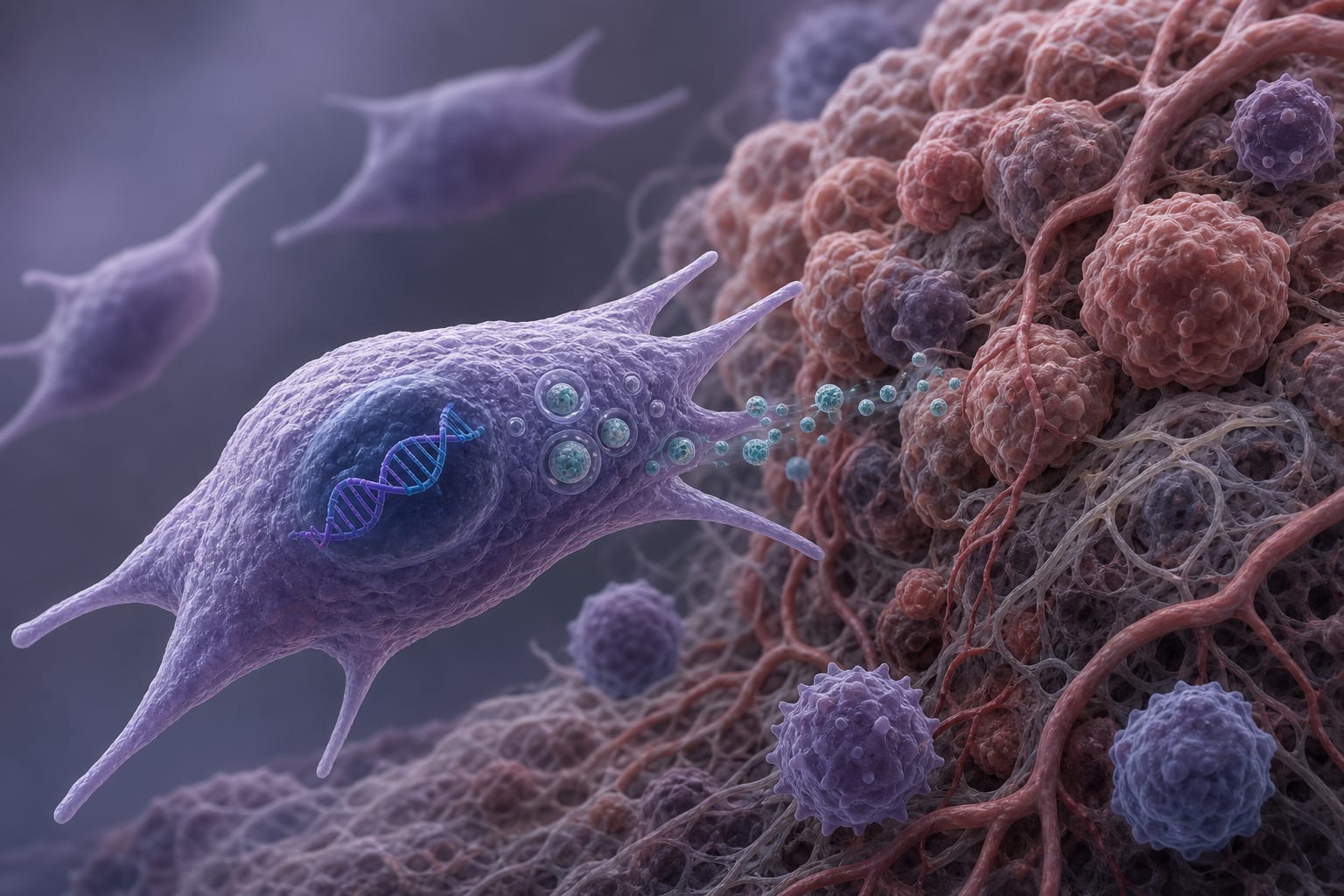
This editorial discusses the critical role of sialic acids and sialylated glycans in tumor development and immune evasion. Recent advances in glycobiology are enhancing our understanding of these molecules' functions in cancer biology and their potential as therapeutic targets.
Background
Aberrant glycosylation is a hallmark of many cancers, influencing tumor initiation, progression, and metastasis. Sialic acids, located at the terminal positions of glycans, play a significant role in regulating biological processes such as immune recognition and cell signaling. Understanding their role in tumor biology is essential for developing new therapeutic strategies.
Data Highlights
No numerical data available in the source material.
Key Findings
- Sialic acids and sialylated glycans are critical determinants of tumor behavior.
- Hypersialylation in tumors is driven by altered expression of glycosylation enzymes.
- Increased sialylation enhances tumor cell motility and promotes metastatic dissemination.
- Sialylated glycans can suppress anti-tumor immune responses by interacting with immune receptors.
- Recent advances in glycomics are improving the characterization of tumor-associated glycans.
- Research highlights the role of polysialic acid in immune cell regulation within the tumor microenvironment.
Clinical Implications
The findings emphasize the importance of sialylation in tumor-immune interactions, suggesting that targeting sialylation pathways may provide new therapeutic avenues. Understanding these mechanisms can aid in the development of glycan-based biomarkers and treatments.
Conclusion
The editorial underscores the emerging significance of sialic acids in cancer biology and their potential as targets for therapeutic intervention. Continued research in this area may lead to innovative strategies for cancer treatment.
Related Resources & Content
- Frontiers in Oncology, Editorial: Exploring molecular mechanisms in cancer through tumor molecular pathology, 2026
- Frontiers in Oncology, Editorial: Autoantibodies in cancer: diagnostic, prognostic, and therapeutic potential, 2026
- Frontiers in Oncology, Editorial: Exploring the tumor microenvironment in resectable lung cancer, 2026
- CA19-9 as a Dynamic Biomarker for Continuous Monitoring of Therapeutic Efficacy in Pancreatic Adenocarcinoma - PMC
- The anti-GD2 monoclonal antibody naxitamab plus GM-CSF for relapsed or refractory high-risk neuroblastoma: a phase 2 clinical trial | Nature Communications
- Disrupting Siglec-mediated interactions to develop immunotherapies for cancer treatment
- Frontiers in Endocrinology — Editorial: Changes in Metabolic Characteristics Associated with Gastrointestinal Tract Cancers, Volume II
- CA19-9 as a Dynamic Biomarker for Continuous Monitoring of Therapeutic Efficacy in Pancreatic Adenocarcinoma - PMC
- The anti-GD2 monoclonal antibody naxitamab plus GM-CSF for relapsed or refractory high-risk neuroblastoma: a phase 2 clinical trial | Nature Communications
- Disrupting Siglec-mediated interactions to develop immunotherapies for cancer treatment
This content is an AI-generated, fully rewritten summary based on a published scholarly article. It does not reproduce the original text and is not a substitute for the original publication. Readers are encouraged to consult the source for full context, data, and methodology.