The relationship between secondhand smoke exposure in Chinese children and adolescents and renal function and hyperuricemia: a cross-sectional study - Report - MDSpire
Advertisement
The relationship between secondhand smoke exposure in Chinese children and adolescents and renal function and hyperuricemia: a cross-sectional study
Clinical Report: Association of Secondhand Smoke Exposure with Renal Function and Hyperuricemia in Chinese Youth
Overview
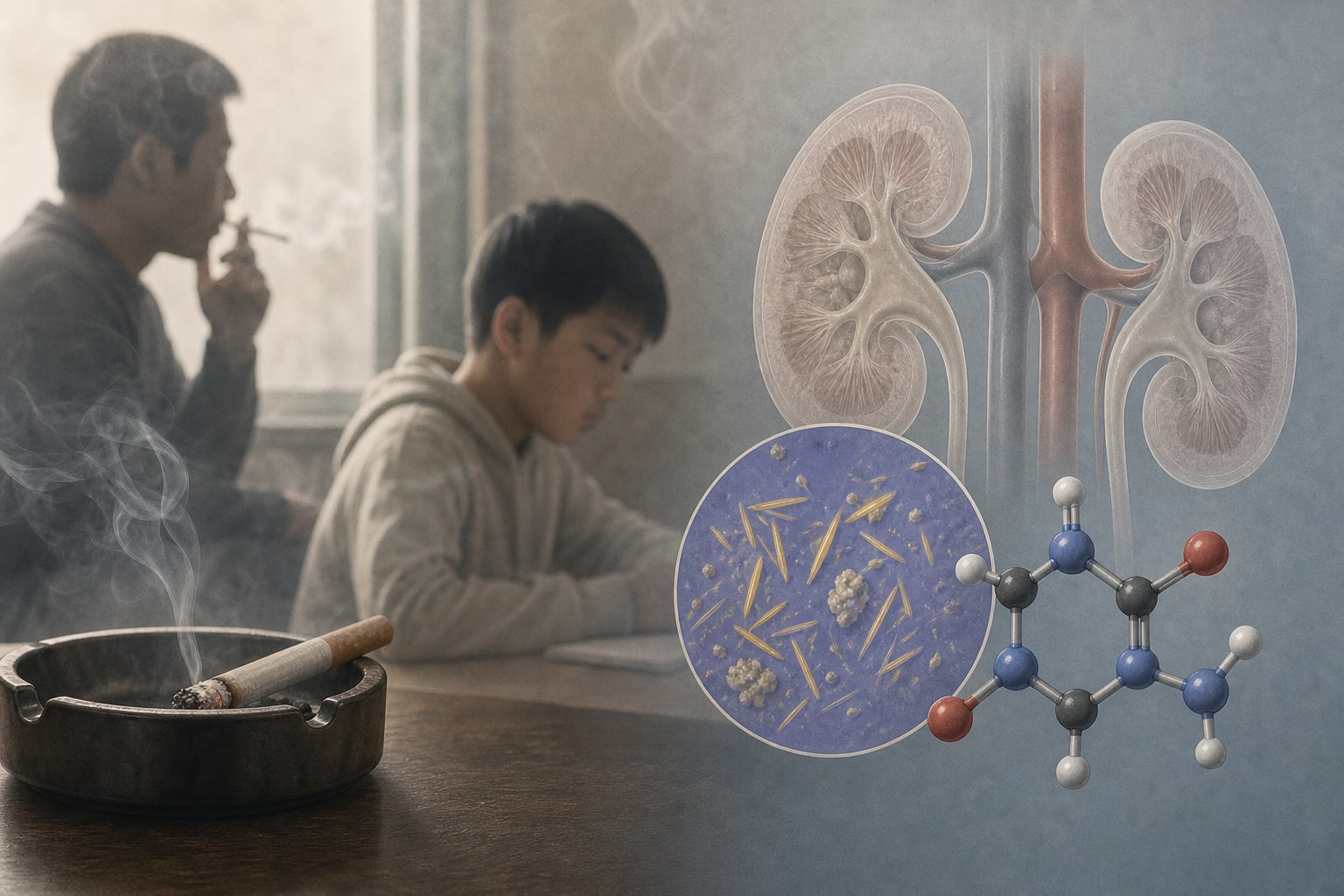
This study investigates the association between secondhand smoke (SHS) exposure and hyperuricemia (HUA) in Chinese youth, revealing a prevalence of HUA at 20.5% and SHS exposure at 41%. The findings suggest that SHS exposure, particularly in boys, may impair renal function and elevate HUA risk.
Background
Hyperuricemia (HUA) is increasingly recognized as a significant health issue among children and adolescents, with potential long-term consequences including kidney disease and cardiovascular complications. Secondhand smoke (SHS) exposure is a modifiable risk factor that may contribute to elevated uric acid levels, yet its impact on youth has been underexplored. Understanding this relationship is crucial for public health interventions aimed at reducing SHS exposure in children.
Data Highlights
Measure
Value
Prevalence of HUA
20.5%
SHS Exposure Rate
41%
Protective Factor for HUA (No SHS Exposure)
OR = 0.811 (95% CI: 0.698, 0.943)
Protective Factor for Boys (No SHS Exposure)
OR = 0.747 (95% CI: 0.613, 0.911)
Mediation Effect of eGFR
10.42%
Key Findings
The prevalence of hyperuricemia (HUA) among children and adolescents aged 6–17 is 20.5%.
41% of the study population reported exposure to secondhand smoke (SHS).
No exposure to SHS is associated with a reduced risk of HUA (OR = 0.811).
In boys, no SHS exposure significantly lowers the risk of HUA (OR = 0.747).
eGFR mediates 10.42% of the association between SHS exposure and HUA.
The mediating effect of eGFR reaches 100% in boys aged 12–17.
Clinical Implications
Healthcare professionals should be aware of the significant association between SHS exposure and hyperuricemia in youth, particularly in boys. This highlights the importance of implementing stricter smoking bans in public areas to protect children's health and mitigate the risk of renal impairment and hyperuricemia.
Conclusion
The findings underscore the detrimental effects of secondhand smoke on renal function and uric acid levels in children and adolescents, necessitating urgent public health measures to reduce SHS exposure.