The impact of family functioning on loneliness among women during home-based postpartum confinement (Zuo Yuezi): the mediating role of social connectedness - Report - MDSpire
Advertisement
The impact of family functioning on loneliness among women during home-based postpartum confinement (Zuo Yuezi): the mediating role of social connectedness
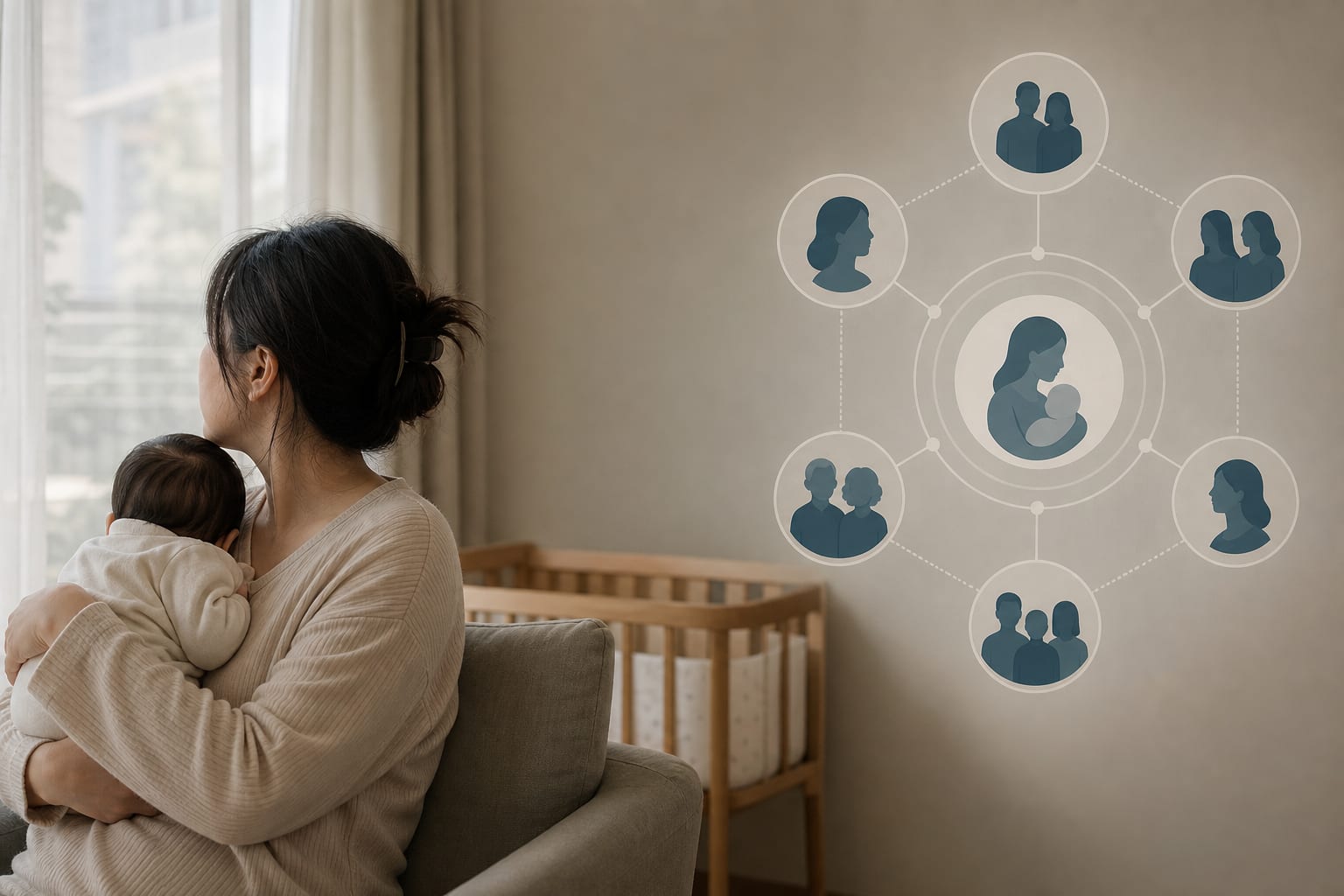
Influence of Family Dynamics on Loneliness in Women During Home-Based Postpartum Recovery
Overview
This study investigates the relationship between family functioning and loneliness in postpartum women in China, revealing a 27.4% prevalence of loneliness.
Background
Understanding loneliness in postpartum women is crucial as it can impact mental health and recovery. The postpartum period is a significant transition that can lead to feelings of isolation, particularly in cultures with specific confinement practices like 'Zuo Yuezi'.
Data Highlights
Measure
Result
Prevalence of Loneliness
27.4%
Correlation between Family Functioning and Loneliness
r = -0.514, p < 0.001
Correlation between LSNS-6 and Loneliness
r = -0.428, p < 0.001
Correlation between LSNS-6 and Family Functioning
r = 0.419, p < 0.001
Indirect Association (B)
-0.164 (95% CI: -0.229 to -0.107)
Key Findings
The prevalence of loneliness among postpartum women was 27.4%.
Family functioning was negatively associated with loneliness (r = -0.514, p < 0.001).
Higher social connectedness (LSNS-6 scores) correlated with lower loneliness (r = -0.428, p < 0.001).
Social connectedness partially mediated the relationship between family functioning and loneliness.
Women without stable postpartum income and primiparous women reported higher loneliness scores.
Clinical Implications
The findings indicate a relationship between family dynamics and loneliness in postpartum women.
Conclusion
The study highlights the relationship between family dynamics and loneliness during postpartum recovery.