Baseline vs. on-treatment heart failure with preserved ejection fraction (HFpEF) in a real world cardio-oncology clinic: observational analysis of cancer therapy-related cardiovascular toxicity incidence and cancer treatment implications - Report - MDSpire
Advertisement
Baseline vs. on-treatment heart failure with preserved ejection fraction (HFpEF) in a real world cardio-oncology clinic: observational analysis of cancer therapy-related cardiovascular toxicity incidence and cancer treatment implications
Clinical Report: HFpEF in Cancer Patients Undergoing Cardiotoxic Treatments
Overview
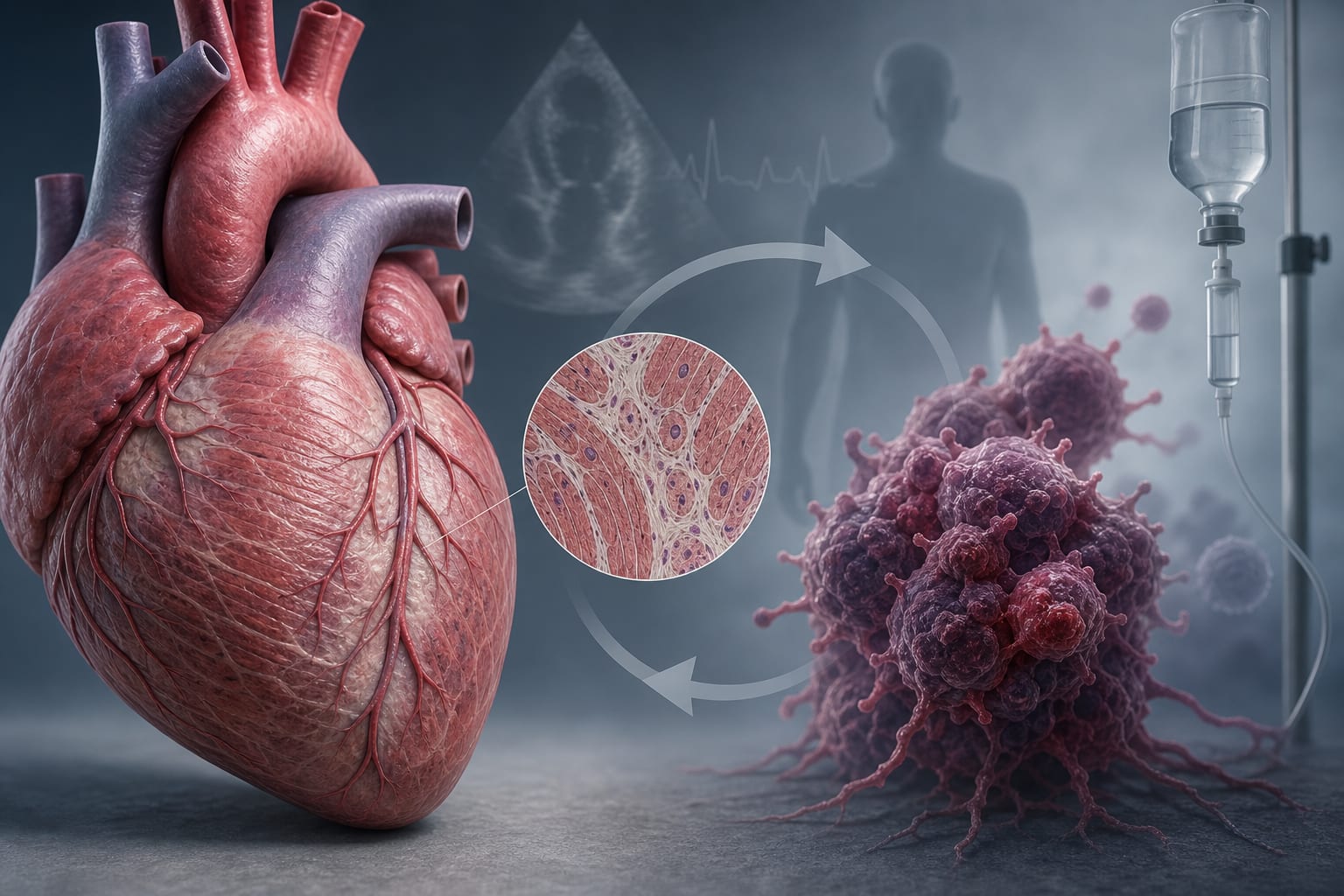
This study reveals a significant prevalence of heart failure with preserved ejection fraction (HFpEF) in cancer patients, highlighting its association with increased mortality and cardiovascular events. Pre-existing HFpEF is identified as a high-risk phenotype, necessitating improved risk stratification in cardio-oncology settings.
Background
The prevalence of HFpEF is rising, particularly among cancer patients undergoing potentially cardiotoxic treatments. Despite its significance, HFpEF is often overlooked in baseline risk assessments for cancer therapy-related cardiovascular toxicity (CTR-CVT). Understanding HFpEF's impact in this population is crucial for optimizing patient management and improving outcomes.
Data Highlights
Parameter
Value
Patients with known HFpEF
36 (5.4%)
Mortality in pre-existing HFpEF
27.8%
Mortality in patients without HF
12.8%
HFpEF events post-treatment
14.4% (96/665)
Patients requiring treatment adaptation
12.5% (12/96)
Key Findings
Pre-existing HFpEF is associated with higher mortality compared to patients without HF (27.8% vs. 12.8%, p = 0.011).
Patients with pre-existing HFpEF experienced more HFpEF events (41.6%, p < 0.001).
Only 15.6% of patients developing HFpEF events had a prior diagnosis of HFpEF.
Older age, female sex, arterial hypertension, and previous arrhythmias are predictors of HFpEF events.
Current guidelines do not adequately address HFpEF in the context of CTRCD.
Clinical Implications
Healthcare professionals should consider the presence of HFpEF in cancer patients as a significant risk factor for adverse outcomes during treatment. Enhanced risk stratification tools are needed to incorporate HFpEF, ensuring timely intervention and management of cardiovascular complications.
Conclusion
The findings underscore the importance of recognizing HFpEF in cancer patients, as it poses significant morbidity and mortality risks. Improved awareness and risk assessment strategies are essential for optimizing patient care in the cardio-oncology setting.