Long-term trends in the burden of leukemia subtypes in China from 1990 to 2021: a Joinpoint regression and age-period-cohort analysis based on GBD 2021 - Report - MDSpire
Advertisement
Long-term trends in the burden of leukemia subtypes in China from 1990 to 2021: a Joinpoint regression and age-period-cohort analysis based on GBD 2021
Trends in the Incidence of Leukemia Subtypes in China from 1990 to 2021
Overview
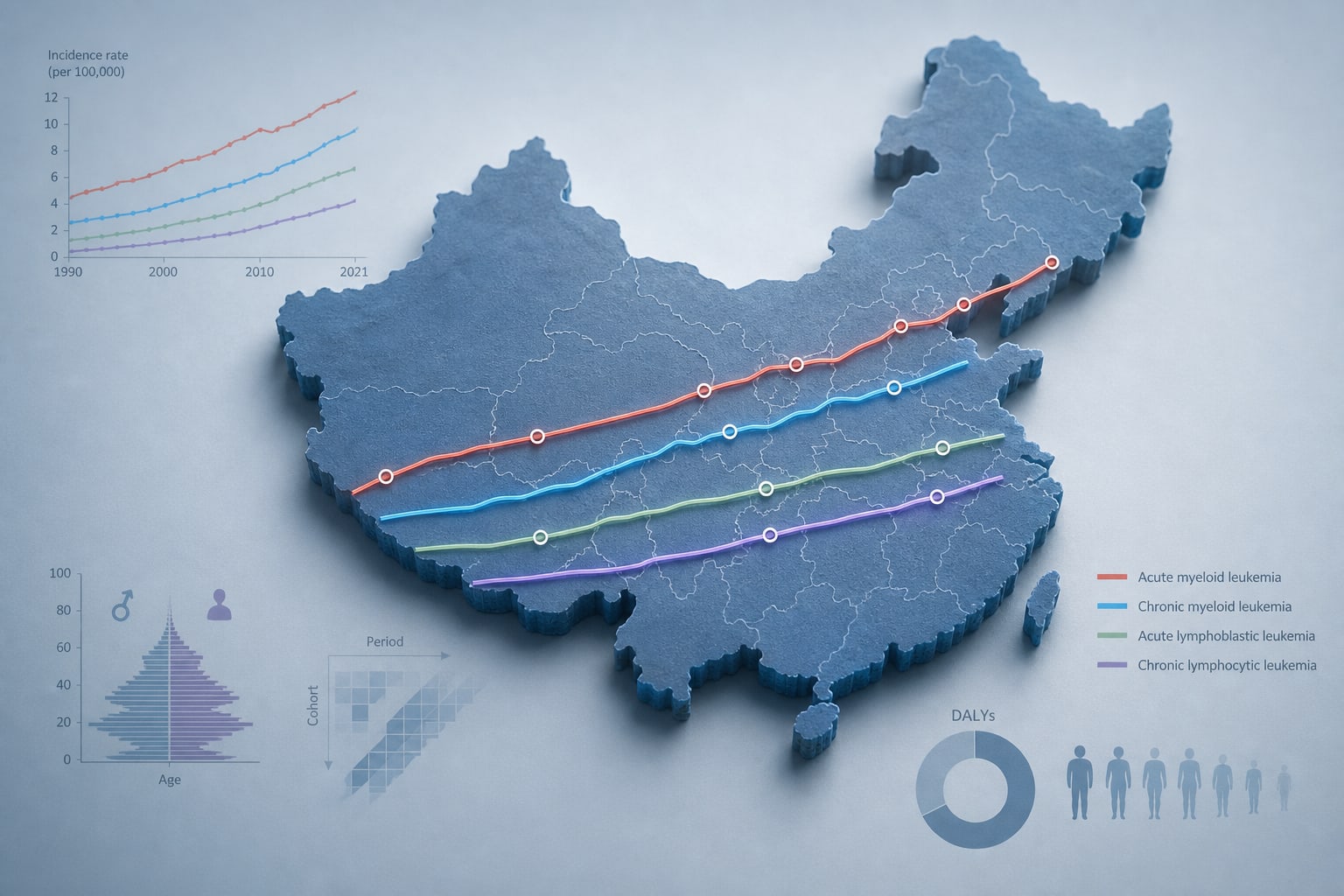
This study analyzes the incidence trends of four major leukemia subtypes in China from 1990 to 2021, revealing distinct patterns. It projects future incidence rates, highlighting a decline in acute myeloid leukemia (AML) and chronic myeloid leukemia (CML), while acute lymphoblastic leukemia (ALL) and chronic lymphocytic leukemia (CLL) show increasing trends.
Background
Leukemia represents a significant public health challenge, particularly in China, where it is the most prevalent category of childhood malignancies. Understanding the long-term trends in leukemia subtypes is crucial for developing targeted prevention and control strategies. This study utilizes comprehensive data to fill gaps in the current understanding of leukemia epidemiology in China.
Data Highlights
{'AML': {'trend': 'Declining'}}
Key Findings
{'ASIRs': 'Include specific numerical values for ASIRs.'}
Clinical Implications
The findings underscore the need for tailored strategies to address the rising incidence of ALL and CLL, particularly in vulnerable populations such as children and the elderly. Improved access to diagnosis and treatment for AML and CML may contribute to their declining burden, suggesting a need for continued investment in healthcare resources.
Conclusion
The distinct trends in leukemia subtypes in China highlight the importance of ongoing surveillance and targeted interventions. Addressing the rising incidence of ALL and CLL will be critical for future public health strategies.
Morristown Medical Center now offers patients access to innovative clinical trials for immunotherapies including the use of Chimeric Antigen Receptor T Cells (CAR-T) and Tumor Infiltrating Lymphocytes (TIL).