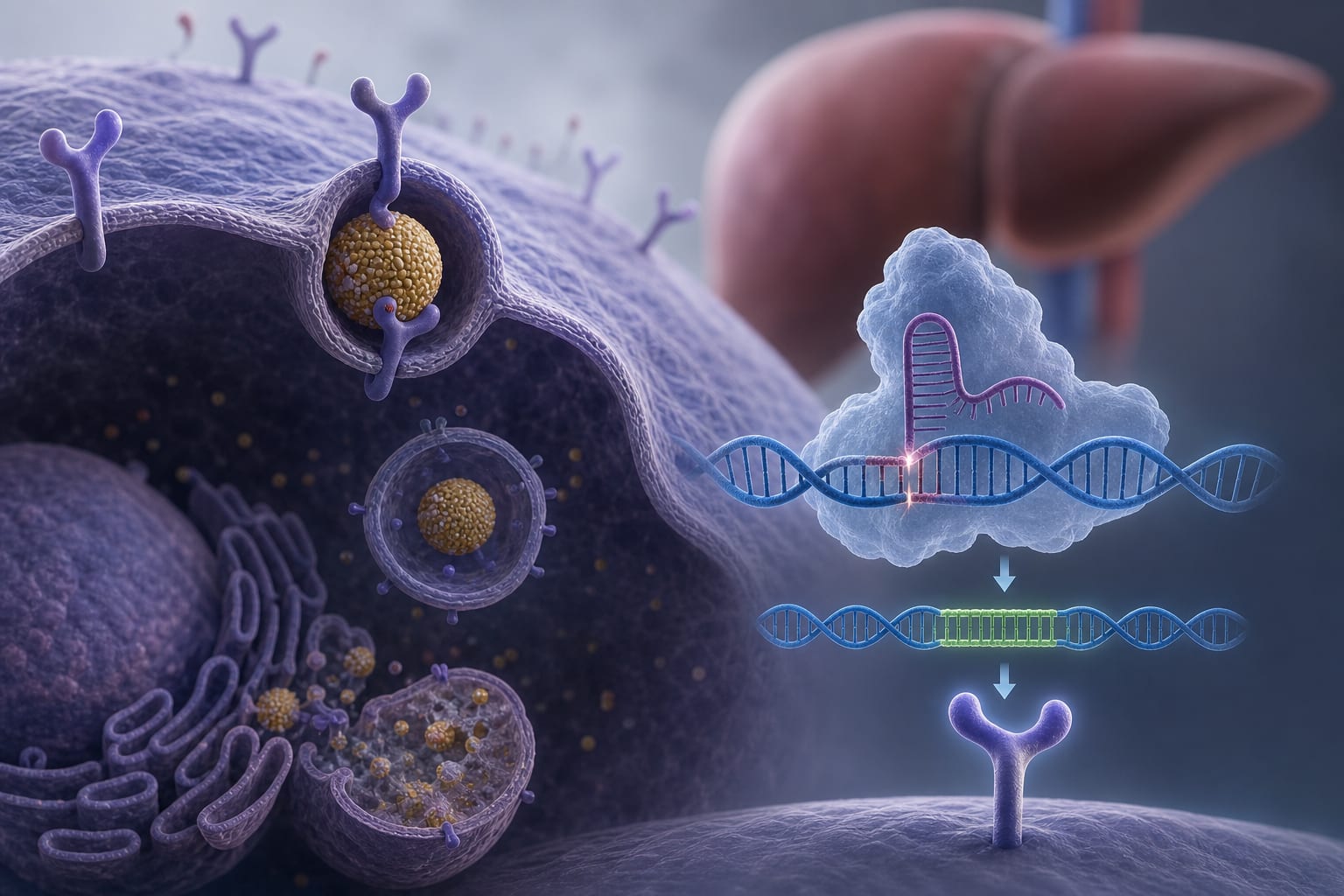
A de novo LDLR mutation in severe familial hypercholesterolemia: case report, functional characterization, and a personalized gene correction strategy exploration - Report - MDSpire
Advertisement
A de novo LDLR mutation in severe familial hypercholesterolemia: case report, functional characterization, and a personalized gene correction strategy exploration
Clinical Report: Identification of a novel LDLR mutation in severe familial hypercholesterolemia
Overview
Expand on the implications of the novel mutation for current FH treatment paradigms.
Background
Familial hypercholesterolemia (FH) is a genetic disorder that leads to significantly elevated low-density lipoprotein cholesterol (LDL-C) levels, increasing the risk of cardiovascular disease. Homozygous FH (HoFH) presents with severe clinical manifestations and limited treatment options, making the identification of novel mutations and effective gene correction strategies critical for improving patient outcomes. The ongoing discovery of LDLR mutations is essential for advancing precision diagnostics and therapeutic approaches.
Data Highlights
Mutation
Correction Efficiency
LDLR c.331C>T (p.Gln111Ter)
98%
Key Findings
The patient exhibited a biallelic LDLR mutation, including a de novo LDLR c.331C>T (p.Gln111Ter) mutation.
In vitro studies confirmed that the c.331C>T mutation impaired normal LDLR protein expression.
A high-fidelity gene correction system achieved approximately 98% correction efficiency for the identified mutation.
LDLR mutations account for approximately 90% of FH cases, highlighting the importance of identifying novel variants.
Current therapeutic options for HoFH are limited, necessitating innovative approaches like gene editing.
Clinical Implications
The identification of the LDLR c.331C>T mutation provides critical insights for genetic testing and counseling in FH patients. The successful application of prime editing technology may pave the way for personalized gene therapies, potentially improving treatment outcomes for patients with HoFH.
Conclusion
The study underscores the significance of identifying and correcting novel LDLR mutations in familial hypercholesterolemia, offering hope for more effective, personalized treatment strategies in the future.
Qualitative interviews identified four themes involving emergency challenges and response, teamwork, psychological stress and coping, and professional growth needs in trauma surgery.