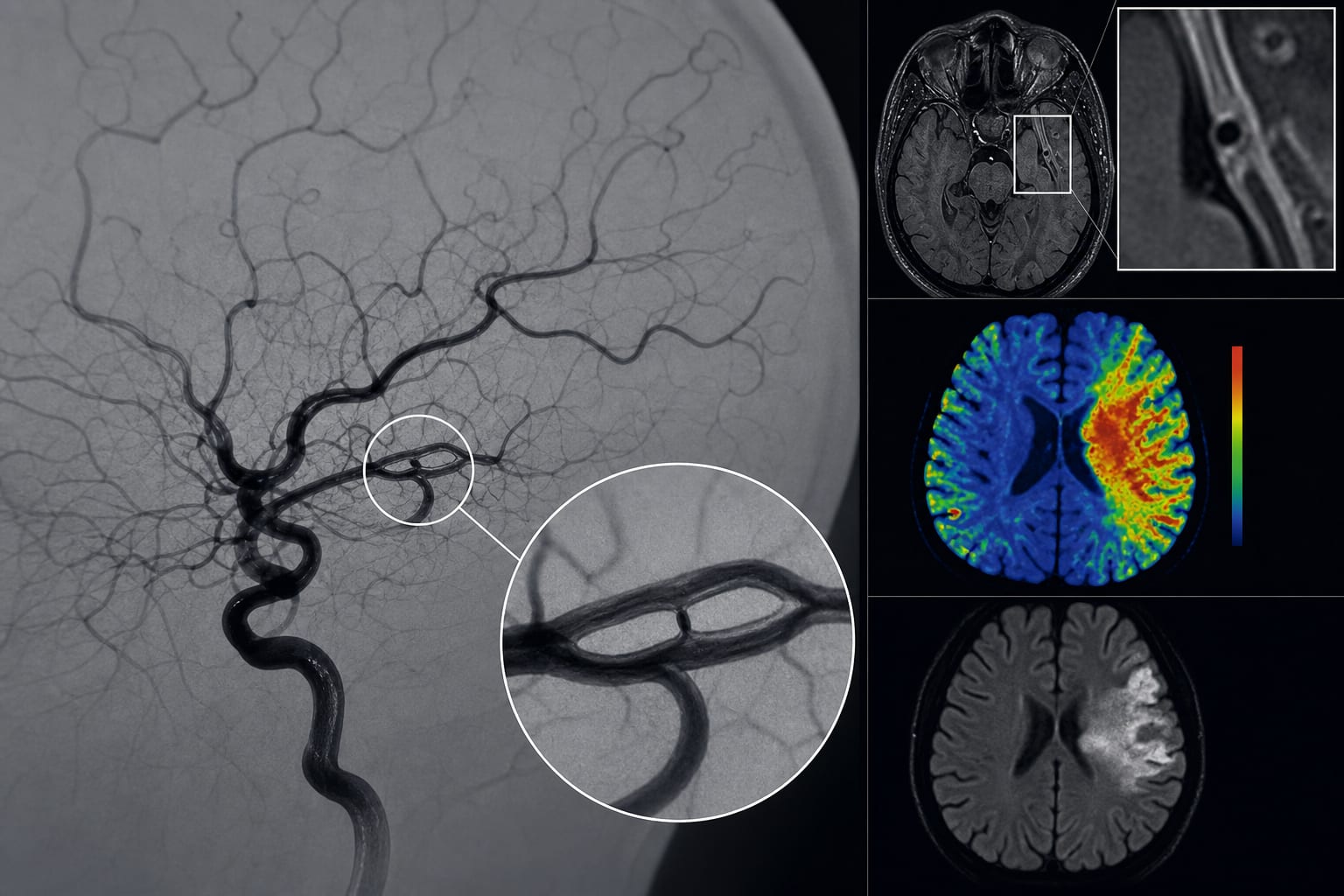
Clinical Report: Cerebral Ischemia Associated with Fenestration of the MCA
Overview
This report discusses a case of middle cerebral artery (MCA) fenestration in a 53-year-old man with a history of transient ischemic attack (TIA) and highlights the association between MCA fenestration and cerebral ischemia. A systematic literature review identified 19 cases, emphasizing the need for accurate diagnosis to prevent mismanagement.
Background
MCA fenestration is a rare vascular variant that can mimic stenosis and poses diagnostic challenges. Its association with cerebral ischemia is debated, making it crucial for healthcare professionals to recognize this condition to avoid inappropriate management. Understanding the hemodynamic implications of MCA fenestration is essential for effective patient care.
Data Highlights
Parameter
Value
Number of cases reviewed
19
Age range of patients
4 to 85 years
Percentage with slit-like morphology
73.7%
Diagnosis via DSA
57.9%
Favorable outcomes after thrombectomy
83.3%
Overall favorable outcomes at follow-up
73.7%
Key Findings
MCA fenestration can mimic stenosis, complicating diagnosis and management.
73.7% of patients exhibited slit-like morphology, more common in acute ischemic stroke.
57.9% of patients were diagnosed definitively via digital subtraction angiography (DSA).
Mechanical thrombectomy was performed in six patients with concurrent MCA occlusion, with 83.3% achieving favorable outcomes.
Multimodal imaging, including high-resolution vessel wall MRI, is crucial for accurate diagnosis.
Clinical Implications
Healthcare professionals should consider MCA fenestration in patients presenting with cerebral ischemia and M1 stenosis or occlusion, especially when conventional risk factors are absent. Utilizing multimodal imaging techniques can enhance diagnostic accuracy and inform appropriate management strategies.
Conclusion
MCA fenestration is a significant vascular variant that requires careful consideration in clinical practice. Accurate diagnosis and management are essential to prevent adverse outcomes in affected patients.
Qualitative interviews identified four themes involving emergency challenges and response, teamwork, psychological stress and coping, and professional growth needs in trauma surgery.