Efficacy and safety of Oliceridine versus Sufentanil in postoperative analgesia for burn skin grafting: a machine learning and SHAP-based cohort study - Report - MDSpire
Advertisement
Efficacy and safety of Oliceridine versus Sufentanil in postoperative analgesia for burn skin grafting: a machine learning and SHAP-based cohort study
Clinical Report: Comparative Analysis of Oliceridine and Sufentanil for Postoperative Pain Management
Overview
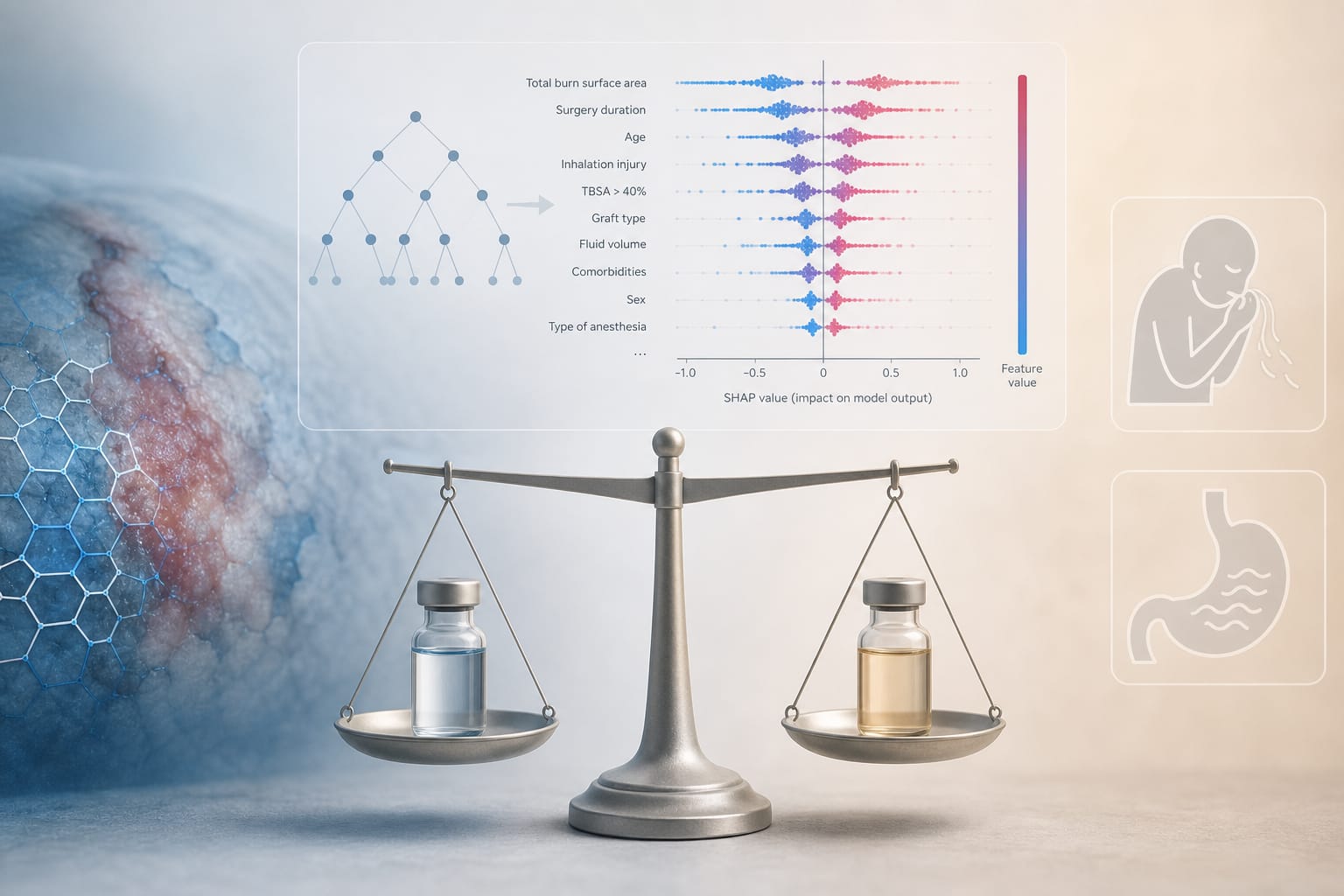
This study utilized machine learning to compare the efficacy and safety of Oliceridine and Sufentanil in postoperative pain management for burn skin grafting. Findings suggest that while both opioids have similar analgesic profiles, Oliceridine is associated with a significantly lower risk of postoperative nausea and vomiting (PONV).
Background
Postoperative pain management in burn surgery is critical due to the severe pain associated with skin grafting procedures. Traditional opioids like Sufentanil can lead to significant opioid-related adverse events, particularly PONV, which complicates recovery. Oliceridine, a biased μ-opioid agonist, presents a potential alternative with a more favorable safety profile, warranting investigation in this high-risk population.
Data Highlights
Model
AUC
Key Predictors
Efficacy (Need for Rescue Analgesia)
0.843
Total burn surface area, surgery duration
PONV
0.788
Sufentanil administration, female patients
Key Findings
Oliceridine and Sufentanil demonstrated comparable analgesic efficacy in burn skin grafting patients.
The XGBoost model for efficacy had an AUC of 0.843, indicating strong predictive capability.
PONV risk was significantly lower with Oliceridine compared to Sufentanil, particularly in female patients.
The study utilized SHAP analysis to clarify the contributions of various predictors to analgesic outcomes.
Machine learning models outperformed traditional logistic regression in predicting PONV.
Clinical Implications
The findings suggest that Oliceridine may be a safer alternative to Sufentanil for managing postoperative pain in burn patients, particularly in reducing the risk of PONV. Clinicians should consider the use of Oliceridine in multimodal analgesic strategies to enhance patient recovery and minimize adverse effects.
Conclusion
This study highlights the potential of Oliceridine in postoperative pain management for burn patients, offering similar analgesic effects to Sufentanil with a reduced risk of PONV. Further prospective studies are needed to validate these findings.