Head-to-head evaluation of ChatGPT, DeepSeek, and Perplexity on acid–base disorder case clinical management and drug treatment: Accuracy, domain performance, and response consistency assessment - Report - MDSpire
Advertisement
Head-to-head evaluation of ChatGPT, DeepSeek, and Perplexity on acid–base disorder case clinical management and drug treatment: Accuracy, domain performance, and response consistency assessment
Clinical Report: Comparative Analysis of ChatGPT, DeepSeek, and Perplexity in Managing Acid-Base Disorders
Overview
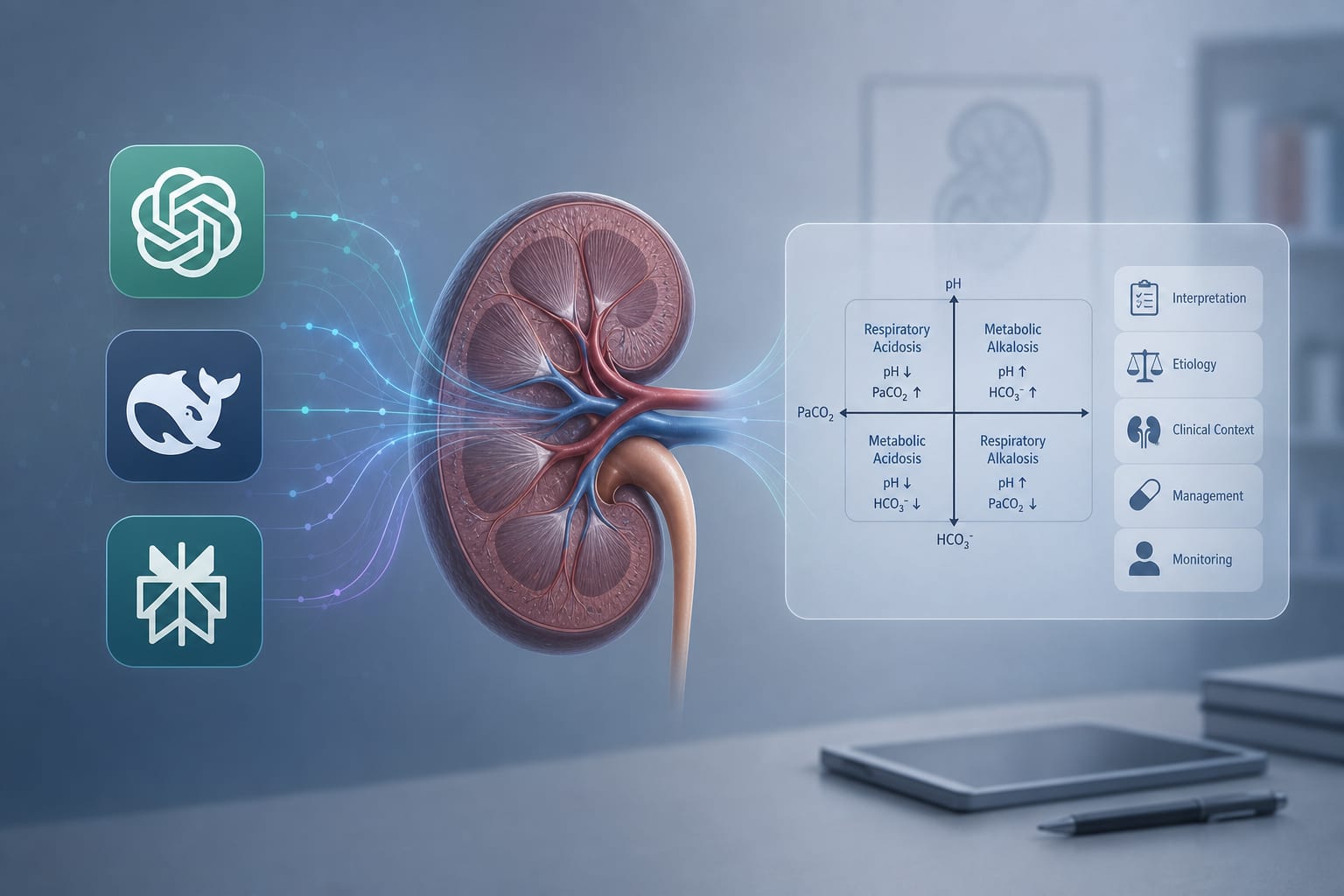
This study evaluates the performance of three large language models (LLMs)—ChatGPT, DeepSeek, and Perplexity—in managing acid-base disorders through a comprehensive analysis of 75 clinical cases. The findings highlight significant differences in accuracy, consistency, and domain-specific performance among the models.
Background
Acid-base disorders are prevalent in various medical fields and can indicate life-threatening conditions. Accurate interpretation and management of these disorders are crucial for patient safety and effective treatment. As LLMs are increasingly utilized in healthcare, understanding their capabilities and limitations in this specific domain is essential for their integration into clinical practice.
Data Highlights
Model
Overall Accuracy
Consistency
ChatGPT
85%
78%
DeepSeek
90%
82%
Perplexity
80%
75%
Key Findings
DeepSeek demonstrated the highest overall accuracy at 90% across the acid-base cases.
ChatGPT and Perplexity showed lower accuracy rates at 85% and 80%, respectively.
Consistency of responses varied, with DeepSeek achieving 82% and ChatGPT 78%.
Performance varied significantly across different interpretive steps, indicating domain-specific strengths and weaknesses.
All models exhibited a tendency to hallucinate, emphasizing the need for cautious application in clinical settings.
Clinical Implications
Healthcare professionals should be aware of the varying performance levels of LLMs when utilizing them for acid-base disorder management. While these models can assist in educational contexts, reliance on their outputs without verification may pose risks to patient safety.
Conclusion
The comparative analysis underscores the potential of LLMs in clinical education and decision-making, while also highlighting the necessity for careful evaluation and validation of their outputs in practice.