Development and external validation of a machine learning model for cardiovascular risk prediction in individuals with chronic lung disease: Evidence from CHARLS and ELSA - Report - MDSpire
Advertisement
Development and external validation of a machine learning model for cardiovascular risk prediction in individuals with chronic lung disease: Evidence from CHARLS and ELSA
Clinical Report: Machine Learning for Cardiovascular Risk in Chronic Lung Disorders
Overview
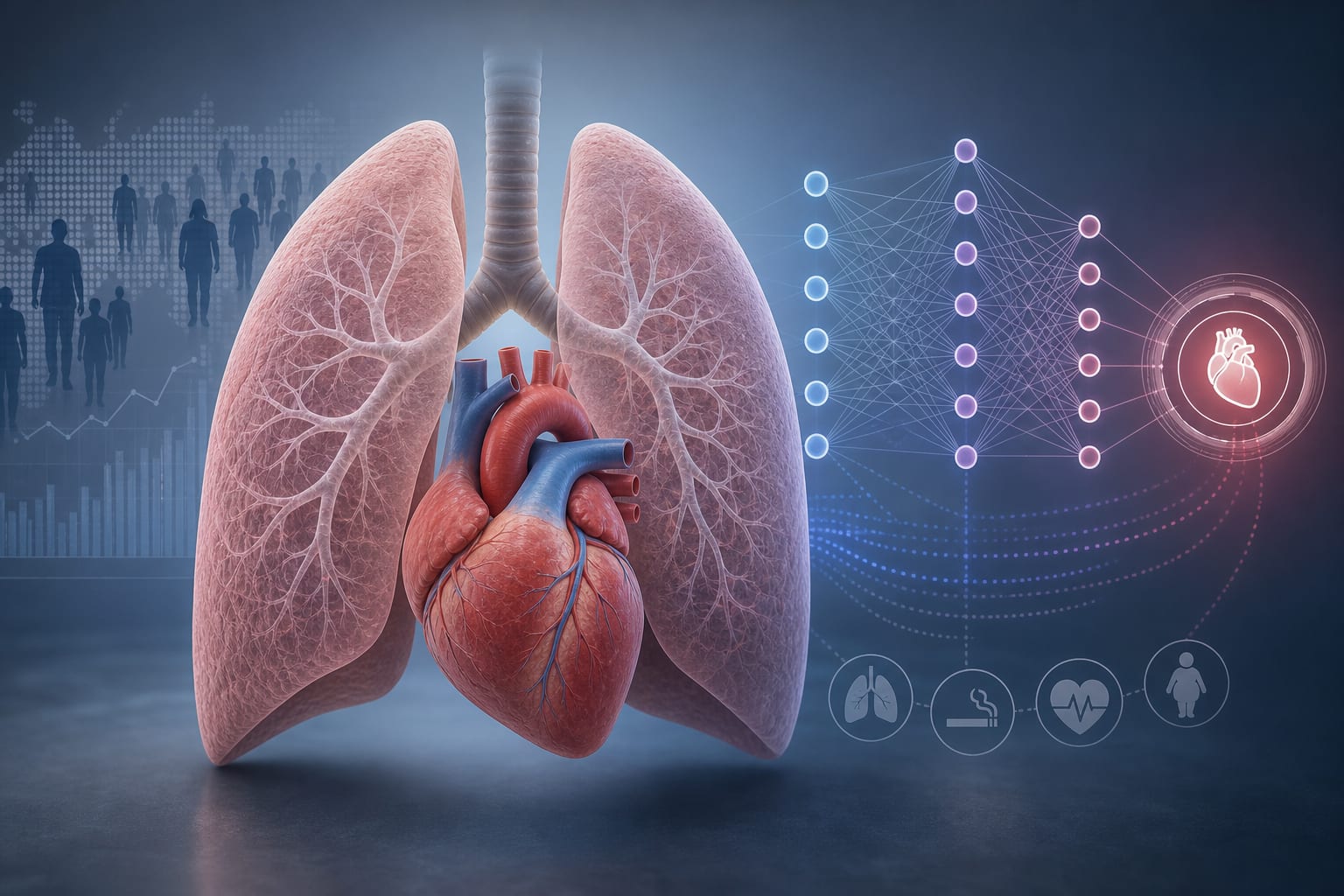
This study developed machine learning-based models to predict cardiovascular disease (CVD) risk in patients with chronic lung disorders (CLD) using data from CHARLS and ELSA. The Extreme Gradient Boosting (XGBoost) model was identified as the optimal approach, demonstrating improved accuracy over traditional risk assessment tools.
Background
Chronic lung diseases (CLD) significantly increase the risk of cardiovascular disease (CVD), which is a leading cause of morbidity and mortality in this population. Current CVD risk assessment tools often fail to account for the unique characteristics of CLD patients, necessitating the development of tailored predictive models. Machine learning offers a promising avenue for enhancing risk stratification and clinical decision-making in this high-risk group.
Data Highlights
No numerical data available in the source material.
Key Findings
Chronic lung diseases are associated with a significantly elevated risk of cardiovascular disease.
Traditional CVD risk assessment tools do not adequately address the complexities of patients with CLD.
Machine learning models, particularly XGBoost, outperform traditional statistical methods in predicting CVD risk.
Integration of multidimensional variables improves the accuracy of CVD risk predictions in CLD patients.
External validation using data from ELSA enhances the robustness of the developed models.
Clinical Implications
Healthcare professionals should consider utilizing machine learning-based models for more accurate CVD risk assessment in patients with chronic lung disorders. Early identification of high-risk individuals can facilitate timely interventions and improve long-term outcomes.
Conclusion
The study underscores the potential of machine learning in refining cardiovascular risk prediction for patients with chronic lung disorders, highlighting the need for tailored approaches in clinical practice.