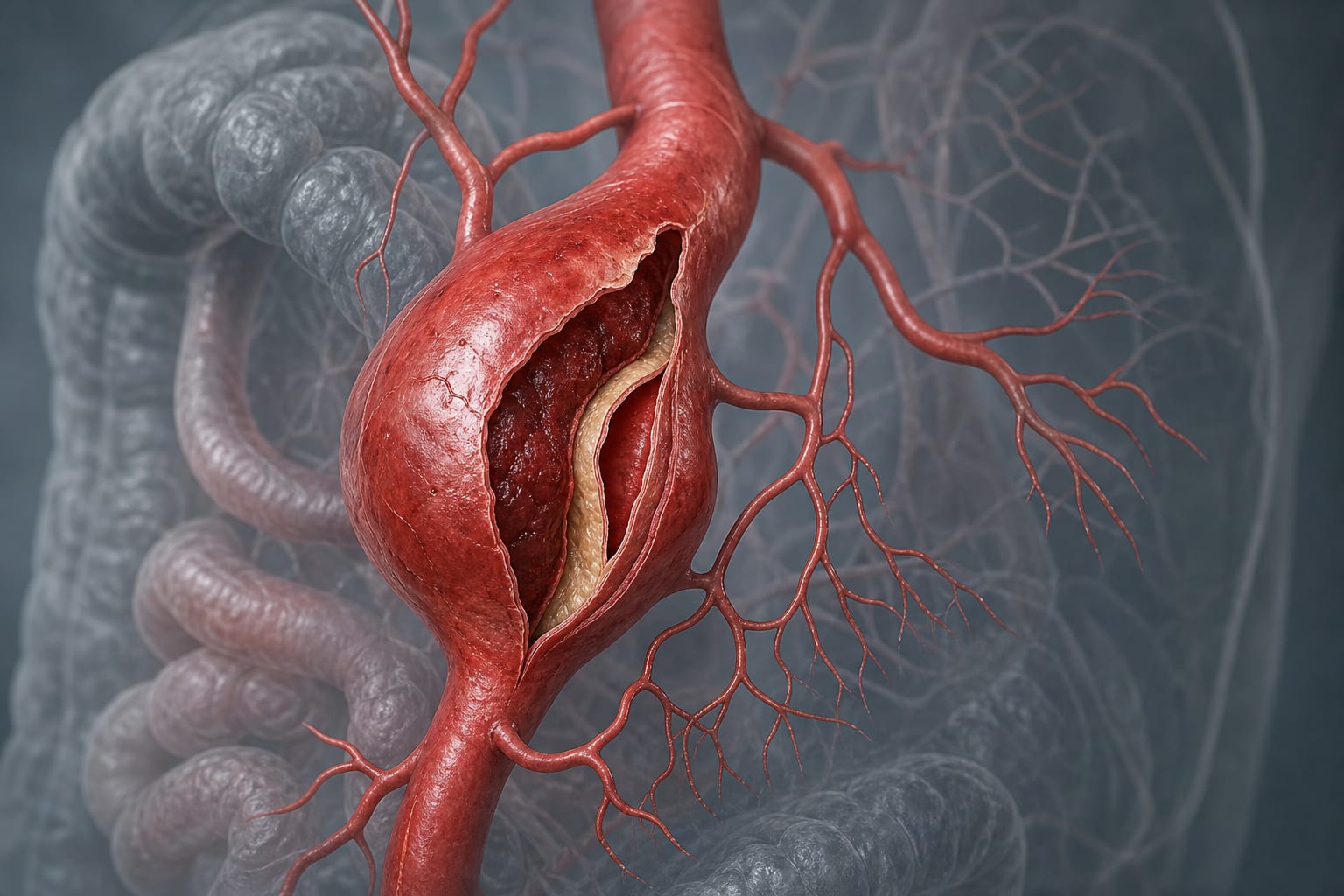
Giant Dissecting Aneurysm of the Superior Mesenteric Artery: A Case Study
Overview
This report details the surgical management of a giant isolated superior mesenteric artery dissecting aneurysm (ISMADA) in a 70-year-old male patient. The case highlights the importance of timely intervention to prevent rupture and subsequent complications.
Background
Isolated superior mesenteric artery dissection is a rare but potentially life-threatening condition that can lead to serious complications such as rupture and hemorrhage. Early detection and appropriate management are crucial, especially in symptomatic cases. The increasing use of advanced imaging techniques has improved the recognition of this condition, emphasizing the need for awareness among healthcare professionals.
Data Highlights
Parameter
Value
Patient Age
70 years
Aneurysm Size
4.8 cm
Postoperative Recovery
Discharged on day 8
Follow-up Duration
30 months
Postoperative Status
Asymptomatic
Key Findings
ISMADA is rare, with a prevalence of approximately 0.075% based on autopsy data.
Most cases are reported in middle-aged and elderly men, particularly from East Asia.
Symptoms often include sudden-onset abdominal pain, with some patients remaining asymptomatic.
Conservative management is recommended for uncomplicated cases, while surgical intervention is necessary for complex presentations.
The case highlights the importance of hybrid surgical approaches in managing complicated ISMADA with true lumen compromise.
Clinical Implications
Healthcare professionals should maintain a high index of suspicion for ISMADA in patients presenting with abdominal pain, particularly in older males. Timely imaging and intervention can prevent serious complications such as rupture and bowel ischemia.
Conclusion
This case underscores the critical nature of prompt diagnosis and intervention in managing giant ISMADA. Surgical repair remains essential in complex cases to ensure patient safety and recovery.