Clinical Report: Phosphorylation of ZDHHC5 by AKT Enhances Palmitoylation of NOD1
Overview
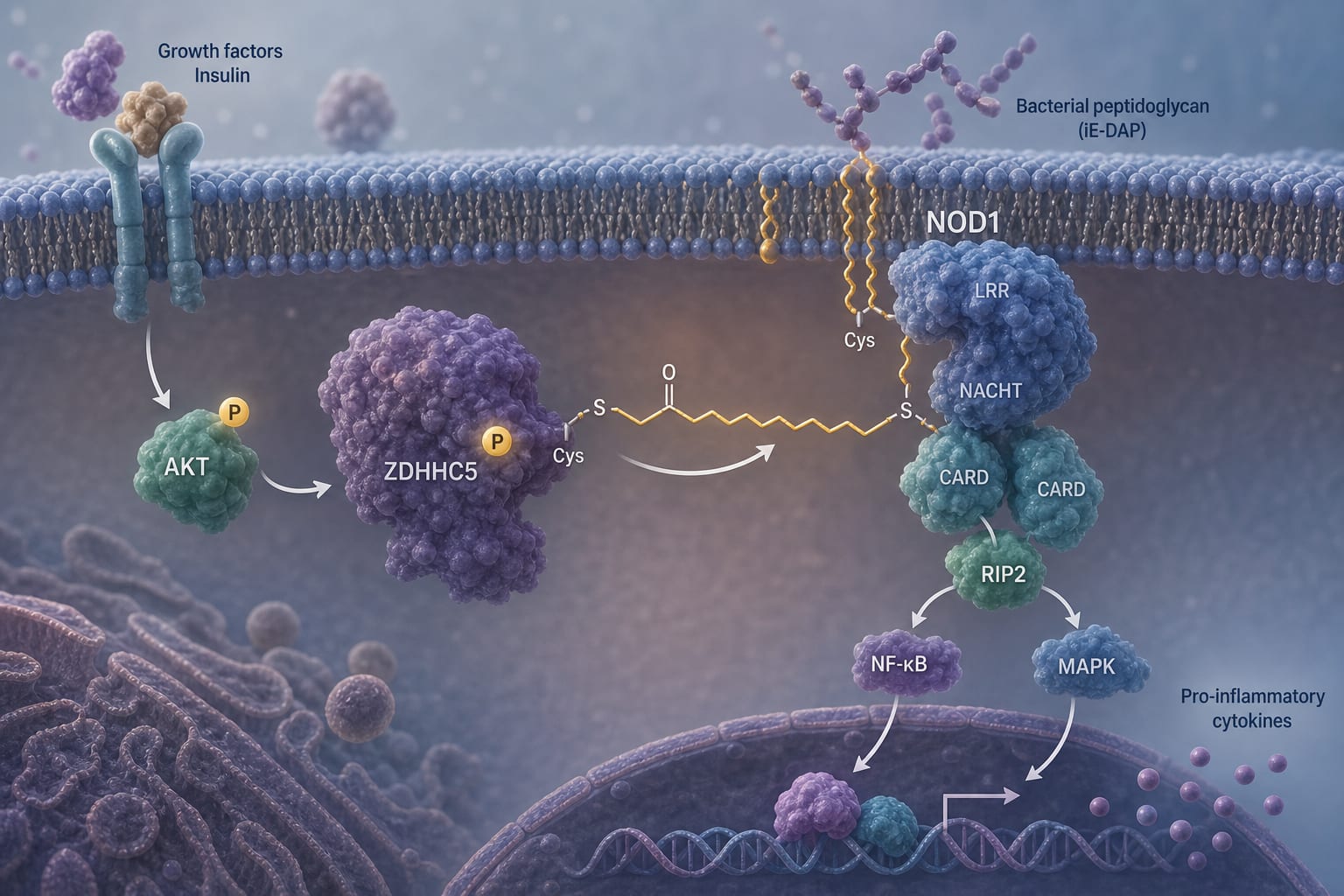
This study identifies a novel AKT-ZDHHC5-NOD1 signaling axis that enhances NOD1 activation through phosphorylation and palmitoylation. Growth factors and insulin were shown to positively regulate this pathway, linking metabolic cues to innate immune responses.
Background
NOD1 is a crucial pattern recognition receptor involved in detecting bacterial components and initiating immune responses. Its activation is dependent on palmitoylation mediated by ZDHHC5, which is influenced by growth factors and insulin. Understanding this regulatory mechanism is vital for developing therapeutic strategies for inflammatory diseases associated with aberrant NOD1 signaling.
Data Highlights
No numerical data available in the source material.
Key Findings
AKT phosphorylates ZDHHC5 at Ser345 and Ser380, enhancing its activity.
Phosphorylation of ZDHHC5 promotes NOD1 palmitoylation and membrane localization.
Growth factors and insulin activate NOD1 through the AKT-ZDHHC5 signaling pathway.
Enhanced NOD1 activation leads to increased downstream innate immune signaling.
This regulatory axis may serve as a target for modulating inflammatory diseases.
Clinical Implications
The findings suggest that targeting the AKT-ZDHHC5 pathway could provide new therapeutic avenues for managing inflammatory diseases linked to NOD1 dysregulation. Clinicians should consider the role of metabolic signals in modulating immune responses.
Conclusion
The study reveals a critical link between metabolic signaling and innate immunity through the AKT-ZDHHC5-NOD1 axis, highlighting potential targets for therapeutic intervention in inflammatory conditions.