Clinician-Patient Asynchronous Text Messaging Communication in Hospital-at-Home Care: Qualitative Study - Report - MDSpire

Clinician-Patient Asynchronous Text Messaging Communication in Hospital-at-Home Care: Qualitative Study

  • By

  • Jeremy Soon Leong Seow

  • Stephanie Ko

  • Shi Yun Low

  • Shefaly Shorey

  • June 8, 2026

  • 0 min

Share

Clinical Report: Asynchronous Text Messaging in Hospital-at-Home Settings

Overview

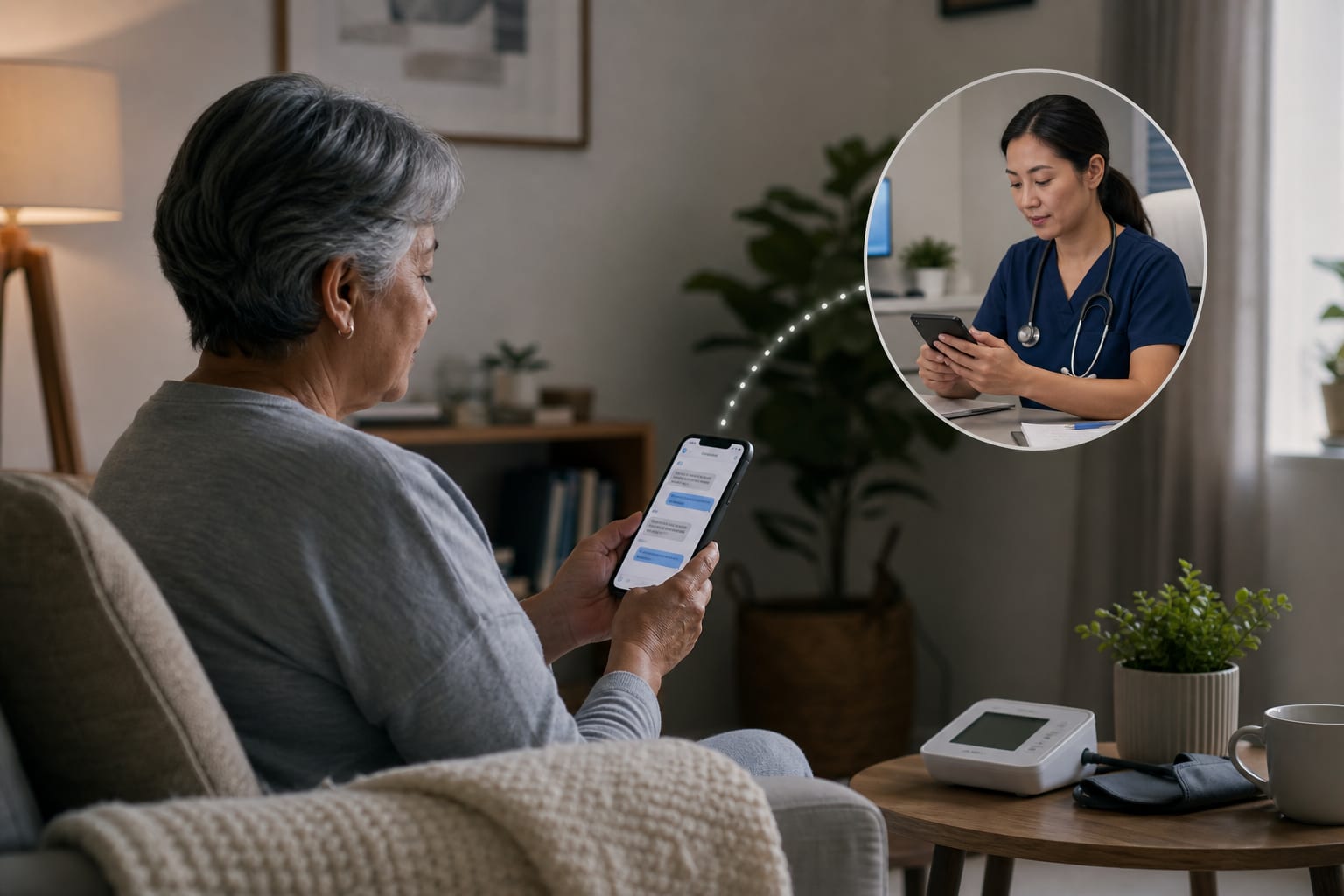
This qualitative analysis explores the dynamics of SMS text messaging between clinicians and patients in hospital-at-home (HaH) settings. Findings reveal how these interactions shape care relationships and highlight the importance of effective digital communication in enhancing patient engagement and care delivery.

Background

The hospital-at-home model addresses the increasing pressure on healthcare systems by providing hospital-level care in patients' homes. Effective communication is critical in these settings, especially as digital tools become integral to care coordination. Understanding the nuances of clinician-patient messaging can inform improvements in HaH programs and enhance relational dynamics.

Data Highlights

No numerical data was provided in the article.

Key Findings

  • Digital communication tools, including SMS, are essential for care coordination in HaH programs.
  • Asynchronous messaging allows for flexible communication without the need for real-time interaction.
  • Text messaging dynamics can reveal insights into trust, empathy, and clinical authority in patient-provider relationships.
  • Effective digital dialogues are crucial for maintaining patient safety and continuity of care.
  • Understanding messaging content can inform clinician training and improve patient engagement strategies.

Clinical Implications

Healthcare providers should prioritize the development of effective digital communication strategies to enhance patient engagement in HaH settings. Training programs should incorporate insights from SMS interactions to foster better relational dynamics between clinicians and patients.

Conclusion

The study underscores the significance of understanding digital communication patterns in HaH programs, which can lead to improved care delivery and patient satisfaction. Future refinements in HaH models should focus on enhancing communication practices.

Related Resources & Content

  1. JAMA Network Open, 2026 -- Automated Health Care Messages and Unexpected Patient Responses
  2. The ASCO Post, 2013 -- Lessons of 2 Decades' Experience with CHESS
  3. Intensive Care Medicine, 2023 -- Recovery Patterns of Family Members of Critically Ill COVID-19 Survivors Post-Hospitalization: A Global Qualitative Study
  4. Acute Hospital Care at Home Data Release Fact Sheet | CMS
  5. Outcomes Associated With Hospital at Home vs Traditional Inpatient Stay | Geriatrics | JAMA Network Open
  6. NHS England — A guide to setting up technology-enabled virtual wards
  7. BMC Psychiatry (Springer) — Therapists’ and patients’ experiences with electronic patient-reported outcome measures (PROMs) and patient-reported experience measures (PREMs) before and during treatment in community mental health services: a qualitative study in Norway
  8. Acute Hospital Care at Home Data Release Fact Sheet | CMS
  9. Outcomes Associated With Hospital at Home vs Traditional Inpatient Stay | Geriatrics | JAMA Network Open | JAMA Network
  10. NHS England » A guide to setting up technology-enabled virtual wards

Original Source(s)

Related Content