Efficacy and safety of transcatheter left atrial appendage closure guided by transoesophageal echocardiography using standard and micro TEE probes: a single-center retrospective study - Report - MDSpire
Advertisement
Efficacy and safety of transcatheter left atrial appendage closure guided by transoesophageal echocardiography using standard and micro TEE probes: a single-center retrospective study
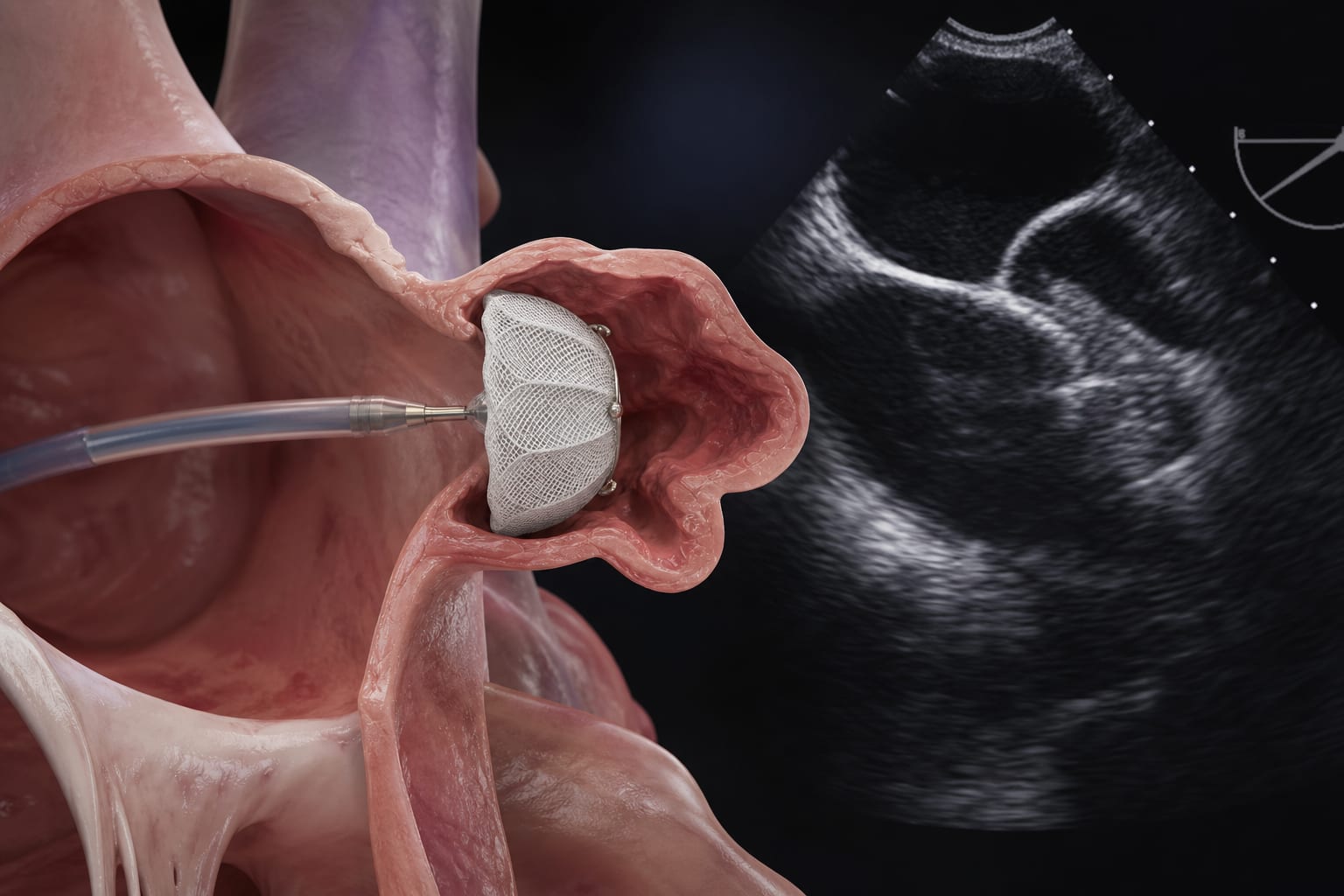
Clinical Report: Efficacy and Safety of Micro-TEE in T-LAAC Procedures
Overview
Expand on the implications of shorter procedural times and similar complication rates.
Background
Transcatheter left atrial appendage closure (T-LAAC) is a critical intervention for patients with atrial fibrillation (AF) who cannot use long-term anticoagulation. Effective imaging during the procedure is essential for success and safety. The introduction of micro-TEE offers a potential alternative to standard TEE, allowing for conscious sedation and possibly reducing procedural complications and time.
Data Highlights
Parameter
Standard TEE
Micro-TEE
Procedural Time (min)
175
153
Orotracheal Intubation Rate
Higher
Lower
Complication Rate
No significant difference
No significant difference
Key Findings
Micro-TEE guidance resulted in a significantly shorter procedural time (153 vs. 175 min, p = 0.040).
There was no significant difference in procedural success rates between micro-TEE and standard TEE.
Complication rates, including pericardial effusion and device-related thrombosis, were similar for both imaging modalities.
Micro-TEE was associated with a lower rate of orotracheal intubation.
No increase in fluoroscopy time, radiation exposure, or contrast use was observed with micro-TEE.
Clinical Implications
The findings suggest that micro-TEE can be a viable alternative to standard TEE for T-LAAC, potentially reducing the need for general anesthesia and associated complications. This may enhance patient comfort and streamline procedural workflows in clinical practice.
Conclusion
Micro-TEE demonstrates comparable efficacy and safety to standard TEE in T-LAAC procedures while offering advantages in procedural efficiency. Its adoption may improve patient outcomes and procedural experiences.
by Alessandro Barbarossa, Francesca Coraducci, Elisa Nicolini, Laura Cipolletta, Alessandro Maolo, Michela Casella, Fabio Vagnarelli, Federico Guerra, Marco Marini, Antonio Dello Russo, Tommaso Piva