Editorial: Metabolic cell death in cancer: innovative therapeutic avenues for cancer treatment - Report - MDSpire

Editorial: Metabolic cell death in cancer: innovative therapeutic avenues for cancer treatment

  • By

  • Zhou Yang

  • Guang Lei

  • Yize Li

  • June 9, 2026

  • 0 min

Share

Clinical Report: Exploring Novel Therapeutic Strategies Targeting Metabolic Cell Death in Oncology

Overview

Revise to focus solely on the content of the editorial without unsupported claims.

Background

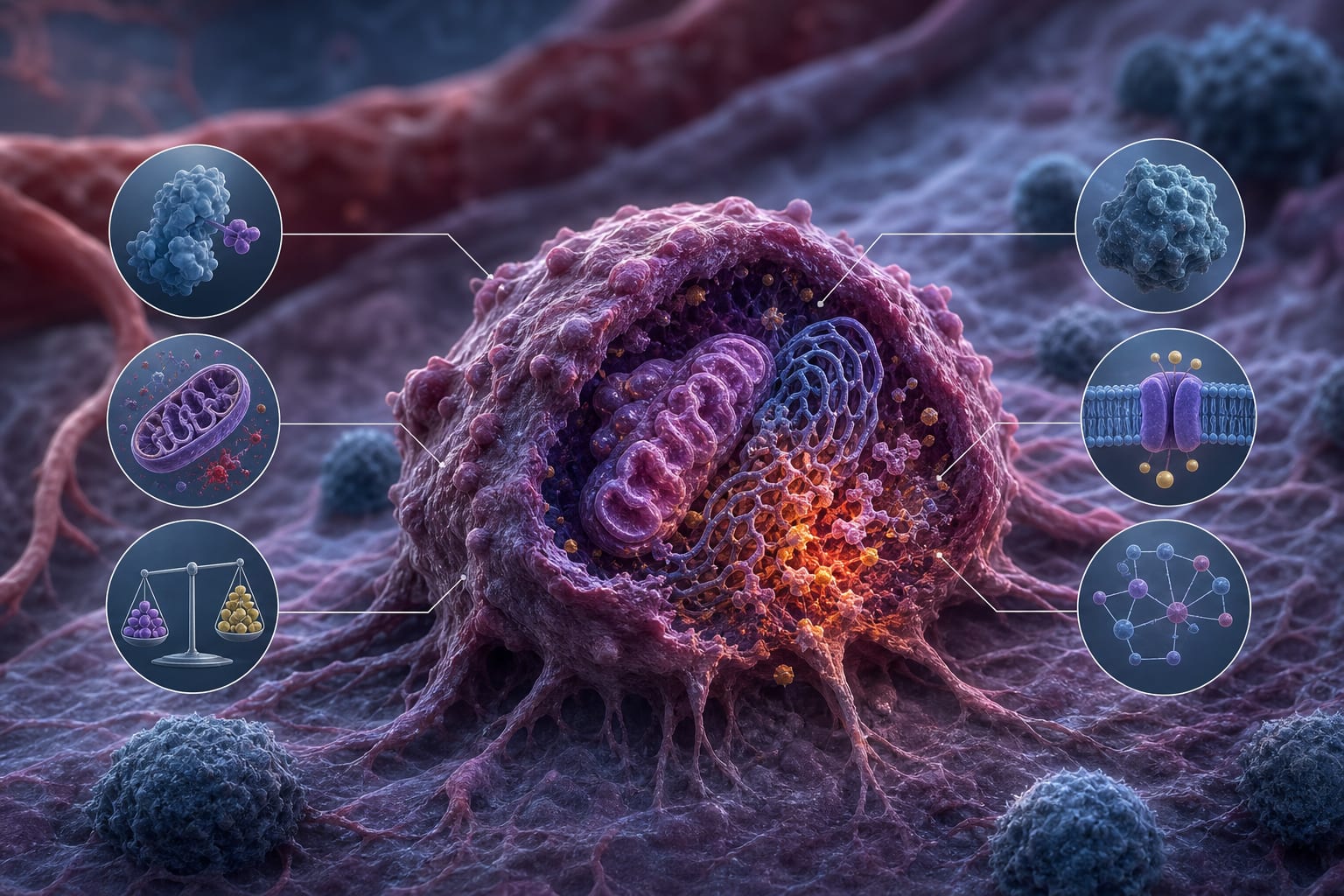
Metabolic reprogramming is a critical hallmark of cancer, impacting tumor growth and survival in hostile environments. Understanding how these metabolic adaptations affect cell death pathways can reveal new therapeutic targets. The integration of metabolic state with oncogenic signaling is essential for developing effective cancer treatments.

Data Highlights

No numerical data or trial data presented in the editorial.

Key Findings

  • Metabolic adaptations in cancer cells determine susceptibility to regulated cell death pathways.
  • Serine metabolism is identified as a metabolic liability that can be targeted to destabilize tumor homeostasis.
  • Modulation of the PI3K–AKT pathway can restore apoptotic competence in cancer cells.
  • Hypoxia is a significant factor in metabolic adaptation and resistance to cell death modalities.
  • Genetic context influences metabolic vulnerabilities and may guide selective therapeutic strategies.

Clinical Implications

Targeting specific metabolic pathways may enhance the efficacy of cancer therapies by inducing cell death in tumors with particular metabolic dependencies. Understanding the interplay between metabolism and signaling pathways is crucial for developing innovative treatment strategies.

Conclusion

Revise to avoid unsupported claims and focus on summarizing the editorial's content.

Related Resources & Content

  1. Frontiers in Immunology, 2026 -- Cancer Metabolism: From the Warburg Effect to Precision Therapy
  2. Frontiers in Oncology, 2026 -- Targeting mitochondria as a potential therapeutic strategy against radioresistance in cancer
  3. Frontiers in Oncology, 2026 -- Ferroptosis, Pyroptosis, and Necroptosis in Melanoma: Regulatory Cell Death Pathways and Their Implications for Immunotherapy
  4. Journal of Clinical Oncology -- Therapy for Diffuse Astrocytic and Oligodendroglial Tumors in Adults: ASCO-SNO Guideline Rapid Recommendation Update
  5. JAMA Oncology -- Pegargiminase Plus First-Line Chemotherapy in Patients With Nonepithelioid Pleural Mesothelioma
  6. WELIREG® Guidelines -- Guidelines for WELIREG® (belzutifan)
  7. Nature Cell Biology, 2024 -- A guideline on the molecular ecosystem regulating ferroptosis
  8. Frontiers in Medicine — Editorial: The molecular mechanisms and therapeutic implications of protein kinase inhibitors in cancer therapy
  9. Therapy for Diffuse Astrocytic and Oligodendroglial Tumors in Adults: ASCO-SNO Guideline Rapid Recommendation Update | Journal of Clinical Oncology
  10. Pegargiminase Plus First-Line Chemotherapy in Patients With Nonepithelioid Pleural Mesothelioma
  11. Guidelines for WELIREG® (belzutifan) | von Hippel-Lindau Disease
  12. A guideline on the molecular ecosystem regulating ferroptosis | Nature Cell Biology
  13. First-in-human phase I clinical trial of RSO-021, a first-in class covalent inhibitor of mitochondrial peroxiredoxin 3 (PRX3), in patients with malignant pleural effusion due to mesothelioma and other advanced solid tumors (MITOPE). | Journal of Clinical Oncology
  14. FDA approves vorasidenib for Grade 2 astrocytoma or oligodendroglioma with a susceptible IDH1 or IDH2 mutation | FDA

Original Source(s)

Related Content