Clinical Report: Correction on Accessibility to Molecular Studies in Gliomas
Overview
This report addresses the correction regarding the funding statement for a study on gliomas and highlights the challenges in accessing molecular research for precision medicine in resource-limited settings. The importance of accurate funding disclosure is emphasized to maintain transparency in scientific communication.
Background
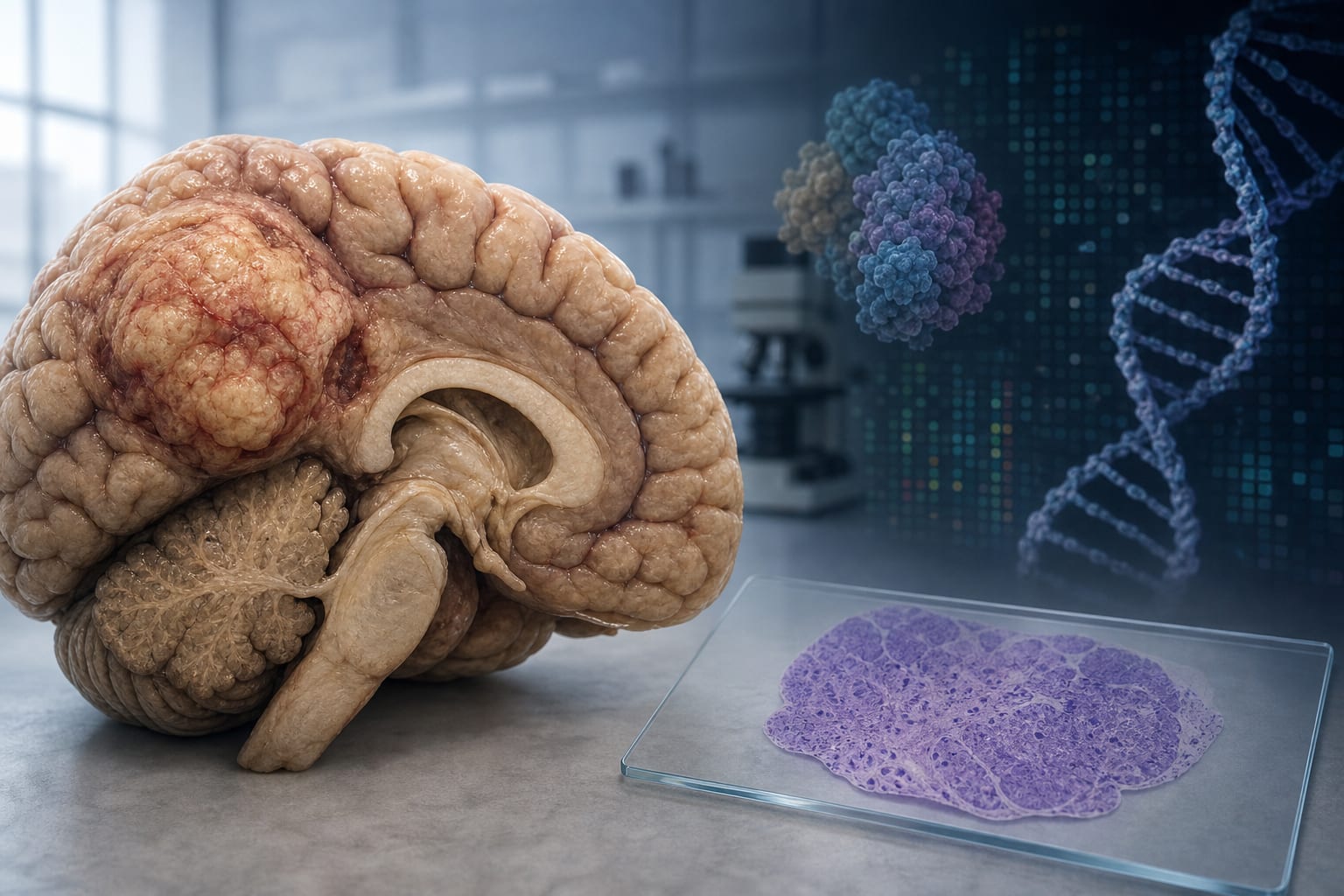
Gliomas are among the most lethal brain tumors, with a notably low 5-year survival rate for glioblastoma. The increasing reliance on molecular profiling for diagnosis and treatment underscores the need for accessible research, particularly in low-resource countries where such studies may be limited. Addressing these accessibility challenges is crucial for advancing precision medicine in glioma treatment.
Data Highlights
No numerical or trial data presented in the article.
Key Findings
['The correction pertains to the funding statement, clarifying that Servier Argentina supported the article processing charge.', 'Gliomas have a high incidence rate of 6 per 100,000 people annually, making them a significant public health concern.', 'Diffuse gliomas are characterized by their infiltrative growth pattern, complicating treatment and management.', 'Access to molecular studies is critical for implementing precision medicine, especially in resource-limited settings.', 'Accurate funding disclosure is essential for maintaining the integrity of scientific publications.']
Clinical Implications
Healthcare professionals should be aware of the importance of molecular research accessibility in glioma treatment, particularly in low-resource settings. Transparency in funding and support for research is vital for fostering trust and integrity in scientific communication.
Conclusion
The correction highlights the need for accurate funding disclosures in research publications and emphasizes the ongoing challenges in accessing molecular studies for gliomas in resource-limited environments.
by Pablo S. Paolinelli, Tomas Saavedra Azcona, Florencia BCasto, Ezequiel Jungberg, Nicolás Tilano, William ABlettler, Joan SPazos, Silvina Dell’Era, Clara Lynch, Miguel Villaescusa, Pedro Plou, Pablo Ajler
Legend and Kelonia reveal 100 percent response rates in phase 1 trials, dual CAR T opens doors for kidney transplant patients, and iPDSC therapy beefs up failing hearts