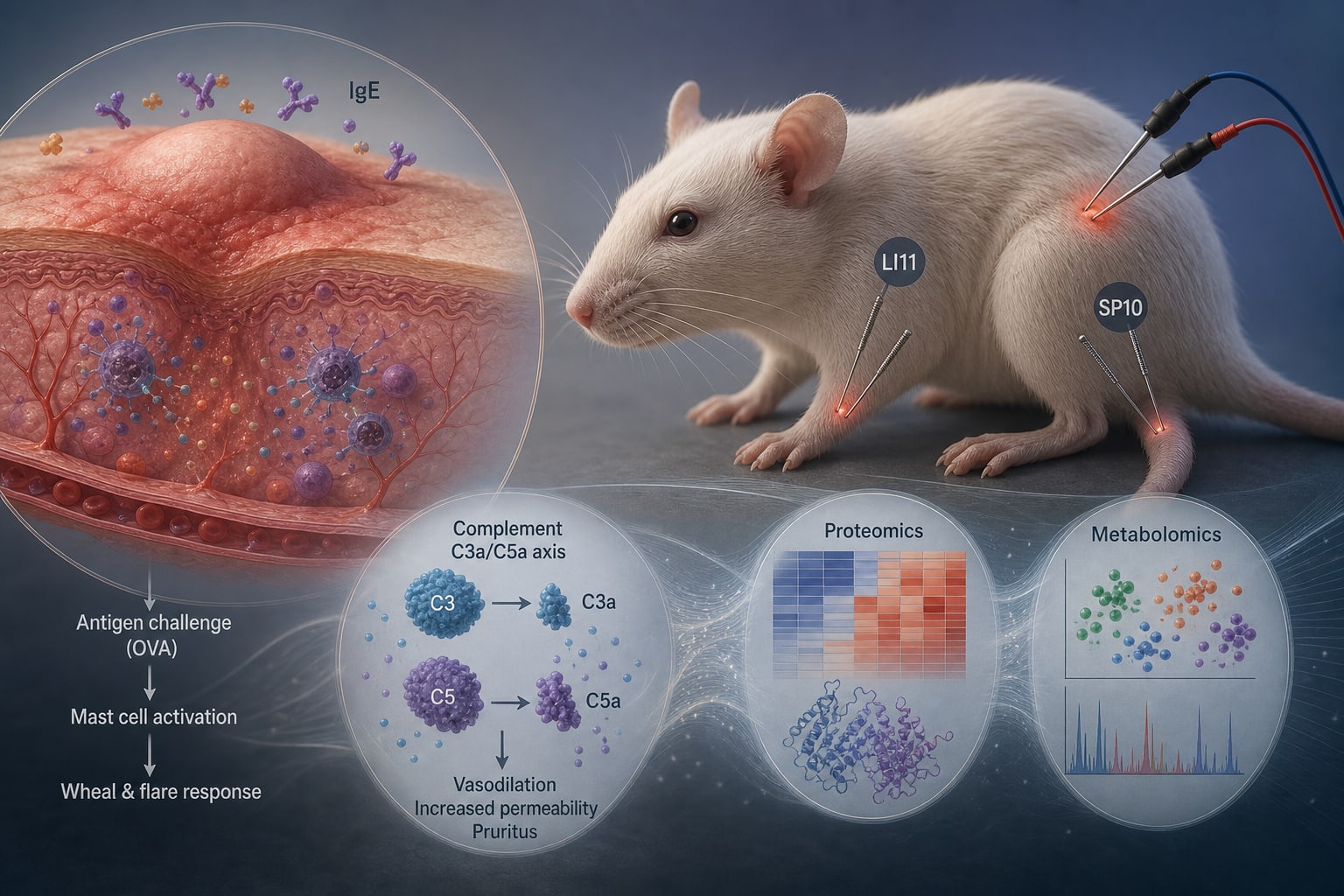
Electroacupuncture at LI11 and SP10 is associated with alleviation of acute urticaria-like reactions in passive cutaneous anaphylaxis: an exploratory analysis of complement-related proteins and multiscale omics - Report - MDSpire
Advertisement
Electroacupuncture at LI11 and SP10 is associated with alleviation of acute urticaria-like reactions in passive cutaneous anaphylaxis: an exploratory analysis of complement-related proteins and multiscale omics
Electroacupuncture at LI11 and SP10 Linked to Reduction of Acute Urticaria-like Symptoms
Overview
This exploratory study investigates the effects of electroacupuncture (EA) at acupoints LI11 and SP10 on acute urticaria-like symptoms in a passive cutaneous anaphylaxis model. Findings indicate that EA treatment is linked to reduced wheal areas, decreased scratching frequencies, and alterations in inflammatory mediators.
Background
Acute urticaria affects approximately 20% of the population and is characterized by wheal formation and pruritus due to IgE-mediated hypersensitivity. Current management primarily involves second-generation antihistamines, but some patients progress to chronic forms and may not respond to standard therapies. Understanding the molecular mechanisms of interventions like electroacupuncture could enhance treatment strategies for acute urticaria.
Data Highlights
Measurement
Result
Wheal Area
Measured reduction
Scratching Frequency
Measured decrease
Vascular Permeability
Measured diminishment
Inflammatory Mediators (IL-6, TNF-α, 5-HT)
Measured reduction
Key Findings
EA treatment at LI11 and SP10 resulted in measured reductions in wheal areas in the PCA model.
Scratching frequencies decreased significantly following EA intervention.
Alterations in lipid and amino acid metabolic pathways were observed post-treatment.
Expression of C3a/C5a and their receptors was decreased in skin tissues after EA.
Serum levels of inflammatory mediators (IL-6, TNF-α, 5-HT) were reduced with EA treatment.
Clinical Implications
The findings indicate that electroacupuncture may modulate inflammatory pathways. Further research is needed to explore the underlying mechanisms.
Conclusion
This study provides evidence that electroacupuncture may alleviate acute urticaria-like symptoms through modulation of inflammatory mediators and metabolic pathways.