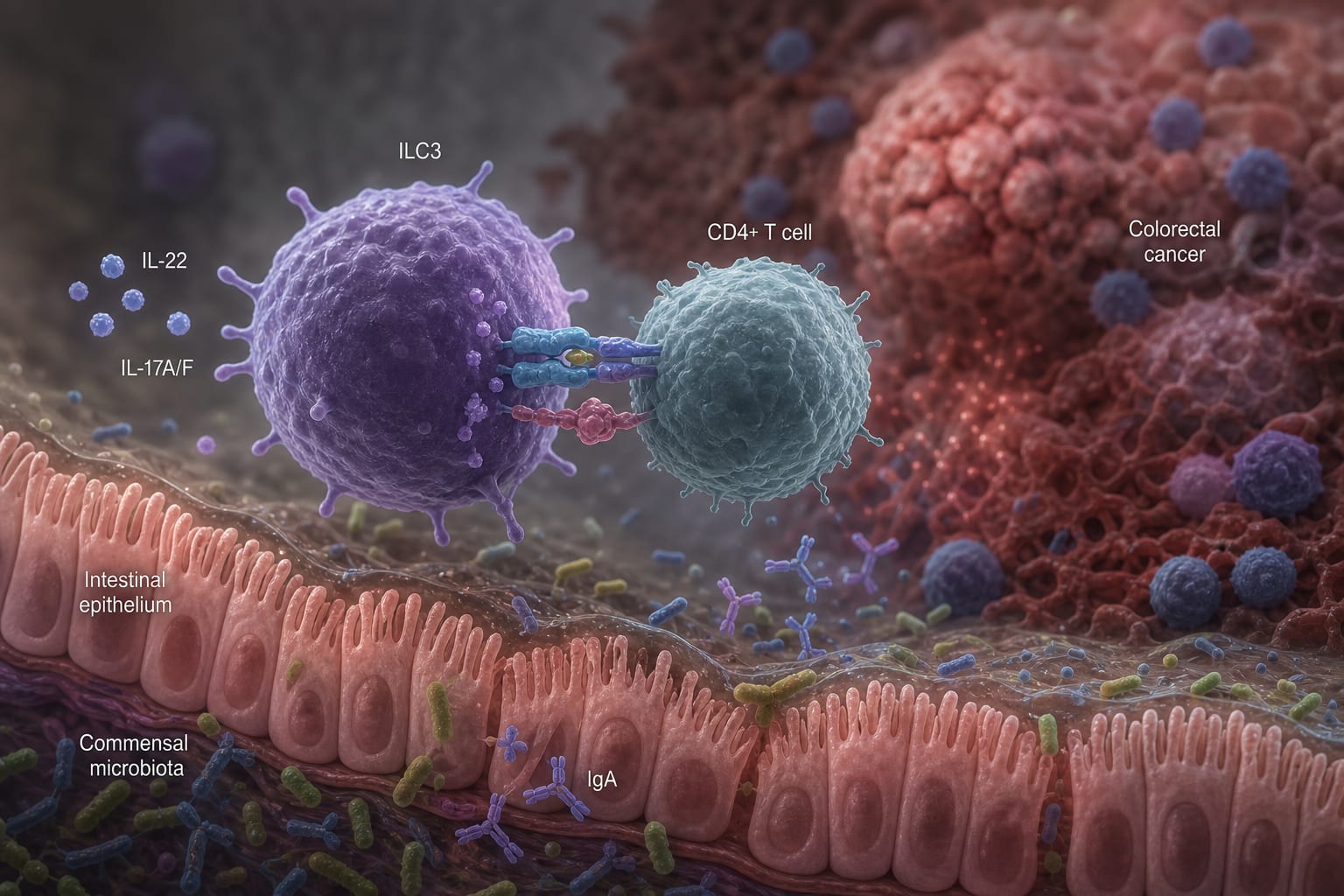
Clinical Report: Antigen Presentation and Functional Adaptability of ILC3 in CRC
Overview
This report discusses the role of group 3 innate lymphoid cells (ILC3) in colorectal cancer (CRC), highlighting their plasticity and MHC II-dependent antigen presentation. The findings suggest that alterations in ILC3 function correlate with aggressive tumor behavior and poor responses to immune checkpoint therapy.
Background
Colorectal cancer is increasingly recognized as a chronic pathological process influenced by the intestinal mucosal ecosystem, including microbiota and immune cells. Understanding the role of ILC3 in this context is crucial, as they are involved in both tissue protection and inflammation, impacting tumor progression and treatment responses.
Data Highlights
No numerical data or trial data provided in the source material.
Key Findings
ILC3 plasticity can lead to both protective and inflammatory states in CRC.
MHC II-dependent antigen presentation by ILC3 is linked to microbiota-directed CD4+ T cell and IgA responses.
Chronic inflammation and dysbiosis in CRC promote barrier-damaging ILC3 programs.
Altered ILC3 function correlates with aggressive tumor behavior and reduced efficacy of immune checkpoint therapies.
Proposed biomarker panels include ILC3 state, barrier integrity, and DEFB1 expression.
Clinical Implications
The findings emphasize the need to consider ILC3 functionality and the mucosal immune environment in CRC management. Targeting cytokine pathways and microbiota composition may offer new therapeutic strategies.
Conclusion
The interplay between ILC3, the epithelium, and microbiota is critical in CRC, influencing tumor progression and treatment outcomes. Further research is needed to explore therapeutic interventions targeting these interactions.