The impact of regressed endometrial hyperplasia on reproductive outcomes following frozen embryo transfer: a propensity score-matched cohort study - Report - MDSpire

The impact of regressed endometrial hyperplasia on reproductive outcomes following frozen embryo transfer: a propensity score-matched cohort study

  • By

  • Qinling Zhu

  • Lizhen Xu

  • Bing Xu

  • Yao Lu

  • Zhe Wei

  • Wenchao Zhang

  • Yiwen Meng

  • Chongwen Shao

  • Mengjia Shi

  • Yaqiong He

  • Jiangan Huang

  • Yuan Wang

  • Jia Qi

  • Ying Ding

  • Yun Sun

  • June 8, 2026

  • 0 min

Share

Clinical Report: Effects of Regressed Endometrial Hyperplasia on Reproductive Success

Overview

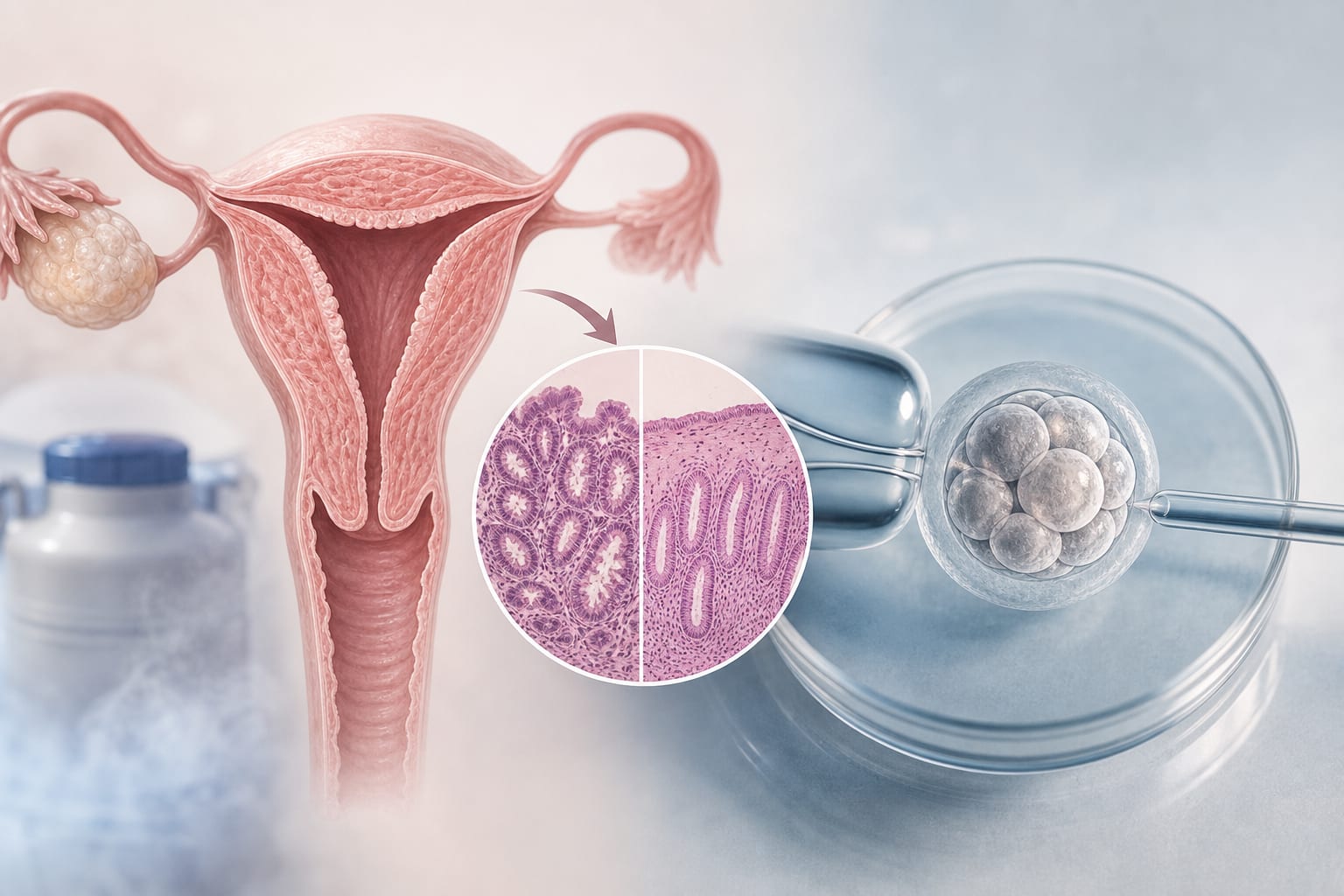
This study evaluates the reproductive outcomes of patients with regressed endometrial hyperplasia (EH) following frozen embryo transfer (FET).

Background

Endometrial hyperplasia (EH) is a condition characterized by abnormal proliferation of endometrial glands, often leading to infertility. The management of EH is crucial, especially in reproductive-aged women.

Data Highlights

OutcomeEH PatientsControl PatientsP-value
Live Birth Rate31.6%49.2%0.002
Clinical Pregnancy Rate44.2%59.2%0.008
Pregnancy Loss Rate40%26.1%0.046

Key Findings

  • Patients with regressed EH had a live birth rate of 31.6% compared to 49.2% in matched controls.
  • Clinical pregnancy rates were 44.2% in EH patients versus 59.2% in controls.
  • The pregnancy loss rate was 40% in EH patients compared to 26.1% in controls.
  • Subgroup analysis indicated a lower live birth rate in EH patients with atypia.
  • Logistic regression identified factors associated with reduced likelihood of live birth.

Clinical Implications

The findings suggest that even after treatment, patients with regressed EH may face challenges in achieving successful pregnancies through FET. Clinicians should consider these factors when counseling patients and developing individualized treatment plans.

Conclusion

Regressed endometrial hyperplasia is associated with poorer reproductive outcomes following frozen embryo transfer, necessitating careful management and counseling for affected patients.

Related Resources & Content

  1. Frontiers in Endocrinology, 2026 -- Outcomes of frozen embryo transfers from a large monocentric cohort (2982 cycles): towards a preferential use of cycles with a corpus luteum for endometrial preparation
  2. The Journal of Clinical Endocrinology & Metabolism, 2025 -- Effects of Negative Pregnancy Experiences in the First IVF Cycle on Future Pregnancy Results
  3. Frontiers in Endocrinology, 2026 -- Impact of GnRH Antagonist Protocols versus Progestin-Primed Ovarian Stimulation on Reproductive Outcomes in Advanced Reproductive Age Women: A Propensity Score-Matched Retrospective Cohort Study
  4. The Journal of Clinical Endocrinology & Metabolism, 2025 -- Impact of Dyslipidemia on Immune Function and Endometrial Receptivity in Women Experiencing Repeated Implantation Failure
  5. ESGO/ESHRE/ESGE fertility-sparing pocket guideline, 2023 -- Fertility-Sparing Treatment
  6. https://guidelines.esgo.org/media/2023/05/Pocket-Guidelines_FERTILITY-SPEARING-TREATMENT.pdf
  7. https://ejgo.org/pdf/10.3802/jgo.2025.36.e111

Original Source(s)

Related Content