Clinical Report: Assessing the Role of Robot-Assisted Gastrectomy in Gastric Cancer Management
Overview
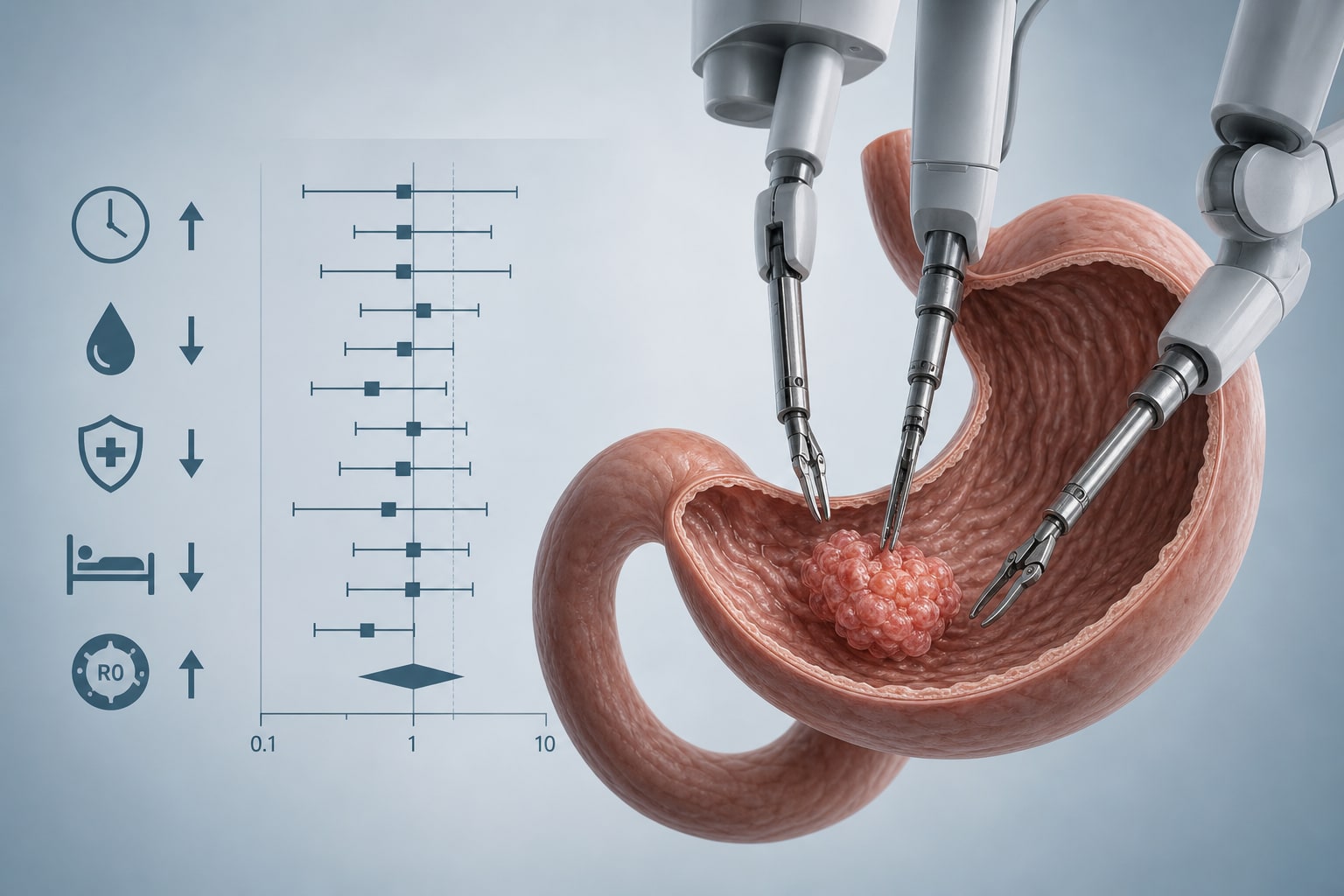
This systematic review and meta-analysis evaluated the clinical outcomes of robot-assisted gastrectomy (RG) compared to open gastrectomy (OG) in gastric cancer management. RG demonstrated advantages in terms of reduced blood loss, shorter hospital stays, and lower complication rates, although it required longer operative times.
Background
Enhance the context regarding the significance of robotic surgery in current treatment standards.
Data Highlights
Outcome
RG
OG
P-value
Operative Time (WMD)
93.4 min longer
-
<0.001
Blood Loss (WMD)
-86.71 ml
-
<0.001
Hospital Stay (WMD)
-3.17 days
-
<0.001
Postoperative Complication Rate (OR)
0.61
-
0.006
R0 Resection Rate (OR)
1.88
-
0.000
Key Findings
RG had a significantly longer operative time compared to OG (WMD: 93.4 min).
RG resulted in significantly less intraoperative blood loss (WMD: -86.71 ml).
Patients undergoing RG had shorter hospital stays (WMD: -3.17 days).
The postoperative complication rate was lower in the RG group (OR: 0.61).
RG achieved a higher R0 resection rate (OR: 1.88).
No significant differences were observed in lymph node retrieval, positive lymph nodes, postoperative mortality, or 5-year survival rates.
Clinical Implications
The findings suggest that RG may be a preferable option for gastric cancer surgery in experienced centers, offering benefits in terms of reduced complications and shorter recovery times. However, the longer operative time should be considered in clinical decision-making.
Conclusion
Reiterate the need for future studies on long-term outcomes and quality of life.