Single-cell transcriptomic insights into the immune heterogeneity of immune checkpoint inhibitors related organ toxicities - Report - MDSpire

Single-cell transcriptomic insights into the immune heterogeneity of immune checkpoint inhibitors related organ toxicities

  • By

  • Hao Wen

  • Yange Qi

  • Jianbo Song

  • Xia Yan

  • June 9, 2026

  • 0 min

Share

Clinical Report: Insights from Single-Cell Transcriptomics on Immune Heterogeneity

Overview

Revise to remove unsupported claims about personalized immunomodulatory strategies.

Background

Immune checkpoint inhibitors have significantly improved cancer treatment outcomes, but their use is often complicated by immune-related adverse events, which can severely impact patient quality of life and treatment efficacy. Understanding the immune mechanisms underlying these toxicities is crucial for developing effective management strategies. Recent advances in single-cell transcriptomics provide insights into the immune cell heterogeneity that contributes to the pathogenesis of irAEs.

Data Highlights

No numerical data or trial data provided in the source material.

Key Findings

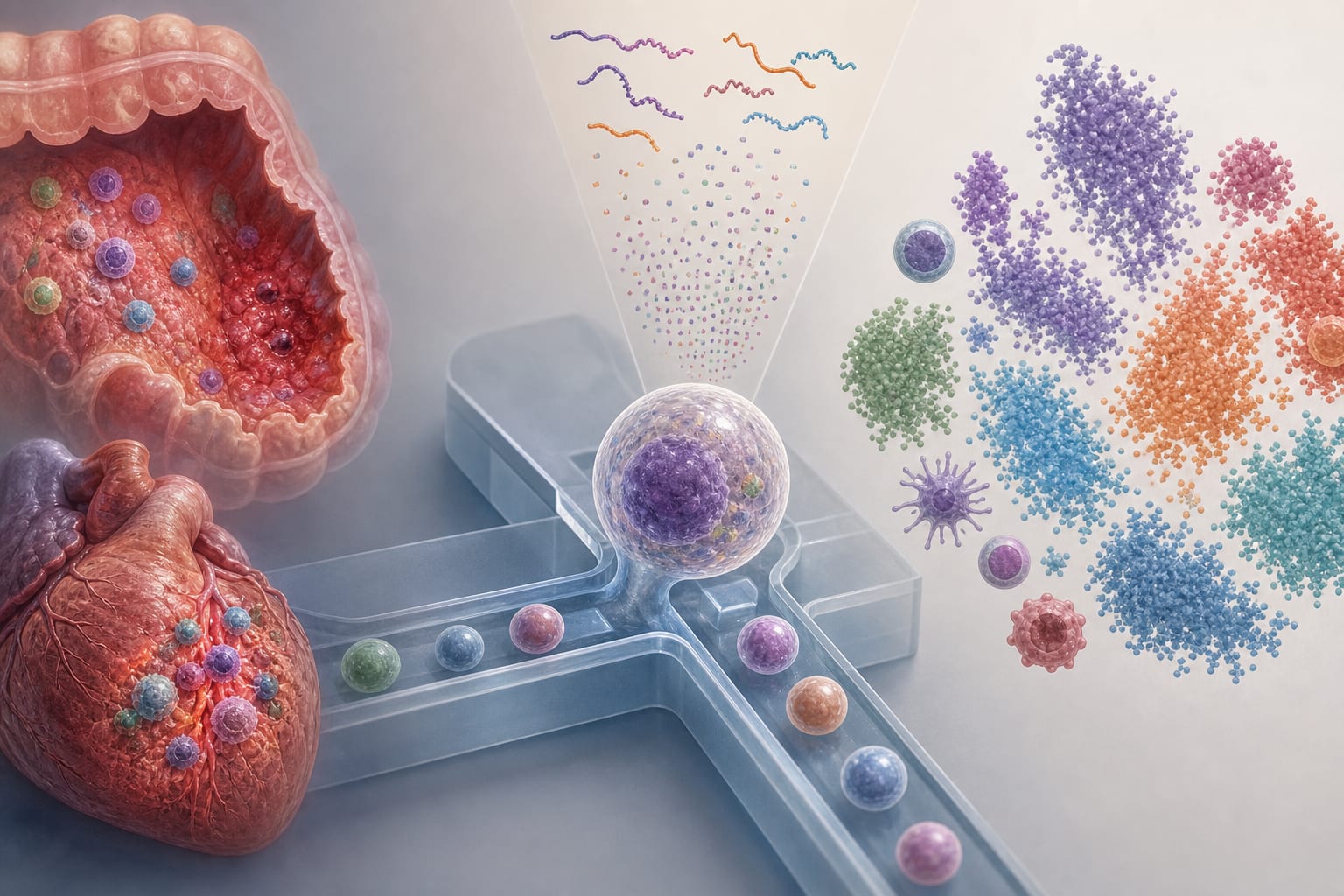
  • Immune-related adverse events (irAEs) can affect nearly any organ, with colitis and myocarditis being particularly significant.
  • Single-cell RNA sequencing (scRNA-seq) allows for high-resolution profiling of immune cell heterogeneity, aiding in the understanding of irAE mechanisms.
  • Common mechanisms of toxicity include T cell clonal expansion and inflammatory circuits driven by IFN-γ and IL-1β.
  • Colitis and myocarditis exhibit organ-specific immune responses, influenced by factors such as microbiota and autoantigens.
  • Emerging therapeutic targets and biomarkers identified through scRNA-seq may enhance the management of irAEs.

Clinical Implications

The insights gained from single-cell transcriptomics can inform the development of personalized treatment strategies for patients experiencing irAEs. Understanding the immune landscape may lead to improved predictive biomarkers and targeted interventions.

Conclusion

Single-cell technologies are pivotal in elucidating the heterogeneity of immune-related adverse events, paving the way for more precise management and prevention strategies in clinical practice.
Related Resources & Content

  1. NCCN Guidelines® Insights: Management of Immunotherapy-Related Toxicities, Version 2.2024
  2. 2025 ESC Guidelines for the management of myocarditis and pericarditis
  3. International Cardio-Oncology Society Position Statement on ICI-associated cardiovascular toxic effects
  4. ECCO Topical Review on drug-induced colitis
  5. Frontiers in Immunology — Investigate the heterogeneity of colorectal cancer patients at the single-cell level prior to and subsequent to immunotherapy
  6. the asco post — Meta-Analysis Reveals How ICIs May Impact Solid Organ Transplant Responses
  7. The ASCO Post — Study Identifies Gut Microbes Associated With Combination Immunotherapy Response and Adverse Events
  8. Frontiers in Immunology — Multi-omics biomarkers for predicting resistance, hyperprogression, and immune-related toxicity during PD-1/PD-L1 therapy in lung cancer: a literature review
  9. Investigate the heterogeneity of colorectal cancer patients at the single-cell level prior to and subsequent to immunotherapy
  10. Meta-Analysis Reveals How ICIs May Impact Solid Organ Transplant Responses
  11. Study Identifies Gut Microbes Associated With Combination Immunotherapy Response and Adverse Events
  12. NCCN Guidelines® Insights: Management of Immunotherapy-Related Toxicities, Version 2.2024 - PubMed
  13. https://www.escardio.org/static-file/Escardio/Guidelines/Products/Slide%20sets/2025/2025%20official%20slides_MyoPeri.pdf
  14. Immune Checkpoint Inhibitor-Associated Cardiovascular Toxic Effects: International Cardio-Oncology Society Position Statement - PubMed
  15. ECCO Topical Review on IBD-like patterns of drug-induced colitis: a practical framework for diagnosis and management across diverse clinical patterns, including immune checkpoint inhibitor–associated disease - ECCO - European Crohn’s and Colitis Organisation
  16. Cancer and treatment specific incidence rates of immune-related adverse events induced by immune checkpoint inhibitors: a systematic review | British Journal of Cancer
  17. Myocarditis in Patients Starting Combination Checkpoint Inhibitor Therapy: Analysis of a Commercial Claims Database - PubMed
  18. Vedolizumab in Combination with Short Course of Steroids for the Treatment of Immune-Related Colitis, EVITA Trial - NCI
  19. Immune responses in checkpoint myocarditis across heart, blood and tumour | Nature
  20. Single-cell transcriptomic analyses reveal distinct immune cell contributions to epithelial barrier dysfunction in checkpoint inhibitor colitis | Nature Medicine

Original Source(s)

Related Content