Activation of the Serum Complement System During Normal Healing and Atrophic Non-Union
Overview
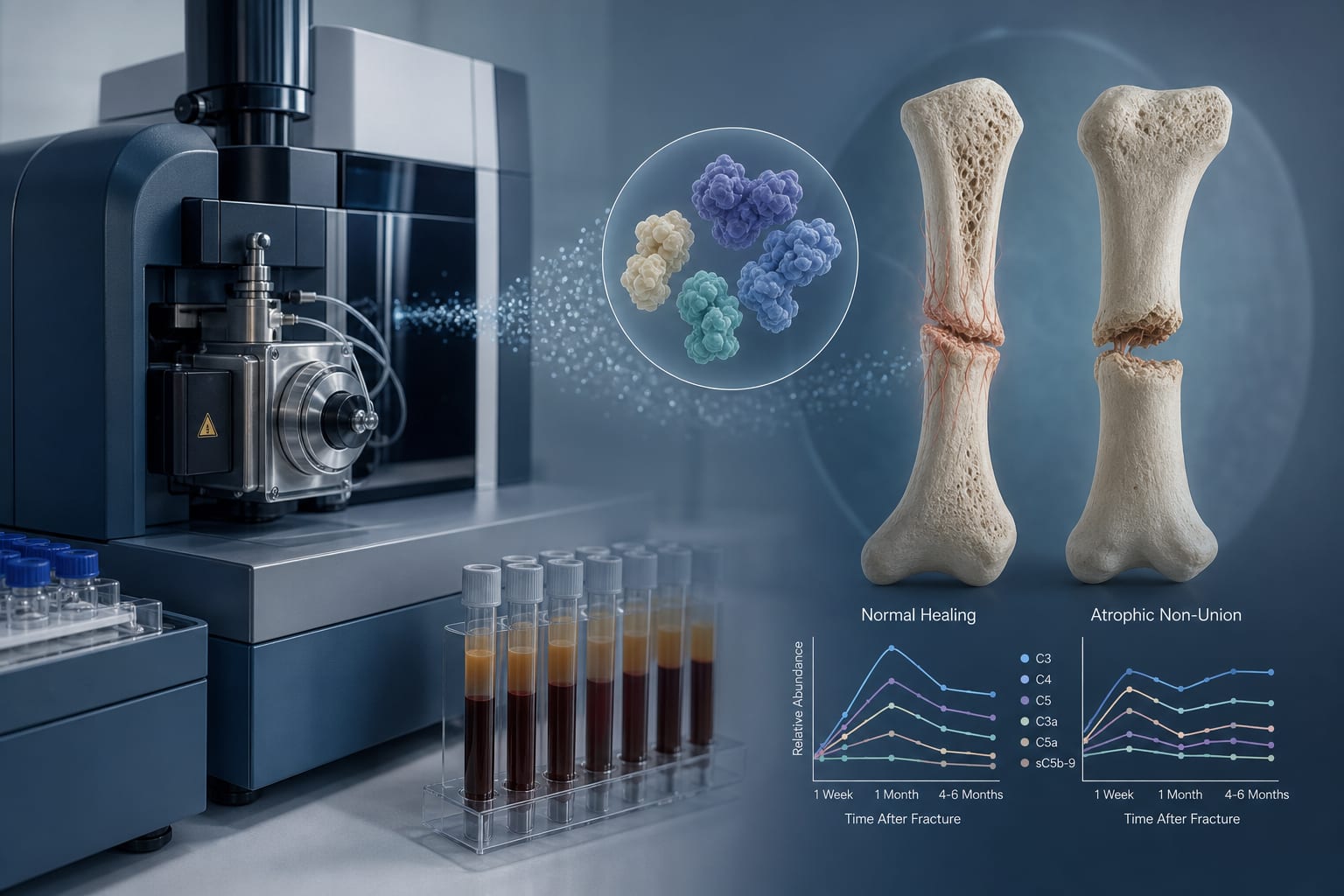
This study investigates the activation levels of the serum complement system during the healing phases of long bone fractures in humans, highlighting significant differences between normal healing and non-union cases. Elevated levels of specific complement proteins during the inflammatory phase were observed, suggesting their potential as biomarkers for healing trajectories.
Background
Understanding the complement system's role in fracture healing is crucial, as it is integral to the inflammatory response and tissue regeneration. While most fractures heal normally, 5-10% result in non-union, which poses significant clinical challenges. Identifying biomarkers associated with healing can improve management strategies for patients at risk of non-union.
Data Highlights
Complement Component
Phase
Level
C1s
Inflammation
Increased
C1r
Inflammation
Increased
C3
Inflammation
Increased
C3a
Inflammation
Increased
C9
Inflammation
Increased
MASP1
Non-union
Higher than normal healers
Key Findings
The classical complement pathway components C1s and C1r were significantly elevated during the inflammatory phase of normal healing.
Serum levels of C3, C3a, and C9 were significantly higher in the inflammatory phase compared to later phases.
No significant differences were found in other complement components (CFB, CFH, CFI, FCN2, FCN3) across healing phases.
In patients with fracture non-union, MASP1 levels were significantly higher than in normal healers and healthy controls.
IPA analysis linked MASP1 to damage in bone and cartilage, indicating its role in abnormal healing.
Clinical Implications
The findings suggest that monitoring serum complement levels, particularly during the inflammatory phase, may provide insights into fracture healing trajectories. Elevated MASP1 levels in non-union cases could serve as a potential biomarker for identifying patients at risk of delayed healing.
Conclusion
This study underscores the importance of the complement system in fracture healing and its potential as a therapeutic target and biomarker for managing fracture non-union.