Clinical Report: Regulatory Pathways in Tissue Remodeling Across Organs
Overview
This report reviews the complex signaling networks involved in tissue remodeling, highlighting both canonical and emerging mechanisms that contribute to pathological conditions across different organs. Understanding these pathways is crucial for developing targeted therapeutic strategies.
Background
Tissue remodeling is a fundamental process that allows organs to adapt to environmental changes, but dysregulation can lead to chronic diseases. Identifying the shared molecular mechanisms underlying remodeling across various tissues can enhance our understanding of disease progression and inform therapeutic interventions. This topic is particularly relevant given the increasing prevalence of chronic inflammatory conditions.
Data Highlights
No numerical data provided in the source material.
Key Findings
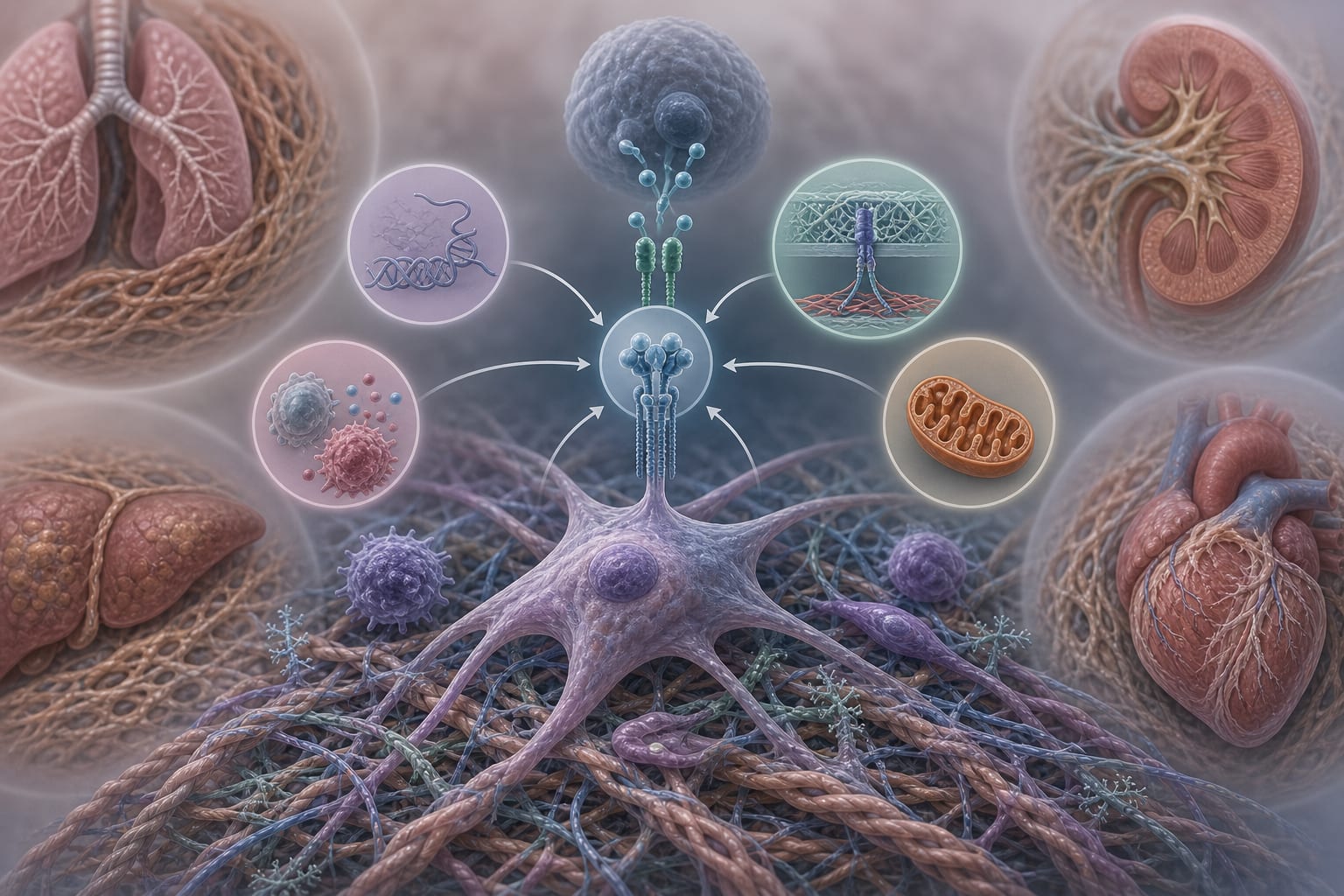
Pathological tissue remodeling is driven by persistent inflammation and immune cell infiltration.
Core pathways such as TGF-β signaling and the MMPs/TIMPs system are pivotal in remodeling across multiple tissues.
Mechanical signals are transduced through the integrin-YAP/TAZ axis, influencing cellular responses.
Metabolic reprogramming via the glycolysis-HIF-mTOR axis is essential for cell activation during remodeling.
Non-coding RNAs play a significant role in the regulation of tissue remodeling processes.
Clinical Implications
Clinicians should be aware of the shared mechanisms of tissue remodeling to better understand the pathophysiology of chronic diseases. Targeting these pathways may offer new therapeutic strategies, particularly in conditions characterized by excessive fibrosis and inflammation.
Conclusion
A comprehensive understanding of the regulatory pathways in tissue remodeling can facilitate the development of precision medicine approaches aimed at mitigating chronic disease progression.