FGF7 Reduces Airway Inflammation and Epithelial Damage in a COPD Model
Overview
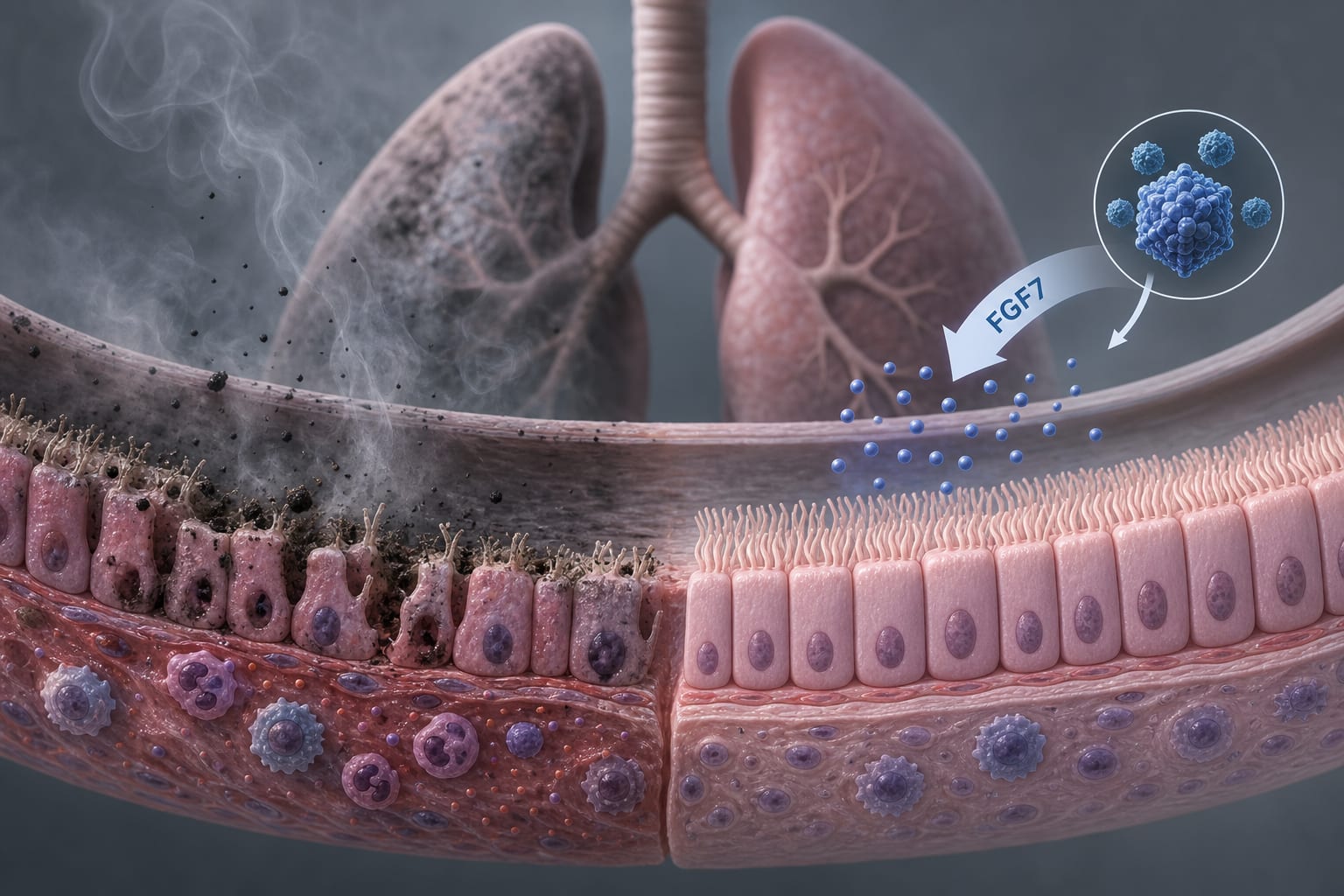
This study investigates the role of fibroblast growth factor 7 (FGF7) in mitigating airway inflammation and epithelial damage in a COPD model induced by cigarette smoke. FGF7 administration improved lung function and reduced inflammatory markers, suggesting its potential as a therapeutic target in COPD management.
Background
Chronic obstructive pulmonary disease (COPD) is a leading cause of morbidity and mortality worldwide, characterized by chronic airway inflammation and epithelial injury. Cigarette smoke is a primary risk factor that exacerbates airway epithelial damage, contributing to disease progression. Understanding the mechanisms that protect airway epithelium is crucial for developing effective therapies.
Data Highlights
Parameter
Control
COPD
FGF7 Treatment
IL-1β Levels
Low
High
Reduced
IL-6 Levels
Low
High
Reduced
TNF-α Levels
Low
High
Reduced
Collagen Deposition
Minimal
Significant
Decreased
Lung Function (MVb/PIFb/EF50)
Normal
Impaired
Improved
Key Findings
FGF7 levels were increased in lung tissues of COPD patients but decreased in serum.
CS exposure in rats led to significant airway inflammation and elevated cytokine levels.
Administration of AAV-FGF7 improved lung function and reduced inflammatory markers in BALF.
FGF7 activated signaling pathways including ADAM17, EGFR, ERK1/2, p38, and AKT.
Knockdown of FGF7 exacerbated airway inflammation and epithelial damage.
Clinical Implications
The findings suggest that FGF7 may serve as a novel therapeutic target for reducing airway inflammation and promoting epithelial repair in COPD patients. Clinicians should consider the potential of FGF7-based therapies in managing COPD-related airway damage.
Conclusion
FGF7 plays a protective role against cigarette smoke-induced airway injury and inflammation, highlighting its potential as a therapeutic agent in COPD management.