Chronic military stress and glandular epithelial tumor biology: an integrative neuroendocrine–inflammatory framework with insights from microgravity gene discovery - Report - MDSpire
Advertisement
Chronic military stress and glandular epithelial tumor biology: an integrative neuroendocrine–inflammatory framework with insights from microgravity gene discovery
Clinical Report: The Impact of Prolonged Military Stress on Tumor Dynamics
Overview
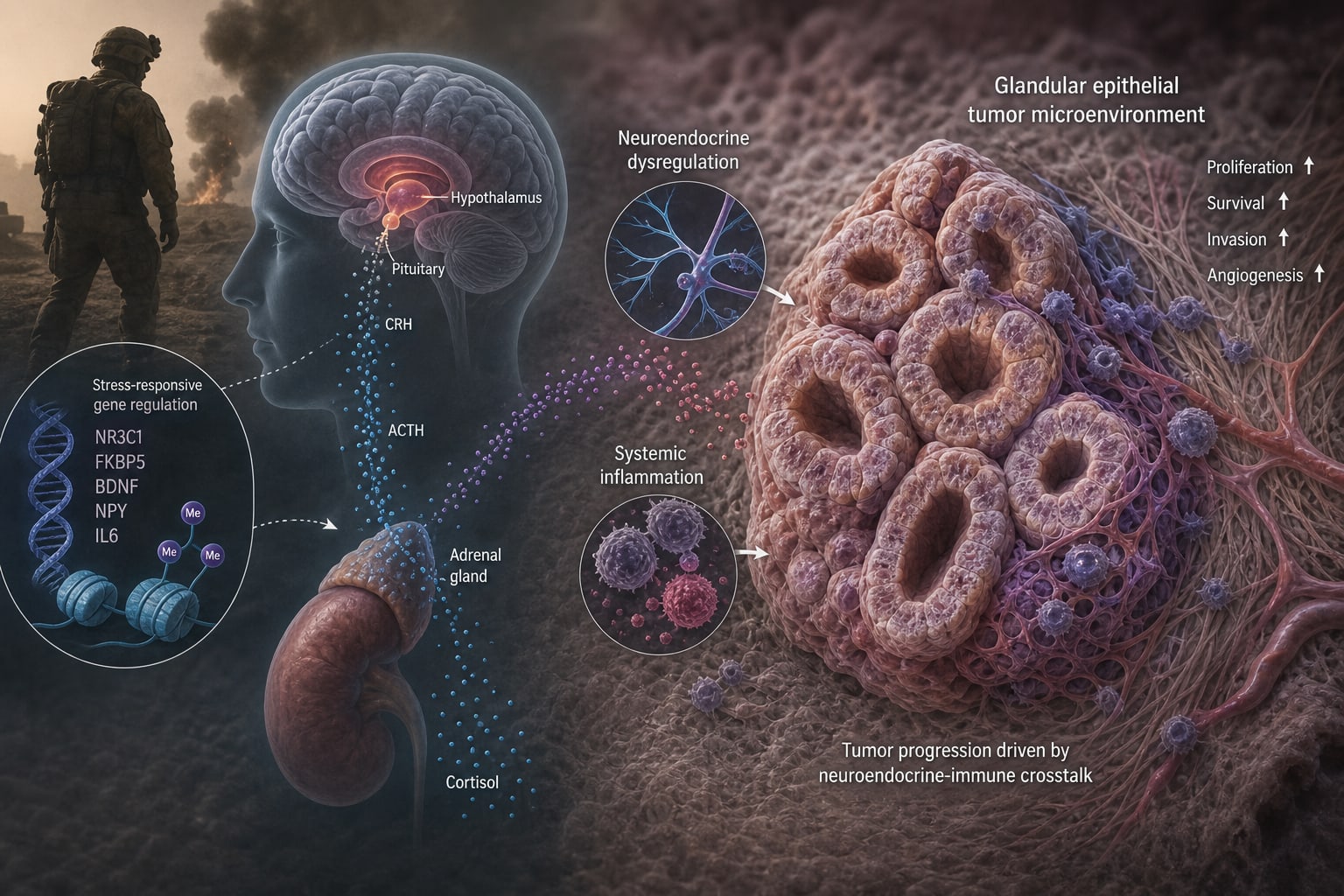
This report examines the relationship between prolonged military stress and the dynamics of glandular epithelial tumors, particularly in the context of neuroendocrine and inflammatory pathways. Key molecules involved in this process include glucocorticoid receptors and interleukin-6, which may predispose individuals to conditions such as PTSD and oncogenesis.
Background
Chronic military stress is a significant concern due to its potential to trigger psychological conditions like PTSD, which can have systemic effects beyond mental health. The interplay between stress and cancer biology is increasingly recognized, with evidence suggesting that stress may influence tumor dynamics through neuroendocrine and inflammatory mechanisms. Understanding these connections is crucial for developing targeted interventions in high-risk populations.
Data Highlights
No specific numerical data or trial results were provided in the source material.
Key Findings
Chronic military stress can lead to dysregulation of neuroendocrine and inflammatory pathways.
Key molecules such as NR3C1, FKBP5, BDNF, NPY, and IL6 are implicated in the stress response and tumor dynamics.
Prolonged stress exposure may contribute to the development of PTSD, which is linked to oncogenic pathways.
Glandular epithelial tumors, including HCC and PDAC, show sensitivity to changes in the systemic inflammatory environment.
Microgravity research has identified oncogenic vulnerabilities that may be exploited under chronic stress conditions.
Clinical Implications
Healthcare providers should be aware of the potential link between chronic stress and cancer risk in military populations. Screening for PTSD and integrating psychosocial support into cancer care pathways may improve outcomes for affected individuals. Understanding the biological mechanisms at play can inform the development of predictive biomarkers and targeted therapies.
Conclusion
The intersection of chronic military stress and tumor dynamics underscores the need for a comprehensive approach to managing both psychological and oncological health in service members. Further research is essential to clarify these relationships and enhance clinical practices.
by David Laván, Natalia Argüelles, Rosa Rea, José Morales, Sofia Montes, Daniel Huaman, Alexis Lluncor, Juan Moyano, Milton Peña, Vilma Herencia-Reyes, Alcides Guerra, Gabriela Calderón, José M. Vela-Ruiz, Aly Gallo