Tetrandrine enhances anti-PD-1 immunotherapeutic efficacy for hepatocellular carcinoma by activating STING/TBK1/IRF3 pathway - Report - MDSpire

Tetrandrine enhances anti-PD-1 immunotherapeutic efficacy for hepatocellular carcinoma by activating STING/TBK1/IRF3 pathway

  • By

  • Biao Zheng

  • Guojun Yao

  • Yuli Pang

  • Jielong Luo

  • Zhiyong Yang

  • Fengmin Xiu

  • Chaohui Zhen

  • Rui Liang

  • June 9, 2026

  • 0 min

Share

Tetrandrine Boosts the Effectiveness of Anti-PD-1 Immunotherapy in HCC

Overview

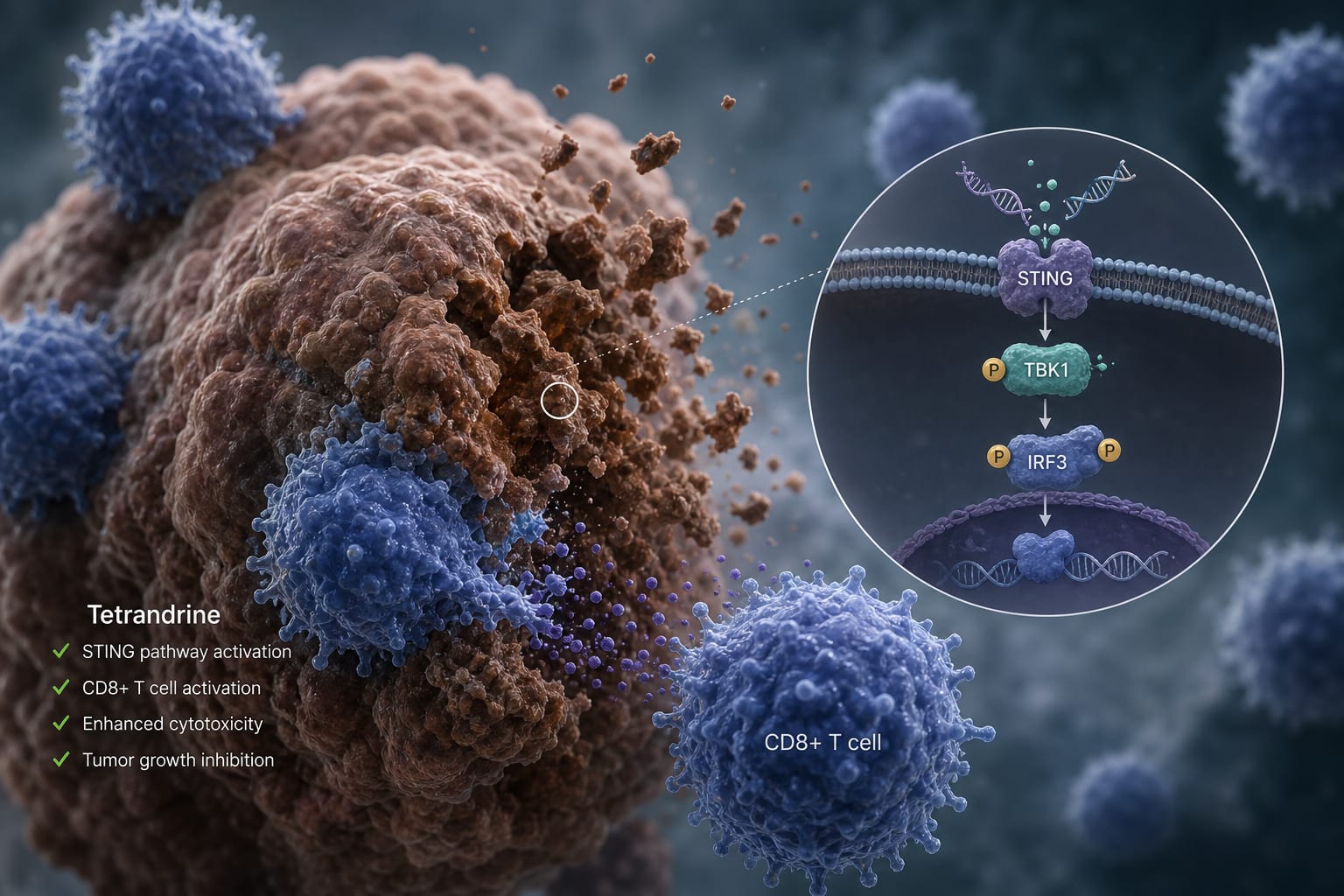
Tetrandrine (TET) enhances the efficacy of anti-PD-1 immunotherapy in hepatocellular carcinoma (HCC) by activating the STING/TBK1/IRF3 signaling pathway. This combination therapy significantly inhibits tumor growth and promotes CD8+ T cell activation.

Background

Hepatocellular carcinoma (HCC) poses a significant global health risk with high mortality rates. Traditional treatment methods have limited efficacy, and the advent of immunotherapy has not universally improved outcomes. Understanding how to enhance immunotherapy effectiveness is crucial for improving patient prognosis.

Data Highlights

ParameterEffect of TET
HCC GrowthSignificantly inhibited
CD8+ T Cell ActivationPromoted
IFN-γ and TNF-α SecretionEnhanced
STING ActivationConfirmed
Tumor VolumeReduced with TET+anti-PD-1

Key Findings

  • Tetrandrine significantly inhibits HCC growth and induces apoptosis.
  • TET promotes CD8+ T cell activation, proliferation, and cytotoxicity.
  • TET enhances secretion of IFN-γ and TNF-α by CD8+ T cells.
  • TET activates the STING/TBK1/IRF3 signaling pathway.
  • The combination of TET and anti-PD-1 shows a significant synergistic anti-tumor effect.

Clinical Implications

The findings suggest that Tetrandrine may serve as a valuable adjunct to anti-PD-1 therapy in HCC treatment. Clinicians may consider this combination to enhance immune responses and improve patient outcomes.

Conclusion

Tetrandrine enhances the effectiveness of anti-PD-1 immunotherapy in HCC through the activation of key immune signaling pathways, warranting further investigation into its clinical application.

Related Resources & Content

  1. Morita et al, Cancer Immunology Research, 2024 -- Improving Hepatocellular Carcinoma Outcomes Through Enhanced Immunotherapy
  2. NIH, Nature Medicine, 2025 -- Neoantigen-Selected TILs Boost Response to Immunotherapy in Heavily Pretreated GI Cancers
  3. Blood Cancer Journal, 2014 -- The stimulation of PD-L1-specific cytotoxic T lymphocytes can both directly and indirectly enhance antileukemic immunity
  4. The ASCO Post — The Future of Immunotherapy: Building on Checkpoint Blockade
  5. EASL Clinical Practice Guidelines on the management of hepatocellular carcinoma - Journal of Hepatology
  6. STRIDE in Unresectable HCC 5-Year Overall Survival Results From HIMALAYA - The ASCO Post
  7. Inhibiting B cells enhances the efficacy of STING agonism or immune checkpoint blockade in hepatocellular carcinoma | Nature Communications

Original Source(s)

Related Content