Clinical Report: Understanding Follicular Development in the Menstrual Cycle's Follicular Phase
Overview
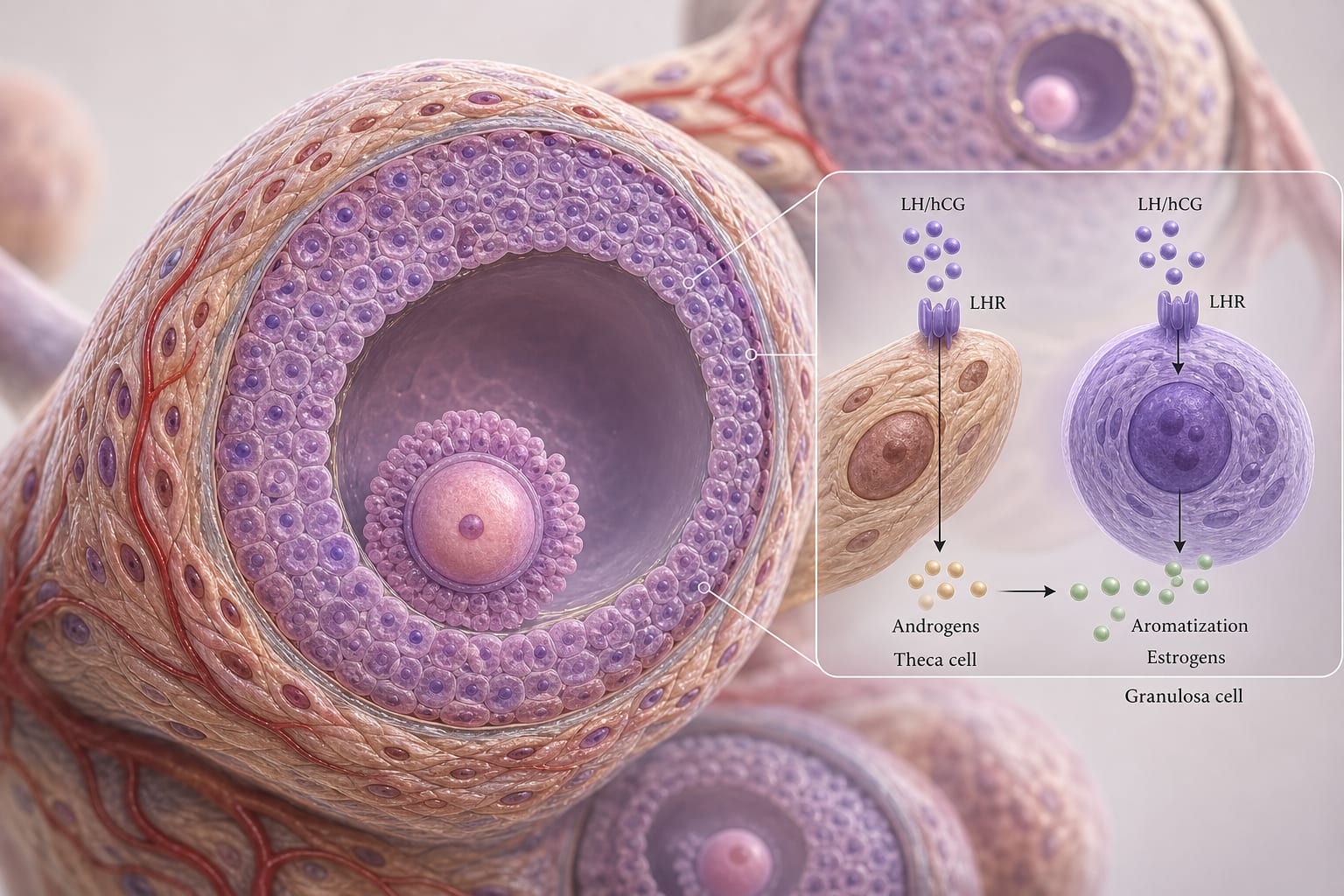
This report examines the role of luteinizing hormone receptor (LHR) function in follicular development during the menstrual cycle. Findings from the Rainbow RCT indicate that exogenous LH-like activity may adversely affect reproductive outcomes, highlighting the need for further investigation into LHR dynamics in ovarian stimulation.
Background
Follicular development is crucial for successful ovulation and fertility, with LHR playing a significant role in this process. Despite the long-standing use of LH-like activity in ovarian stimulation protocols, recent trials have shown inconsistent benefits, indicating a gap in understanding LHR's physiological role. Clarifying LHR function could enhance ovarian stimulation strategies and improve reproductive outcomes.
Data Highlights
No numerical data available.
Key Findings
In the Rainbow RCT, increasing doses of recombinant hCG (rhCG) led to a dose-dependent reduction in good-quality blastocysts and ongoing pregnancy rates.
Androstenedione, 17-OH-progesterone, testosterone, and oestradiol levels increased with higher rhCG doses, while progesterone, inhibin-A, and inhibin-B levels decreased.
Granulosa cells (GCs) exhibited altered function due to rhCG exposure, despite theca cells (TCs) maintaining responsiveness.
LHR expression and signaling differ between GCs and TCs, suggesting distinct regulatory mechanisms during folliculogenesis.
Constant exposure to rhCG may disrupt normal receptor dynamics, affecting GC function.
Current guidelines recommend individualized approaches to gonadotropin use in ovarian stimulation, emphasizing the limited benefit of routine LH supplementation.
Clinical Implications
Healthcare professionals should consider the implications of LHR dynamics when designing ovarian stimulation protocols. The findings suggest that reliance on exogenous LH-like activity may not yield the expected benefits and could potentially hinder reproductive outcomes.
Conclusion
The insights from the Rainbow RCT underscore the complexity of LHR function in follicular development, necessitating further research to optimize ovarian stimulation strategies and improve fertility treatments.
Analysis of England’s multicancer early detection screening trial found modest, temporary diagnostic delays in participating regions, adding to concerns about health system effects and the evidence base for population-level blood-based cancer screening.