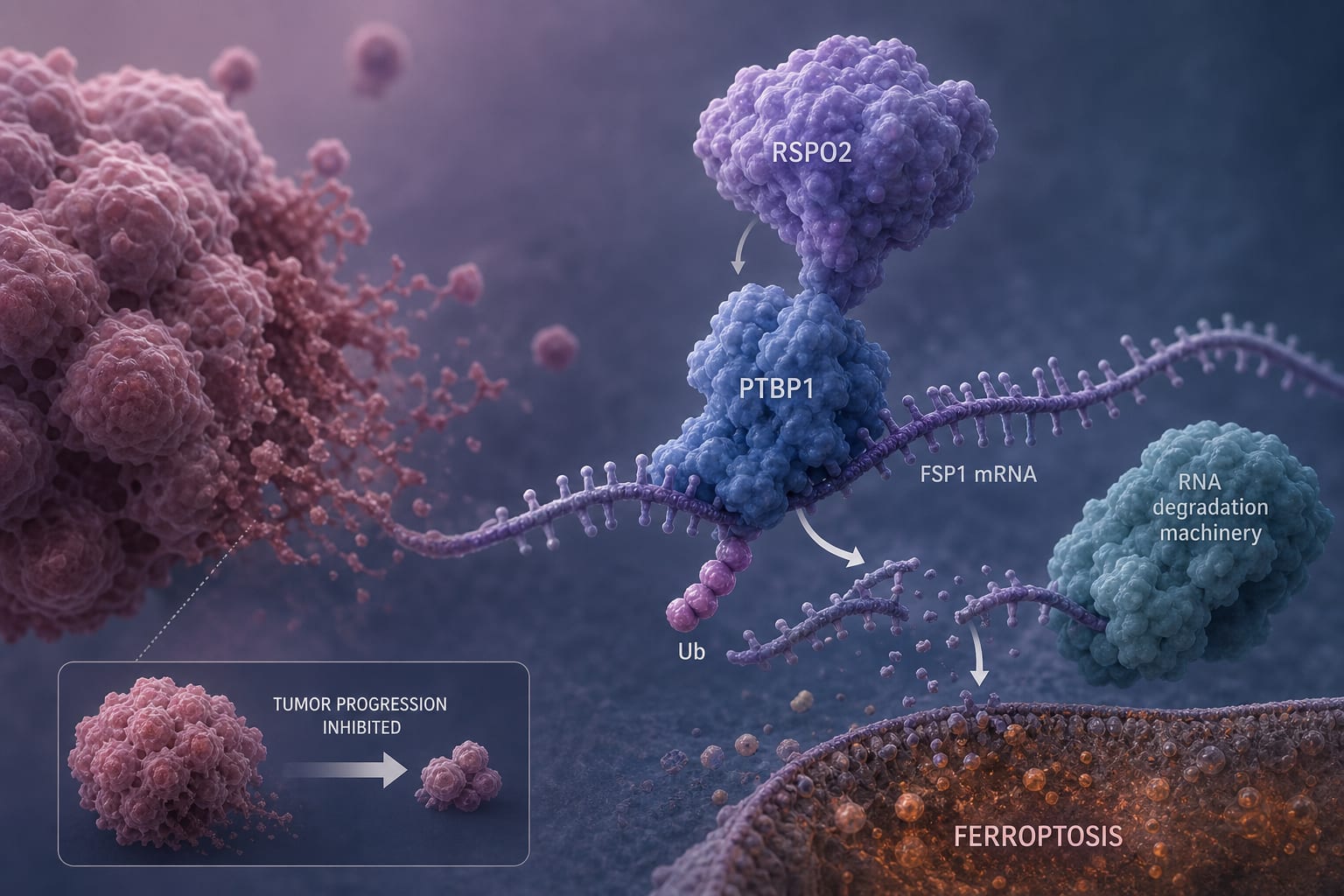
RSPO2-induced ferroptosis via PTBP1-mediated FSP1 mRNA decay suppresses breast cancer progression
-
By
-
Shuyun Jiang
-
Hongwei Ma
-
Zhanwei Du
-
Zhijun Ma
-
Xiaowu Wang
-
June 9, 2026
-
Clinical Scorecard: Ferroptosis Induction by RSPO2 Through PTBP1-Dependent FSP1 mRNA Degradation Inhibits Progression of Breast Cancer
At a Glance
| Category | Detail |
|---|
| Condition | |
| Key Mechanisms | RSPO2 downregulates PTBP1, leading to decreased FSP1 mRNA stability. |
| Target Population | Patients with breast cancer with high RSPO2 expression. |
| Care Setting | |
Key Highlights
- RSPO2 expression is downregulated in malignant breast cancer tissues.
- Restoring RSPO2 suppresses cell proliferation, migration, and invasion.
- RSPO2 recruits TRIM21 to degrade PTBP1, reducing FSP1 mRNA stability.
- Ferroptosis is triggered by RSPO2 overexpression, indicated by ROS accumulation and GSH depletion.
Guideline-Based Recommendations
Diagnosis
- Assess RSPO2 expression in breast cancer subtypes.
Management
- Consider targeting the RSPO2/PTBP1/FSP1 axis.
Monitoring & Follow-up
- Monitor ferroptosis markers in treatment response.
Risks
- Evaluate potential for therapeutic resistance.
Patient & Prescribing Data
Patients with breast cancer.
Targeting RSPO2 may enhance ferroptosis.
Clinical Best Practices
- Incorporate molecular profiling to guide treatment decisions.
Related Resources & Content