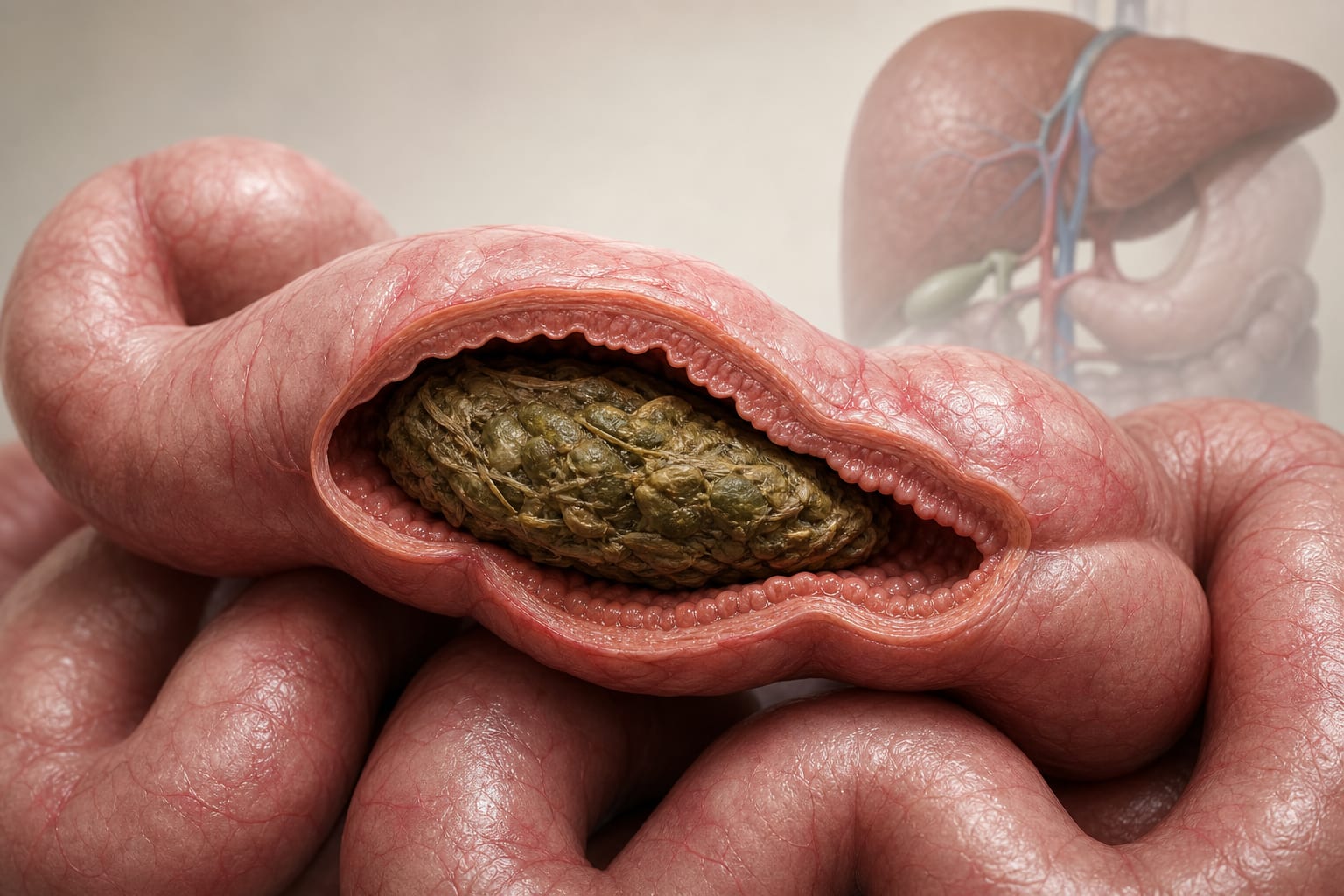
Unusual cause of small bowel obstruction in a liver transplant recipient: a case report and focused literature review
-
By
-
Anastasia Sotiropoulou
-
David Martin
-
Julien Vionnet
-
Amaniel Kefleyesus
-
June 8, 2026
-
Clinical Scorecard: Atypical Etiology of Small Bowel Obstruction in a Liver Transplant Patient: Case Study and Targeted Literature Review
At a Glance
| Category | Detail |
|---|
| Condition | |
| Key Mechanisms | Atypical etiologies in transplant recipients due to immunosuppression, altered gastrointestinal anatomy, and phytobezoars. |
| Target Population | |
| Care Setting | |
Key Highlights
- Phytobezoar-induced SBO identified in a liver transplant recipient.
- Intraoperative ICG fluorescence used to assess bowel viability.
- Bezoars accounted for 5 out of 7 SBO cases in reviewed literature.
- Importance of individualized dietary counseling for long-term follow-up.
Guideline-Based Recommendations
Diagnosis
- Consider atypical causes of SBO in transplant recipients.
- Use imaging studies like contrast-enhanced CT for diagnosis.
Management
- Early surgical exploration is warranted when conservative management fails.
- Use of intraoperative ICG fluorescence can help avoid unnecessary bowel resection.
Monitoring & Follow-up
- Monitor for signs of bowel ischemia and complications postoperatively.
Risks
- Delayed recognition of SBO may lead to bowel ischemia and resection.
- Consider dietary counseling to prevent bezoar formation.
Patient & Prescribing Data
Individualized dietary counseling should be considered in long-term follow-up to prevent SBO.
Clinical Best Practices
- Maintain a high index of suspicion for SBO in transplant patients.
- Consider dietary habits that may predispose to bezoar formation.
- Utilize imaging studies for accurate diagnosis of SBO.
Related Resources & Content