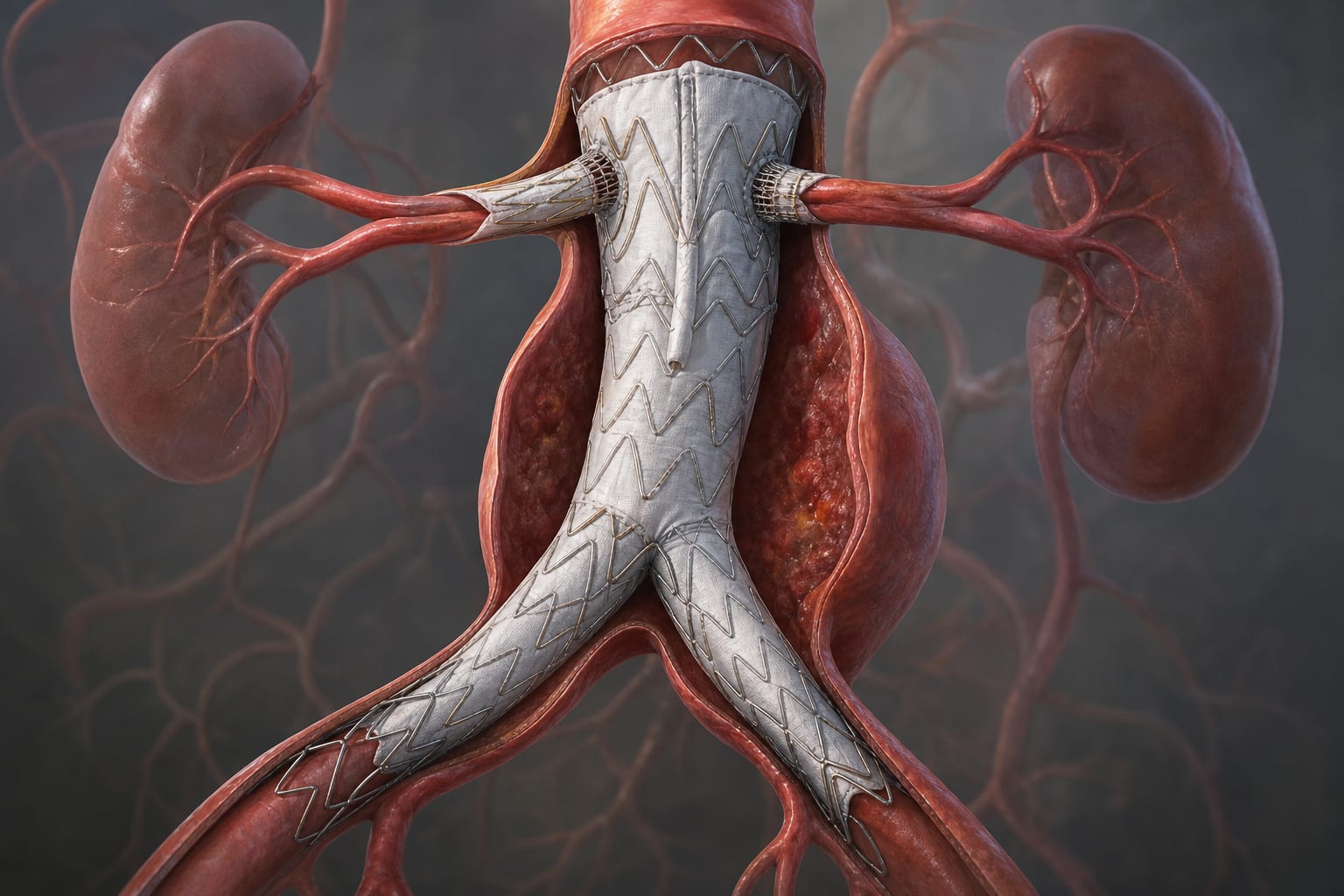
Endovascular Conversion of a Failed Fenestrated Anaconda Endograft Using a Branched Custom-Made Device
-
By
-
Alexia-Vasiliki Amvrazi
-
Baban Assaf
-
Natasha Hasemaki
-
Jan Stana
-
Ryan Gouveia E Melo
-
Nikolaos Tsilimparis
-
June 8, 2026
-
Clinical Scorecard: Conversion of a Failed Fenestrated Anaconda Endograft via Endovascular Approach Utilizing a Custom Branched Device
At a Glance
| Category | Detail |
|---|
| Condition | Type Ia endoleak after fenestrated endovascular aneurysm repair (fEVAR) |
| Key Mechanisms | Endovascular conversion using a custom branched device |
| Target Population | Patients with complex abdominal aortic pathologies and previous fEVAR failures |
| Care Setting | Multidisciplinary aortic board in a hospital setting |
Key Highlights
- Endovascular repair is preferred for high surgical risk patients with complex aortic pathologies.
- The Anaconda endograft allows repositioning and has specific design features.
- Type Ia endoleaks are a notable complication of fEVAR.
- Custom-made branched devices can address anatomical challenges in failed fEVAR cases.
- Close follow-up and timely management are critical for long-term treatment success.
Guideline-Based Recommendations
Diagnosis
- Monitor for type Ia endoleaks post-fEVAR.
Management
- Consider endovascular approaches for failed fEVAR cases.
Monitoring & Follow-up
- Regular imaging follow-up to assess for complications.
Risks
- Increased risk of reinterventions and complications in high-risk patients.
Patient & Prescribing Data
High surgical risk patients with complex abdominal aortic aneurysms.
Custom branched devices can effectively manage complications from previous endografts.
Clinical Best Practices
- Utilize multidisciplinary teams for complex aortic repairs.
- Employ imaging guidance during endovascular procedures.
- Ensure thorough preoperative planning considering patient comorbidities.
Related Resources & Content