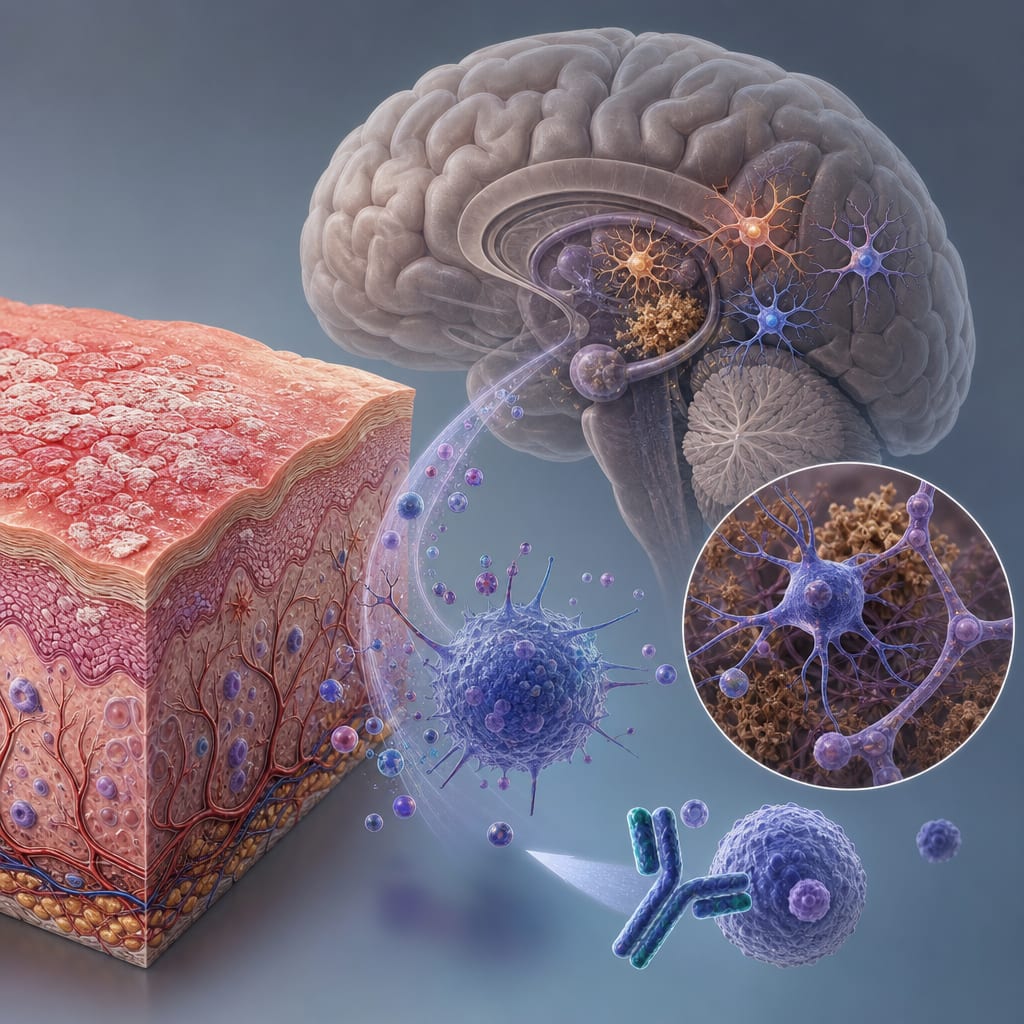
Investigating the Therapeutic Mechanisms and Key Bioactive Compounds of Solanum nigrum in Treating Psoriatic Lesions
-
By
-
Ya Chen
-
Tianyou Ma
-
Congcong Zhu
-
Zongguang Tai
-
Huijun Pan
-
Zhongjian Chen
-
Quangang Zhu
-
April 24, 2026
-
Clinical Scorecard: Investigating the Therapeutic Mechanisms and Key Bioactive Compounds of Solanum nigrum in Treating Psoriatic Lesions
At a Glance
| Category | Detail |
|---|
| Condition | Psoriasis |
| Key Mechanisms | Inhibition of NLRP3 inflammasome activation and reduction of inflammatory cytokines (IL-1β, IL-18) |
| Target Population | Patients with psoriasis |
| Care Setting | Clinical and traditional medicine |
Key Highlights
- Solanum nigrum (SN) alleviates psoriasis-like dermatitis in experimental models.
- NLRP3 inflammasome activation is elevated in psoriatic lesions.
- Trigonelline identified as a major active component of SN.
- SN modulates PRR/NLR-related signaling pathways.
- SN reduces keratinocyte hyperproliferation and systemic inflammation.
Guideline-Based Recommendations
Diagnosis
- Evaluate clinical presentation and consider biopsy for confirmation.
Management
- Consider topical application of Solanum nigrum for inflammatory relief.
Monitoring & Follow-up
- Assess disease severity and response to treatment regularly.
Risks
- Monitor for potential allergic reactions to herbal treatments.
Patient & Prescribing Data
Individuals with chronic inflammatory skin disease, specifically psoriasis.
SN has a long history of use in traditional medicine for skin disorders.
Clinical Best Practices
- Integrate traditional herbal treatments with modern pharmacological insights.
- Utilize transcriptomic analysis for understanding treatment mechanisms.
References