Internet of things-based pulmonary rehabilitation for moderate-to-severe chronic obstructive pulmonary disease: a prospective non-randomized controlled intervention study protocol - Scorecard - MDSpire
Advertisement
Internet of things-based pulmonary rehabilitation for moderate-to-severe chronic obstructive pulmonary disease: a prospective non-randomized controlled intervention study protocol
Clinical Scorecard: Utilizing Internet of Things Technology for Pulmonary Rehabilitation in Patients with Moderate to Severe Chronic Obstructive Pulmonary Disease: A Protocol for a Prospective Non-Randomized Controlled Intervention Study
At a Glance
Category
Detail
Condition
Chronic Obstructive Pulmonary Disease (COPD)
Key Mechanisms
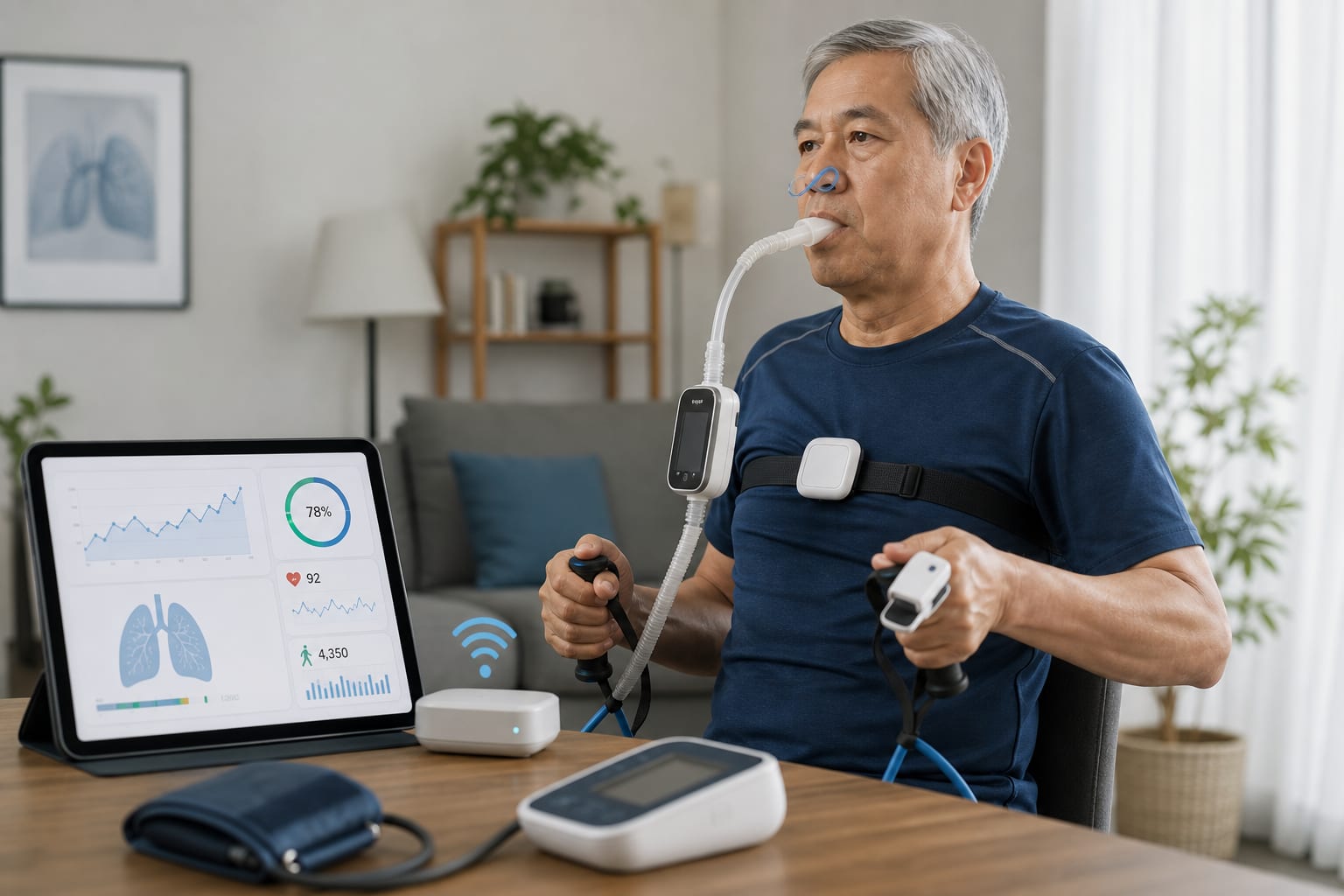
Integration of Internet of Things (IoT) technology for real-time monitoring and support in pulmonary rehabilitation.
Target Population
Patients aged 40-75 years with moderate-to-severe stable COPD (GOLD grades 2–4).
Care Setting
Home-based pulmonary rehabilitation with IoT assistance.
Key Highlights
Study will enroll 588 patients with moderate-to-severe COPD.
Participants will be assigned to either conventional PR or IoT-assisted PR.
Primary outcome is the rate of moderate-to-severe AECOPD over 12 months.
Secondary outcomes include pulmonary function, exercise capacity, and quality of life.
Study aims to evaluate the feasibility and safety of IoT-assisted PR.
Guideline-Based Recommendations
Diagnosis
Confirmed diagnosis of COPD according to GOLD criteria.
Management
Pulmonary rehabilitation is recommended for patients with moderate-to-severe COPD.
Monitoring & Follow-up
Real-time monitoring through IoT devices to enhance adherence and outcomes.
Risks
Suboptimal adherence to PR in traditional settings without real-time monitoring.
Patient & Prescribing Data
Patients aged 40-75 years with moderate-to-severe COPD.
IoT-assisted devices and smartphone app support home-based PR.
Turns out biology tracks more than we thought — from a spit test that reads your all-nighter to a surgical outcome that still shows up in household chores two decades later. Plus: habits aren't built gradually. They snap.