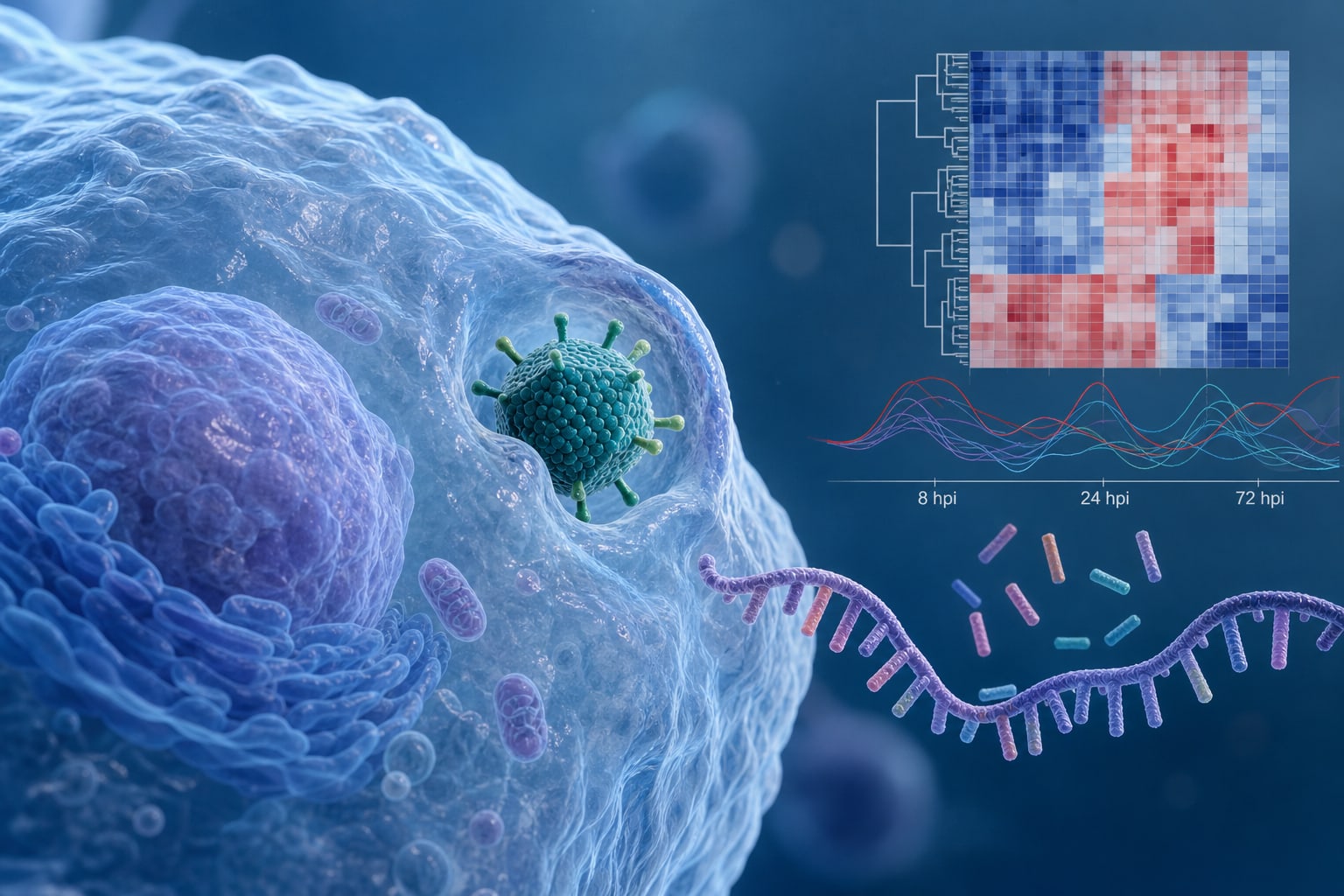
Temporal transcriptomic analysis of scale drop disease virus in Asian seabass kidney cells reveals host immune and signaling changes
By
Hong-Yi Xin
Lee Ching Pei Carmen
Lim Xin Ying
Mookkan Prabakaran
June 9, 2026
Clinical Scorecard: Analysis of Host Transcriptomic Responses to Scale Drop Disease Virus in Kidney Cells of Asian Seabass Over Time
At a Glance
Category Detail
Condition Scale Drop Disease Virus (SDDV) infection in Asian seabass Key Mechanisms Host transcriptional responses, immune signaling pathways, viral entry processes, cellular reprogramming Target Population Asian seabass (Lates calcarifer) Care Setting Aquaculture
Key Highlights
SDDV is a major viral threat causing high mortality in Asian seabass aquaculture. Time-resolved RNA sequencing revealed distinct host responses at 8, 24, and 72 hours post-infection. Early infection stages showed rapid activation of innate immune pathways. Later stages were characterized by immune modulation and cellular reprogramming. ASBK-1 cells serve as a robust platform for studying SDDV pathogenesis. Guideline-Based Recommendations
Diagnosis
PCR screening for SDDV using specific primers targeting conserved regions. Management
Utilization of ASBK-1 cells for mechanistic studies of SDDV. Monitoring & Follow-up
Assessment of host transcriptional responses to understand disease progression. Risks
High mortality rates and significant economic losses associated with SDDV outbreaks. Patient & Prescribing Data
Asian seabass in aquaculture settings.
Limited insights into treatment; focus on understanding host-virus interactions.
Clinical Best Practices
Implement time-resolved transcriptomic analyses for viral infection studies. Monitor immune signaling pathways during SDDV infection. Related Resources & Content