Clinical Scorecard: The Pathophysiological Triad of Acute Kidney Injury in the Perioperative Setting: Renal Microcirculatory Hypoxia, Mitochondrial Dysfunction, and Immuno-Metabolic Alterations
At a Glance
Category
Detail
Condition
Key Mechanisms
Target Population
Patients undergoing surgical procedures, particularly high-risk surgeries such as cardiac surgery, with risk factors including age and underlying diseases.
Care Setting
Key Highlights
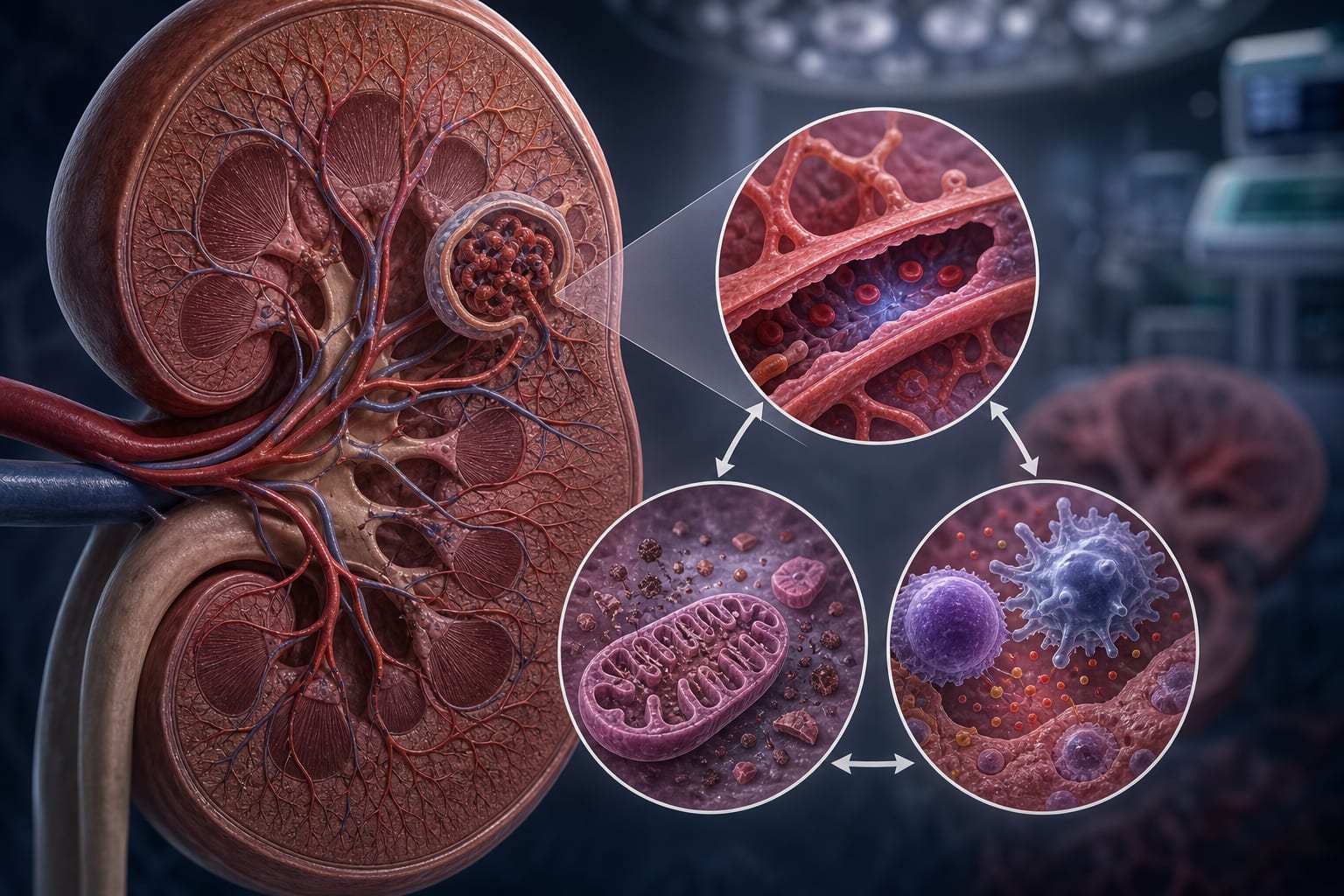
Perioperative AKI is characterized by local microcirculation and energy metabolism imbalances.
Traditional prerenal models do not fully explain AKI occurrences with stable systemic parameters.
Renal microcirculatory hypoxia is a significant upstream trigger for AKI.
The pathological triangle model integrates microcirculatory dysfunction, mitochondrial damage, and immunometabolic abnormalities.
Time-windowed intervention pathways are proposed for risk optimization and management.
The pathological triangle model has significant implications for clinical practice, guiding targeted interventions.
Guideline-Based Recommendations
Diagnosis
Assess renal microcirculation and tissue oxygenation.
Evaluate mitochondrial-related biomarkers such as lactate dehydrogenase and creatine kinase.
Management
Optimize preoperative risk factors.
Manage intraoperative perfusion and oxygen delivery.
Implement postoperative mitochondrial protection and immunometabolic regulation.
Monitoring & Follow-up
Monitor local renal microenvironment and microcirculation using techniques like laser Doppler flowmetry.
Risks
Increased risk of AKI associated with age, underlying diseases, type of surgery, and nephrotoxic exposures.
Patient & Prescribing Data
Focus on multidimensional stratification based on the pathological triangle model, which includes assessing microcirculation, mitochondrial function, and immunometabolic status.
Clinical Best Practices
Utilize a time-resolved approach to manage perioperative AKI.
Incorporate assessments of microcirculation and mitochondrial function in clinical practice, including specific monitoring techniques.