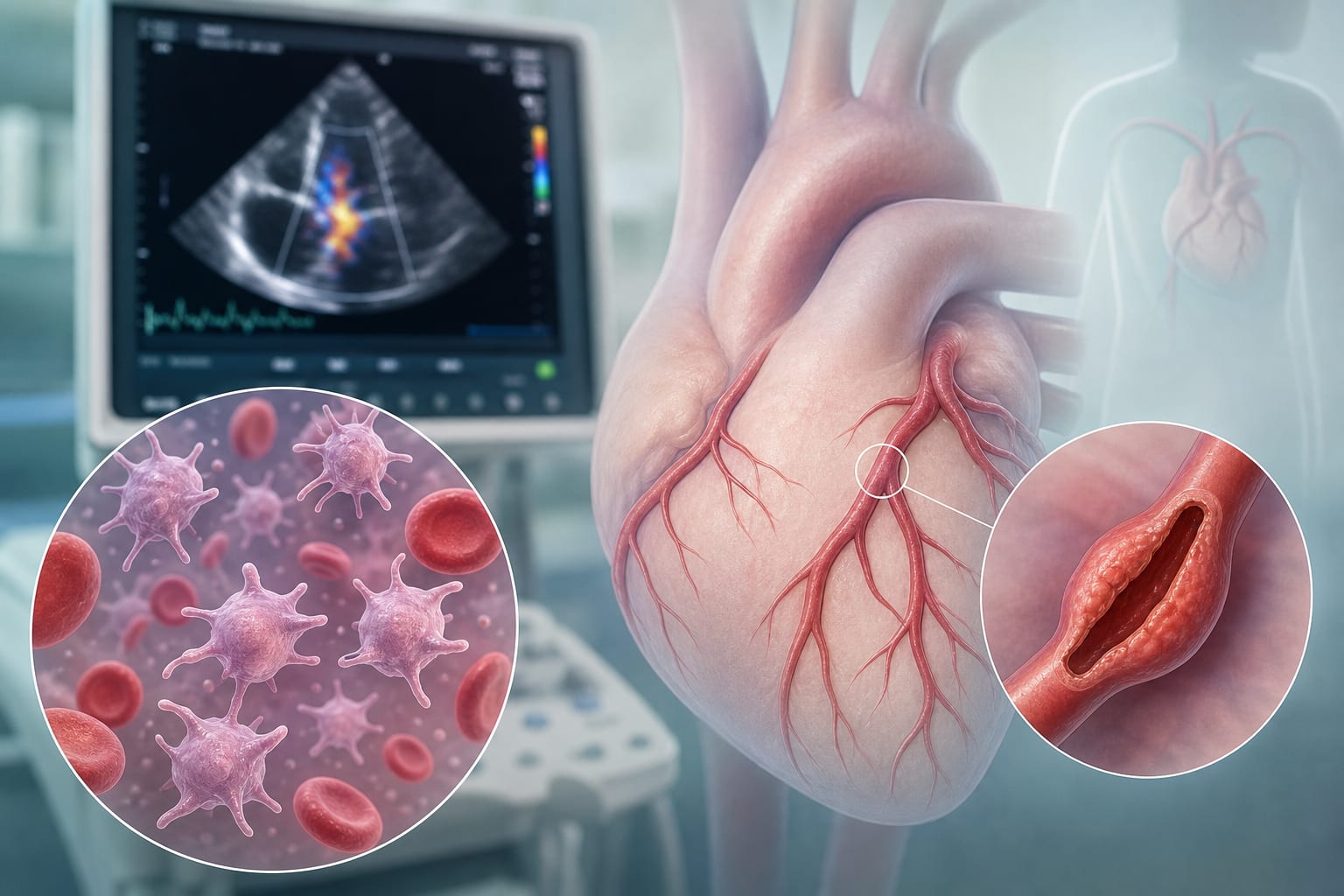
Clinical correlation between platelet parameters and coronary artery lesions in pediatric Kawasaki disease
-
By
-
Yujia Ji
-
Xia Chen
-
Lizhi Jiang
-
Chao Li
-
June 9, 2026
-
Clinical Scorecard: Association of Platelet Metrics with Coronary Artery Lesions in Children Diagnosed with Kawasaki Disease
At a Glance
| Category | Detail |
|---|
| Condition | |
| Key Mechanisms | Platelet activation and systemic vasculitis. |
| Target Population | |
| Care Setting | Pediatric hospital setting. |
Key Highlights
- Platelet parameters (PLT, MPV, PCT, PDW) are significantly higher in Kawasaki Disease patients compared to healthy controls.
- Children with coronary artery lesions exhibit higher platelet parameters than those without lesions.
- The Harada score is significantly higher in the lesion group.
- Multivariate analysis shows significant correlations between platelet metrics and coronary artery lesions.
Guideline-Based Recommendations
Diagnosis
- Diagnosis of Kawasaki Disease requires at least two clinical features and fever duration exceeding 3 days.
Management
- Echocardiography is recommended to assess coronary artery lesions.
Monitoring & Follow-up
- Regular monitoring of platelet parameters is suggested.
Risks
- Untreated Kawasaki Disease can lead to coronary artery dilation and aneurysm formation.
Patient & Prescribing Data
80 children with Kawasaki Disease and 80 healthy controls.
Clinical Best Practices
- Utilize the Harada scoring system for assessing severity in Kawasaki Disease.
- Conduct echocardiography within 24–48 hours of admission.
Related Resources & Content