A de novo LDLR mutation in severe familial hypercholesterolemia: case report, functional characterization, and a personalized gene correction strategy exploration - Scorecard - MDSpire
Advertisement
A de novo LDLR mutation in severe familial hypercholesterolemia: case report, functional characterization, and a personalized gene correction strategy exploration
Clinical Scorecard: Identification of a novel LDLR mutation in severe familial hypercholesterolemia: a case study, functional analysis, and exploration of personalized gene correction approaches
At a Glance
Category
Detail
Condition
Familial Hypercholesterolemia (FH)
Key Mechanisms
Mutations in LDLR leading to elevated plasma low-density lipoprotein and cardiovascular disease.
Target Population
Patients with homozygous familial hypercholesterolemia (HoFH).
Care Setting
Genetic and metabolic disorder clinics.
Key Highlights
Novel LDLR mutation c.331C>T (p.Gln111Ter) identified in a HoFH patient.
Biallelic LDLR mutations confirmed in the patient.
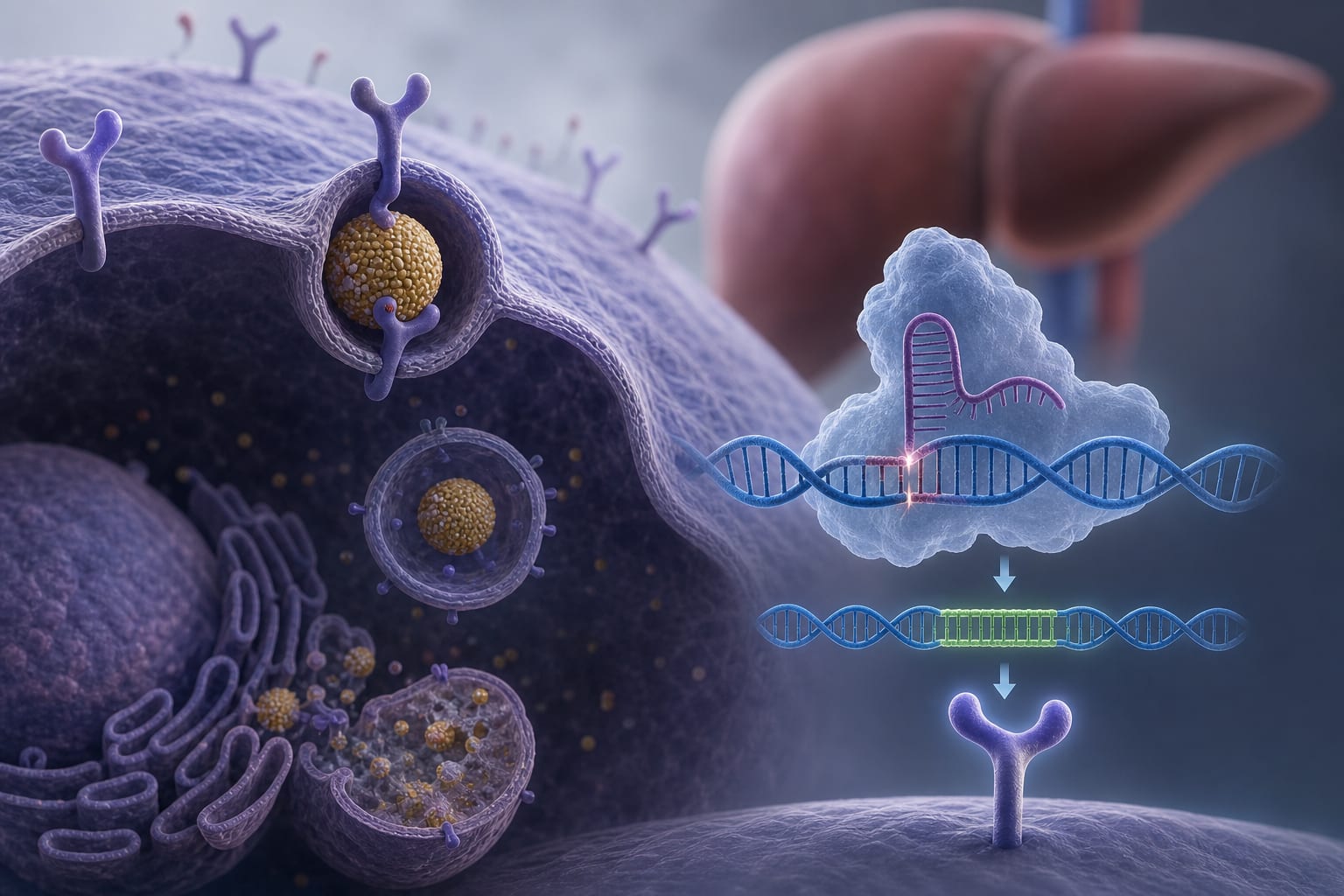
CRISPR/Cas9 technology used for gene correction with 98% efficiency.
HoFH patients exhibit severe phenotypes and poor response to standard therapies.
Study emphasizes the need for precise gene therapy approaches.
Guideline-Based Recommendations
Diagnosis
Early diagnosis of FH is crucial for preventing morbidity and mortality.
Functional validation of LDLR mutations is essential for accurate diagnosis.
Management
Current management options for HoFH are limited; standard therapies include high-intensity statins and PCSK9 inhibitors.
Monitoring & Follow-up
Regular monitoring of lipid levels and cardiovascular health in FH patients.
Risks
Patients with HoFH are at increased risk for premature atherosclerotic cardiovascular disease.
Patient & Prescribing Data
17-year-old female diagnosed with HoFH.
Limited effective treatment options available for HoFH patients.
Clinical Best Practices
Utilize genetic testing for accurate diagnosis of FH.
Implement personalized gene therapy approaches for patients with novel mutations.