Effects of ciprofol versus propofol sedation on hypoxaemia and hypotension in elderly patients undergoing bidirectional endoscopy: protocol for a randomized controlled trial - Scorecard - MDSpire
Advertisement
Effects of ciprofol versus propofol sedation on hypoxaemia and hypotension in elderly patients undergoing bidirectional endoscopy: protocol for a randomized controlled trial
Clinical Scorecard: Comparative Study of Ciprofol and Propofol Sedation on Hypoxaemia and Hypotension in Elderly Patients During Bidirectional Gastrointestinal Endoscopy: A Randomized Controlled Trial Protocol
At a Glance
Category
Detail
Condition
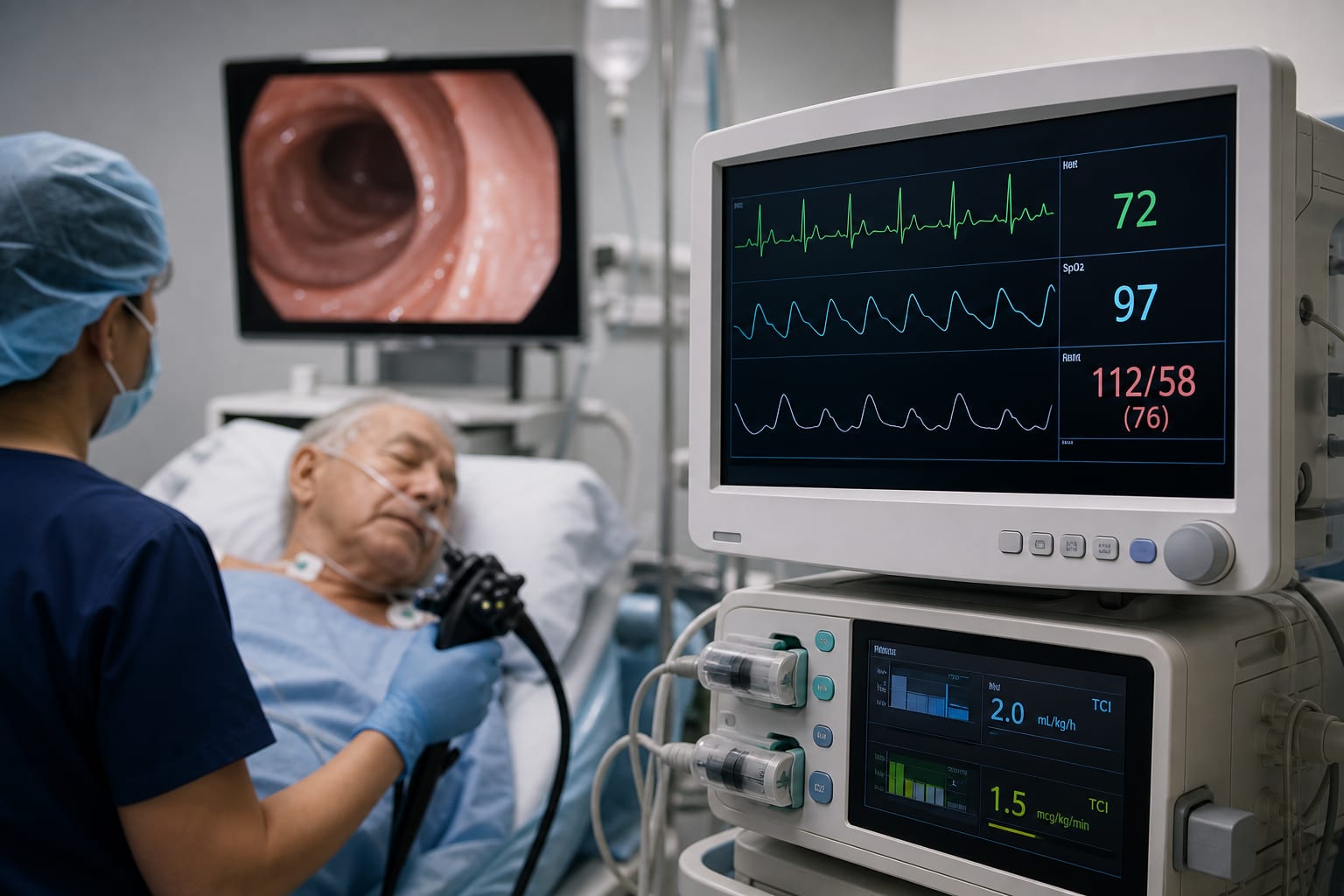
Sedation during gastrointestinal endoscopy in elderly patients
Key Mechanisms
Ciprofol acts on the GABA_A receptor with higher potency than propofol, potentially offering improved cardiorespiratory stability.
Target Population
Elderly patients aged ≥65 years undergoing elective gastrointestinal endoscopy
Care Setting
Tertiary academic hospital
Key Highlights
Primary outcome: composite incidence of hypoxaemia and hypotension during sedation.
Secondary outcomes include individual incidences of hypoxaemia and hypotension, airway interventions, and sedation times.
Ciprofol may reduce respiratory and haemodynamic suppression compared to propofol.
Guideline-Based Recommendations
Diagnosis
Assess eligibility based on age, ASA physical status, and baseline SpO₂.
Management
Randomly assign patients to receive either ciprofol or propofol for sedation.
Monitoring & Follow-up
Monitor SpO₂ and blood pressure during sedation for hypoxaemia and hypotension.
Risks
Consider risks of respiratory depression, hypotension, and other sedation-related complications.
Patient & Prescribing Data
Patients aged ≥65 years scheduled for elective gastrointestinal endoscopy.
Ciprofol may provide sedation efficacy with potentially fewer side effects compared to propofol.
Clinical Best Practices
Ensure informed consent is obtained from all participants.
Conduct thorough pre-procedural assessments to identify at-risk patients.