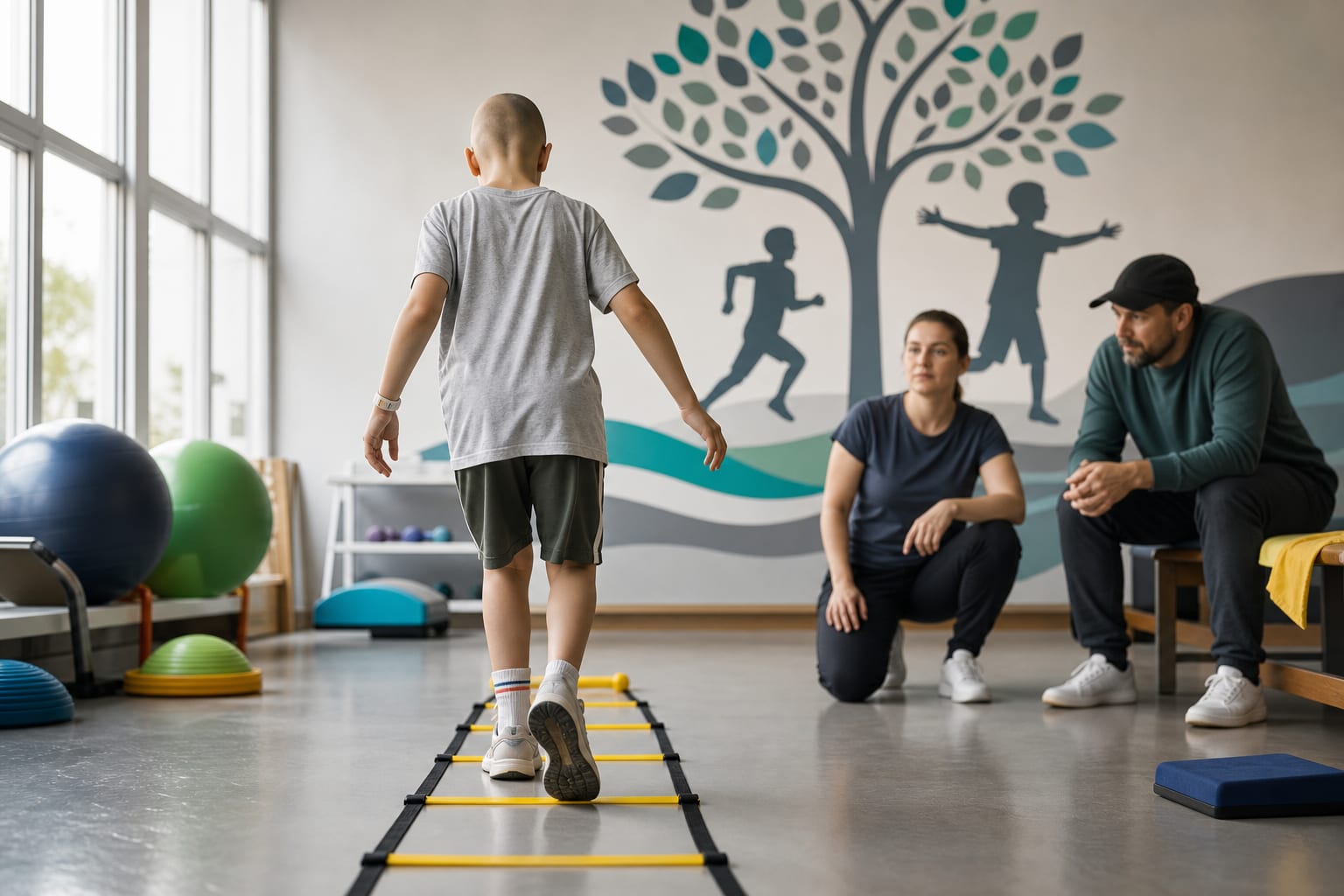
Heroes in motion – a six-year quality report and patient evaluation of a real-world exercise therapy program in pediatric oncology
By
Carolin Ohnmacht
Alina Kunder
Sina Benz
Tobias Feuchtinger
Alexander Puzik
June 9, 2026
Clinical Scorecard: Evaluating a Six-Year Quality Report on a Real-World Exercise Therapy Initiative for Pediatric Oncology Patients
At a Glance
Category Detail
Condition Key Mechanisms Exercise therapy as a component of tertiary prevention to support bio-psycho-social health. [Needs sourcing] Target Population Care Setting
Key Highlights
457 patients participated in the HIM program over six years. [Ensure data is sourced] High satisfaction rates: 74% in 2020 and 81% in 2025 reported being very satisfied. [Ensure data is sourced] Increased family involvement following the introduction of the family-centered outpatient exercise program in 2023. [Needs sourcing] Demand for more frequent sessions and improved exercise facilities was consistently expressed. [Needs sourcing] Guideline-Based Recommendations
Diagnosis
Management
Integrate physical activity during and after cancer treatment as per German AWMF-S2k guideline. [Needs citation] Monitoring & Follow-up
Continuous process monitoring of exercise therapy implementation. [Needs sourcing] Risks
Inactivity increases the risk of long-term adverse outcomes, including cardiovascular disease and chronic pain. [Needs sourcing] Patient & Prescribing Data
Children and adolescents with cancer, aged 1-24 years.
Exercise therapy is recognized for its survival benefits and bio-psycho-social support.
Clinical Best Practices
Provide individualized care and supervision in exercise therapy. [Needs sourcing] Encourage family involvement in physical activity. [Needs sourcing] Related Resources & Content