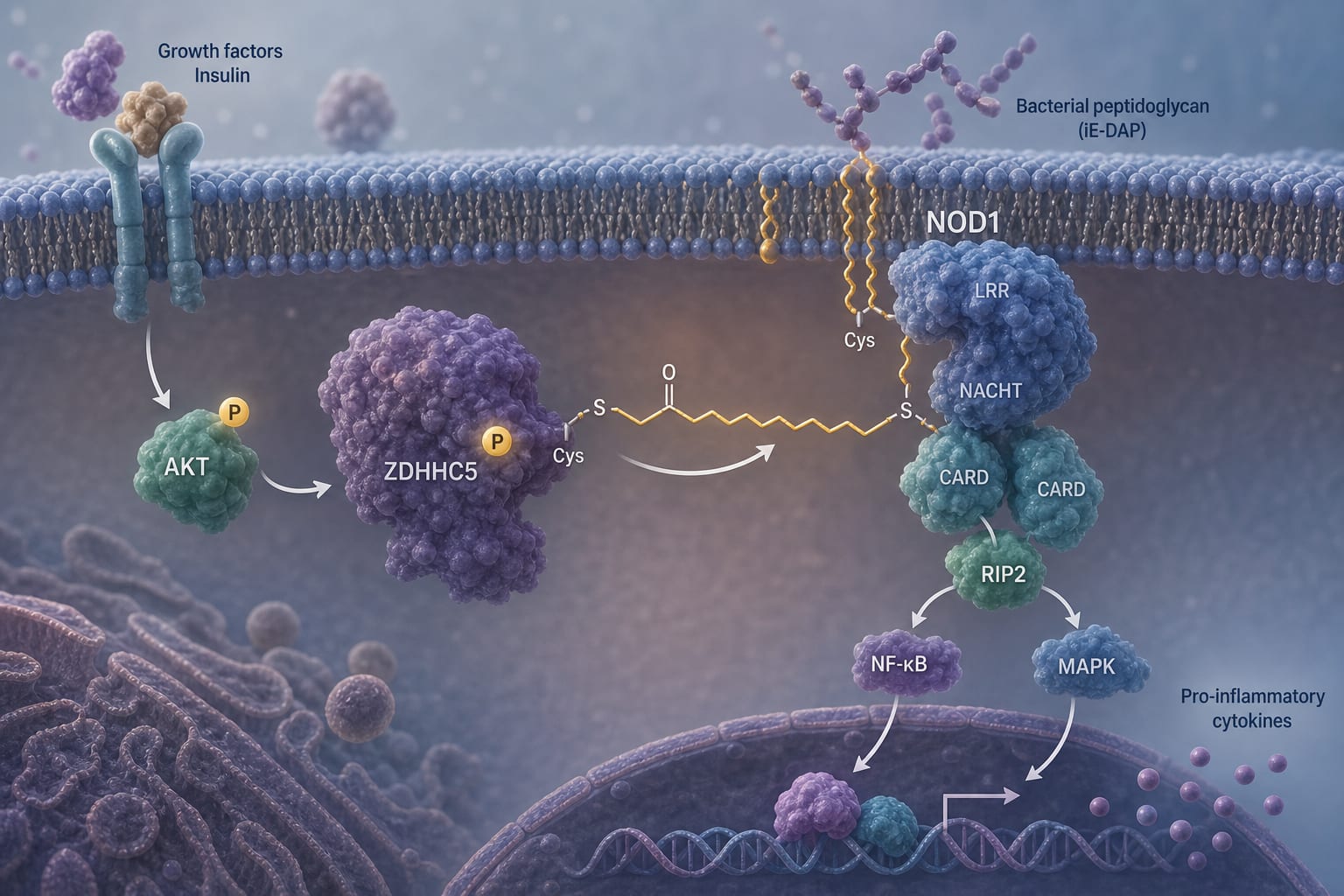
AKT-mediated phosphorylation of ZDHHC5 promotes NOD1 palmitoylation and innate immune signaling
By
Shaojie Mi
Yue Zhu
Qian Li
Xin Wang
Xuewu Guo
Yali Chen
June 9, 2026
Clinical Scorecard: Phosphorylation of ZDHHC5 by AKT Enhances Palmitoylation of NOD1 and Facilitates Innate Immune Response
At a Glance
Category Detail
Condition NOD1 activation and innate immune response Key Mechanisms AKT-mediated phosphorylation of ZDHHC5 enhances NOD1 palmitoylation and membrane recruitment Target Population Individuals with inflammatory and immune-related disorders Care Setting Research and clinical settings focusing on innate immunity and inflammatory diseases
Key Highlights
NOD1 is a pattern recognition receptor that detects bacterial peptidoglycan. AKT phosphorylates ZDHHC5, enhancing its activity and promoting NOD1 activation. Growth factors and insulin positively regulate NOD1 signaling through the AKT-ZDHHC5 axis. Disruption of AKT-dependent phosphorylation impairs NOD1 palmitoylation and signaling. Aberrant NOD1 activation is linked to various inflammatory diseases. Guideline-Based Recommendations
Diagnosis
Evaluate NOD1 activation in patients with inflammatory bowel disease, uveitis, rheumatoid arthritis, and cancer. Management
Consider targeting the AKT-ZDHHC5 pathway in therapeutic strategies for NOD1-driven inflammatory diseases. Monitoring & Follow-up
Monitor NOD1 signaling and palmitoylation status in relevant patient populations. Risks
Aberrant NOD1 activation may lead to dysregulated immune responses and inflammatory disorders. Patient & Prescribing Data
Patients with conditions associated with dysregulated NOD1 signaling.
Targeting the AKT-ZDHHC5 pathway may provide new therapeutic avenues.
Clinical Best Practices
Utilize biochemical assays to assess NOD1 palmitoylation and activation. Incorporate growth factor and insulin signaling assessments in inflammatory disease evaluations. Consider the role of AKT in innate immune signaling when developing treatment plans. Related Resources & Content