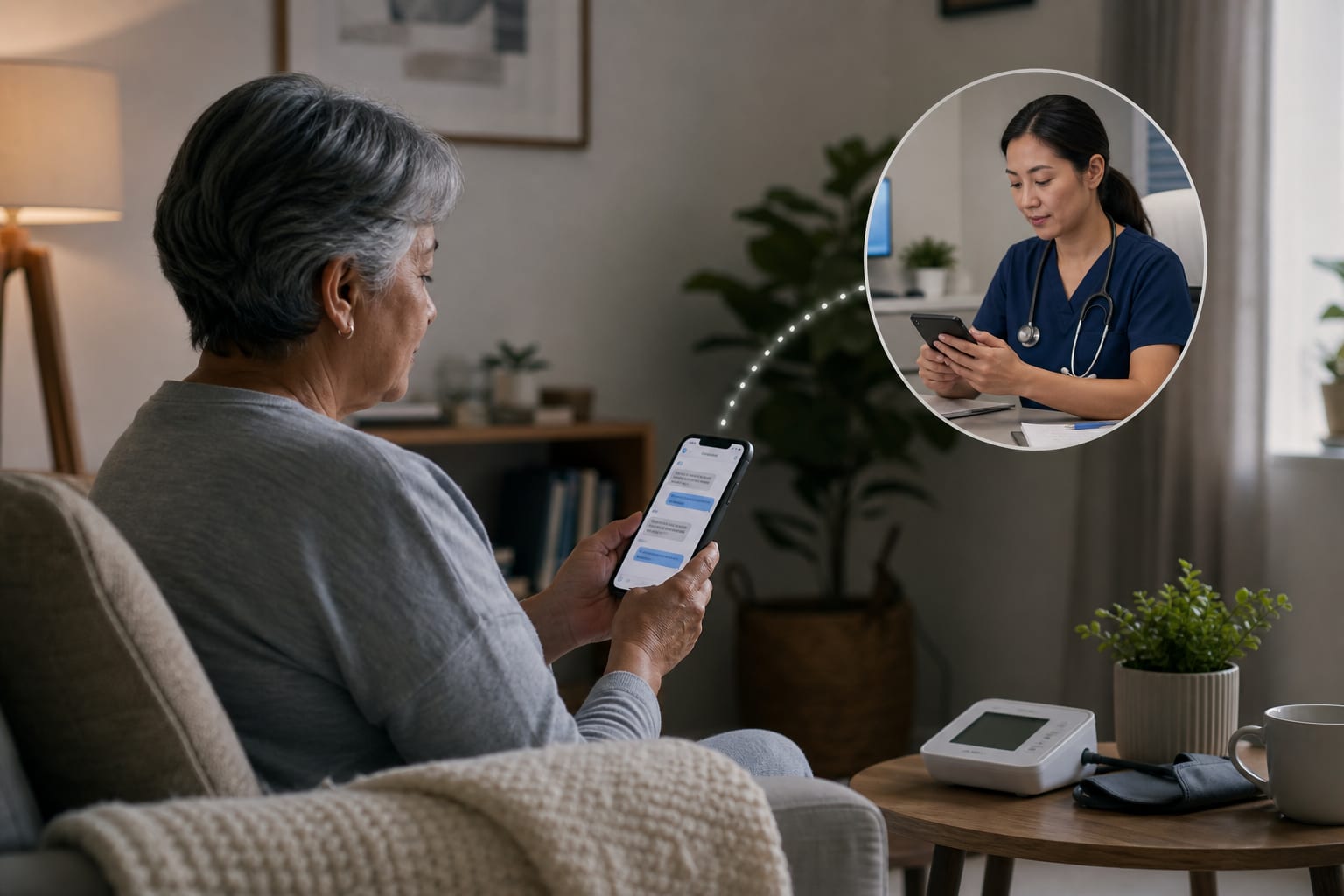
Clinician-Patient Asynchronous Text Messaging Communication in Hospital-at-Home Care: Qualitative Study
-
By
-
Jeremy Soon Leong Seow
-
Stephanie Ko
-
Shi Yun Low
-
Shefaly Shorey
-
June 8, 2026
-
Clinical Scorecard: Asynchronous Text Messaging Between Clinicians and Patients in Hospital-at-Home Settings: A Qualitative Analysis
At a Glance
| Category | Detail |
|---|
| Condition | Hospital-at-Home (HaH) care model |
| Key Mechanisms | Digital communication tools for clinical care coordination and remote monitoring |
| Target Population | Patients enrolled in HaH programs, specifically those diagnosed with COVID-19 during the study period |
| Care Setting | Home environment |
Key Highlights
- HaH programs provide hospital-level care at home, improving patient satisfaction and reducing hospital stays.
- Digital communication, including SMS text messaging, is essential for effective care delivery in HaH settings.
- The study explores the content and dynamics of SMS interactions between health care providers and patients.
Guideline-Based Recommendations
Diagnosis
- Patients must be enrolled in the HaH program and diagnosed with acute internal medicine conditions.
Management
- Utilize digital communication platforms for clinical updates and care coordination.
Monitoring & Follow-up
- Implement remote monitoring to ensure continuity of care and timely information exchange.
Risks
- Potential challenges in maintaining effective communication and trust in a digital environment.
Patient & Prescribing Data
Patients enrolled in the NUHS@Home program during the COVID-19 pandemic.
Care is delivered through a combination of digital communication and periodic home visits.
Clinical Best Practices
- Ensure effective communication among health care providers, patients, and caregivers.
- Leverage digital tools to enhance patient engagement and clinical decision-making.
Related Resources & Content