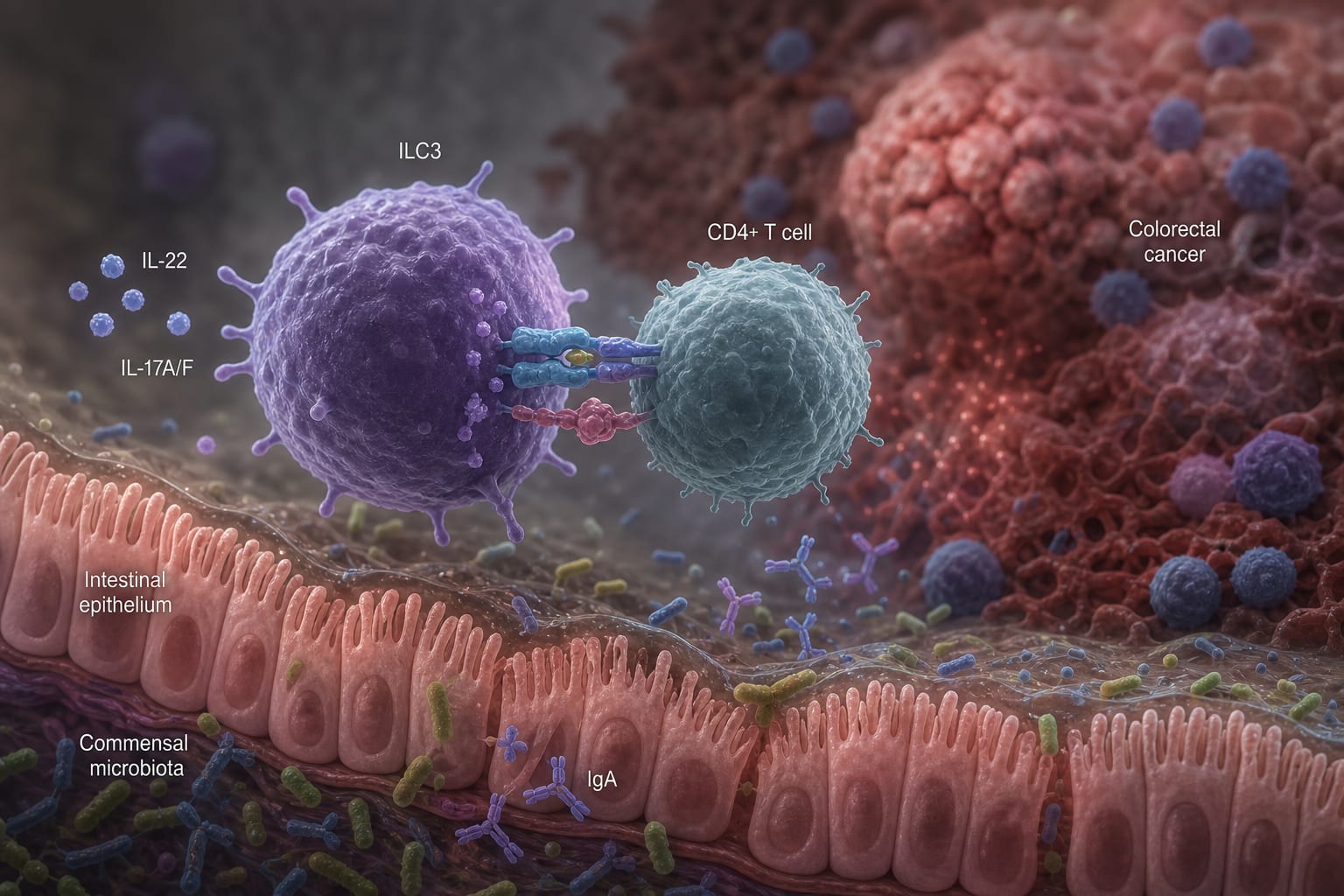
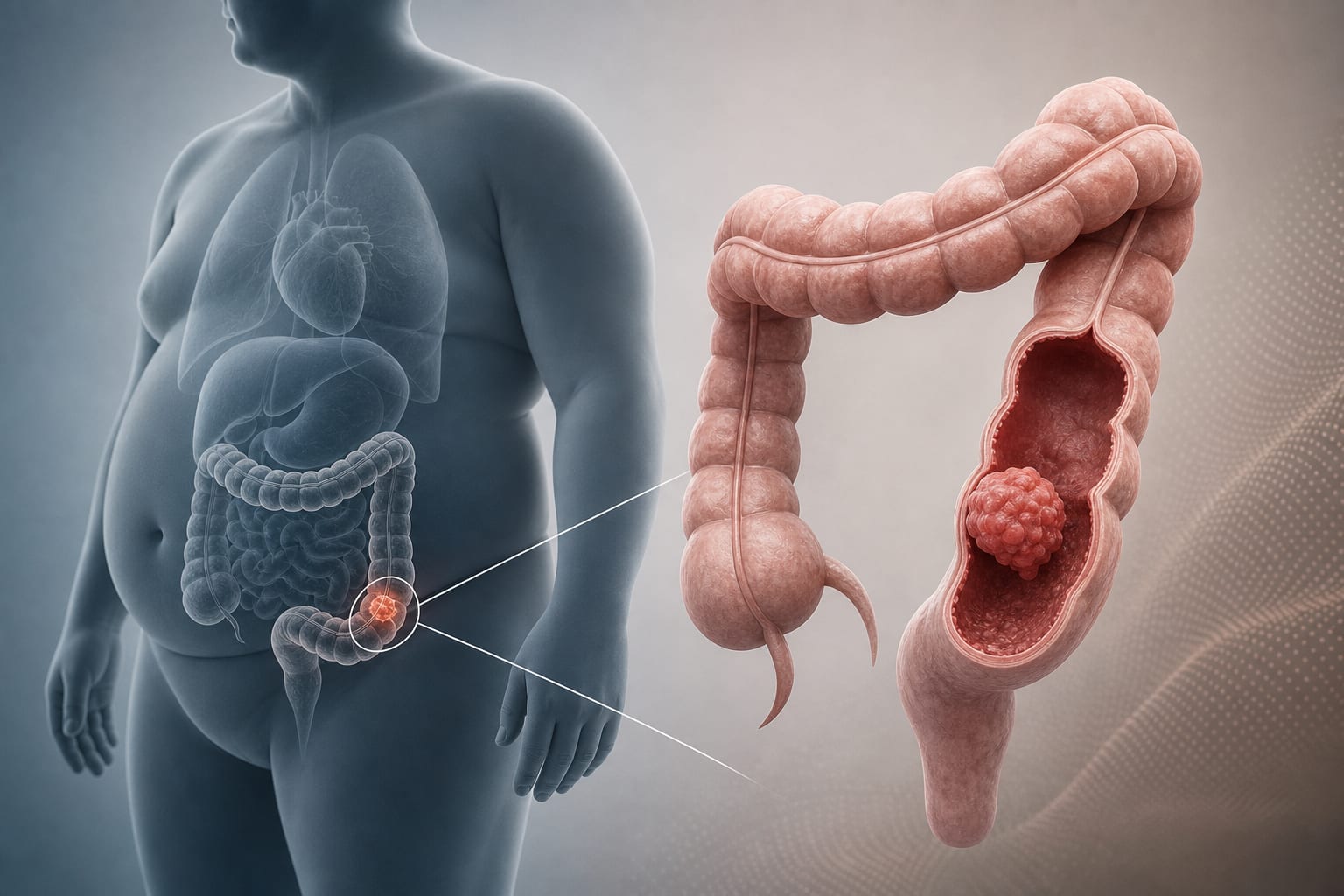
Plasticity and antigen presentation by group 3 innate lymphoid cells in colorectal cancer
-
By
-
Lu Qiao
-
Jingwen Zhang
-
Jiaxi Li
-
Xia Li
-
Xiaoxia He
-
Mingyu Zhang
-
Jingkun Lu
-
Xuan Zhang
-
Jing Dong
-
Gesi Tao
-
Yue Wang
-
Jiaxian Cui
-
Lili Bao
-
Pengwei Zhao
-
June 9, 2026
-
Clinical Scorecard: Antigen Presentation and Functional Adaptability of Group 3 Innate Lymphoid Cells in Colorectal Cancer
At a Glance
| Category | Detail |
|---|
| Condition | |
| Key Mechanisms | |
| Target Population | Individuals with colorectal cancer |
| Care Setting | |
Key Highlights
- ILC3 play dual roles in tumor immunity and inflammation.
- MHC II expression in ILC3 is crucial for effective adaptive immunity.
- Chronic inflammation and dysbiosis in CRC correlate with aggressive tumor behavior.
- ILC3 plasticity is influenced by cytokine milieu and microbial composition.
Guideline-Based Recommendations
Diagnosis
- Assess ILC3 state and microbiota composition in CRC patients.
Management
- Consider therapeutic strategies targeting cytokine pathways.
Monitoring & Follow-up
- Monitor ILC3 populations as potential biomarkers.
Risks
- Increased plasticity of ILC3 may lead to resistance to immune checkpoint therapy.
Patient & Prescribing Data
Patients with colorectal cancer.
Therapeutic strategies should consider ILC3.
Clinical Best Practices
- Integrate assessment of ILC3 in CRC management.
- Utilize biomarker panels to evaluate treatment response.
Related Resources & Content