Association between H. pylori infection status, UBT-derived DOB level, and colorectal polyp detection
-
By
-
Yu Zhou
-
Ge Yu
-
Zhigang Huang
-
Rong Wan
-
June 9, 2026
-
Clinical Scorecard: Correlation of Helicobacter pylori Infection, UBT-Derived Delta Over Baseline Levels, and the Identification of Colorectal Polyps
At a Glance
| Category | Detail |
|---|
| Condition | Colorectal Polyps |
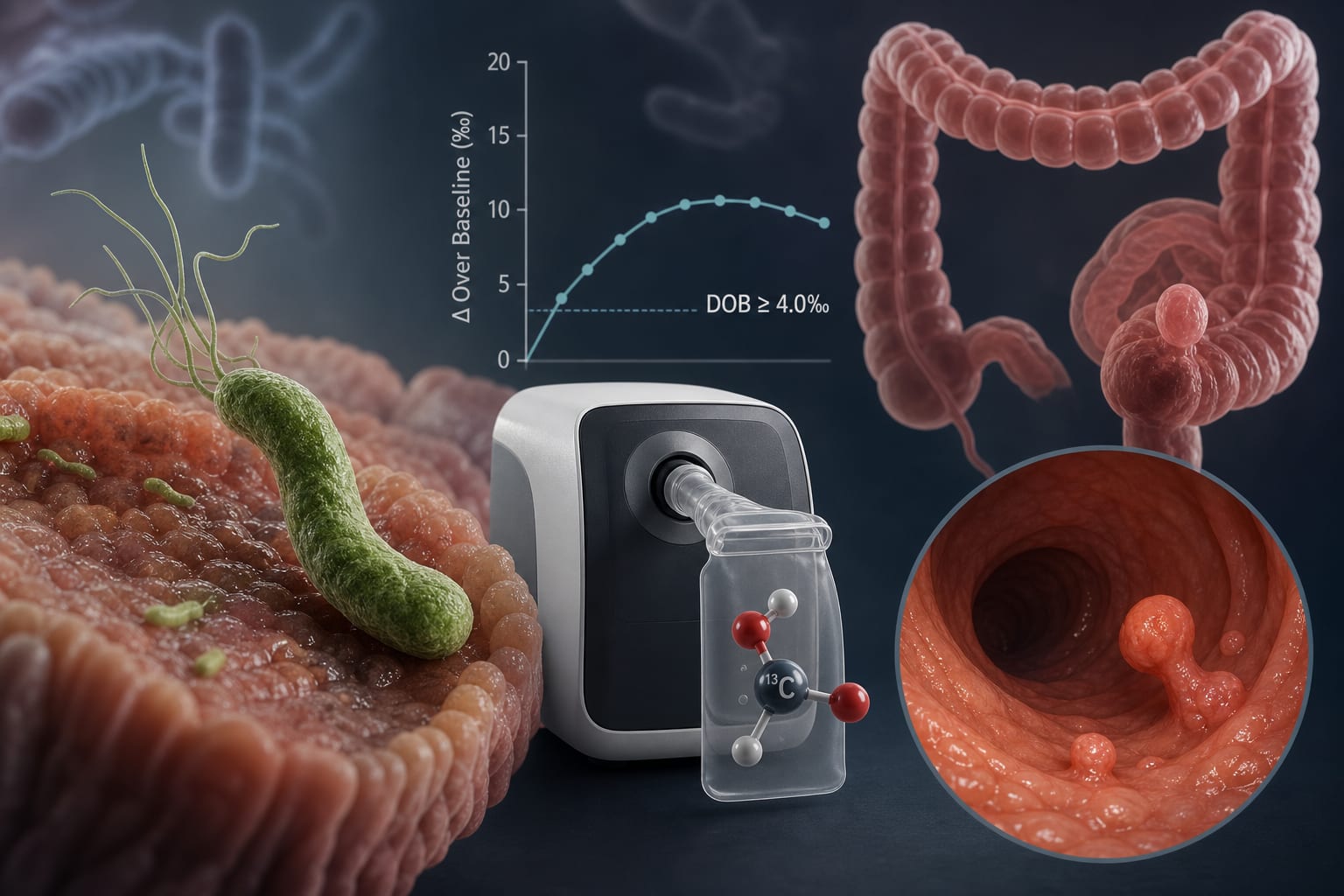
| Key Mechanisms | Association of H. pylori infection and urea breath test-derived DOB values with colorectal polyp detection. |
| Target Population | Adults aged 18 and older undergoing colonoscopy and ¹³C-urea breath test. |
| Care Setting | Single-center ambispective observational study. |
Key Highlights
- H. pylori-positive individuals had a higher detection rate of colorectal polyps.
- Adjusted odds ratio for colorectal polyp detection in H. pylori-positive group was 1.91.
- Higher DOB levels correlated with increased odds of colorectal polyp detection.
- Adenomatous polyps were more frequently detected in the H. pylori-positive group.
Guideline-Based Recommendations
Diagnosis
- H. pylori positivity defined as DOB value ≥4.0‰.
Management
- Consider H. pylori status in patients undergoing colonoscopy for polyp detection.
Monitoring & Follow-up
- Monitor DOB levels in H. pylori-positive patients for colorectal polyp risk assessment.
Risks
- Increased risk of colorectal polyps and adenomas associated with H. pylori infection.
Patient & Prescribing Data
439 adults undergoing colonoscopy and ¹³C-urea breath test.
Higher DOB levels may indicate increased risk for colorectal polyps.
Clinical Best Practices
- Utilize urea breath test results in conjunction with colonoscopy findings.
- Implement routine screening for H. pylori in patients with colorectal polyp history.
Related Resources & Content