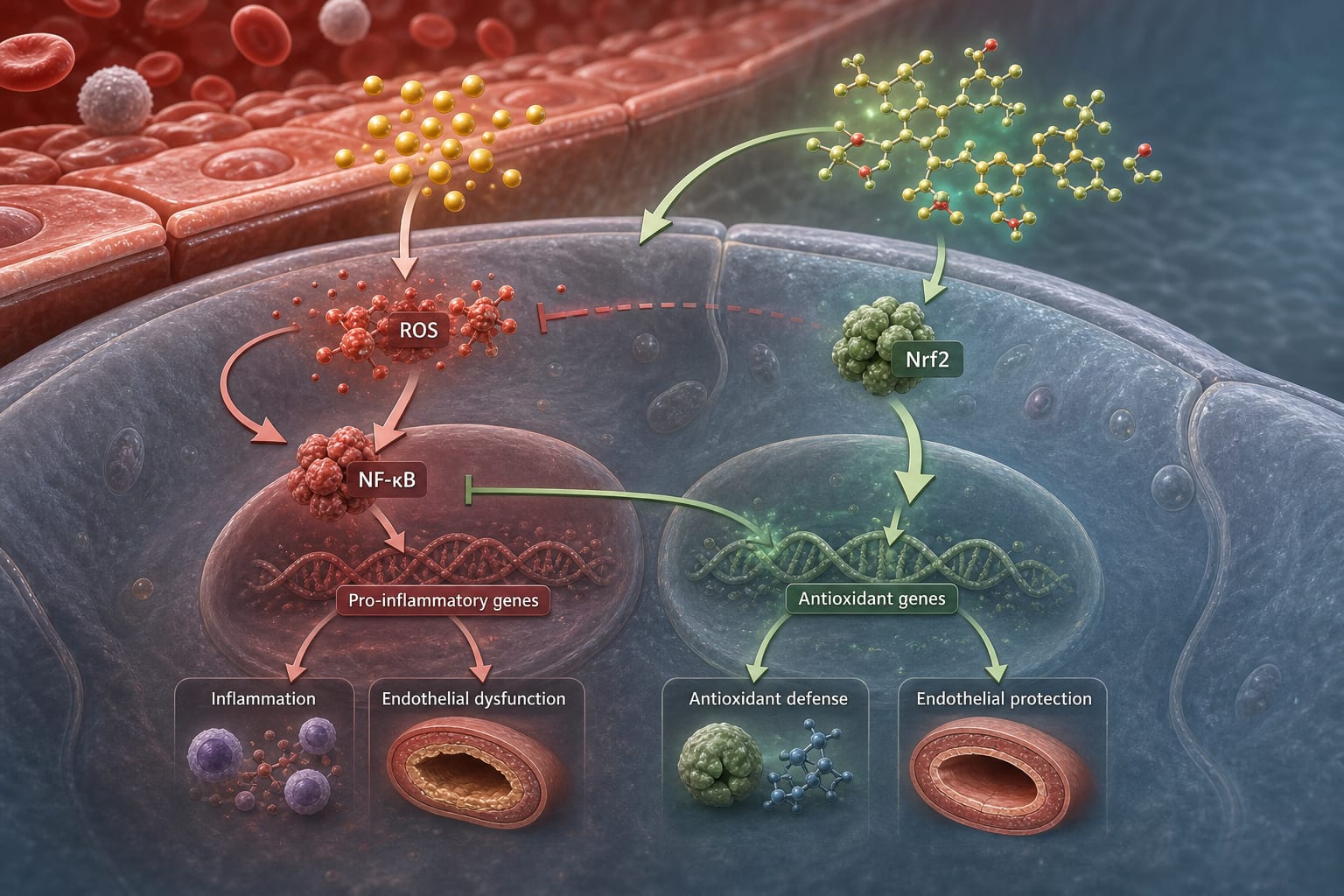
Clinical Scorecard: Theaflavins Mitigate Oxidative and Inflammatory Damage Induced by Free Fatty Acids in Endothelial Cells via the Nrf2-NF-κB Pathway
At a Glance
Category
Detail
Condition
Key Mechanisms
Target Population
Individuals with metabolic and cardiovascular diseases, particularly those experiencing FFA-induced oxidative-inflammatory injury.
Care Setting
Key Highlights
TF1 exhibits the strongest cytoprotective effects among the TF subtypes due to its superior ability to activate Nrf2 and suppress NF-κB signaling.
Guideline-Based Recommendations
Diagnosis
Management
Consider dietary polyphenols, particularly theaflavins, as adjunctive therapy, with specific attention to dosages of 200-500 mg/day.
Monitoring & Follow-up
Risks
Patient & Prescribing Data
Patients with metabolic syndrome and cardiovascular risk factors.
Theaflavins may provide a protective effect against oxidative and inflammatory damage.
Clinical Best Practices
Incorporate dietary sources of theaflavins in patient management plans, supported by recent studies linking TF intake to improved endothelial function.