Laminectomy vs. laminoplasty for treating multi-segment cervical canal stenosis combined with central cord syndrome in the absence of fracture or dislocation: a retrospective study - Scorecard - MDSpire
Advertisement
Laminectomy vs. laminoplasty for treating multi-segment cervical canal stenosis combined with central cord syndrome in the absence of fracture or dislocation: a retrospective study
Clinical Scorecard: Comparison of Laminectomy and Laminoplasty for Multi-Segment Cervical Canal Stenosis with Central Cord Syndrome Without Fracture or Dislocation: A Retrospective Analysis
At a Glance
Category
Detail
Condition
Key Mechanisms
Multi-segment cervical canal stenosis leading to spinal cord compression (source needed).
Target Population
Care Setting
Key Highlights
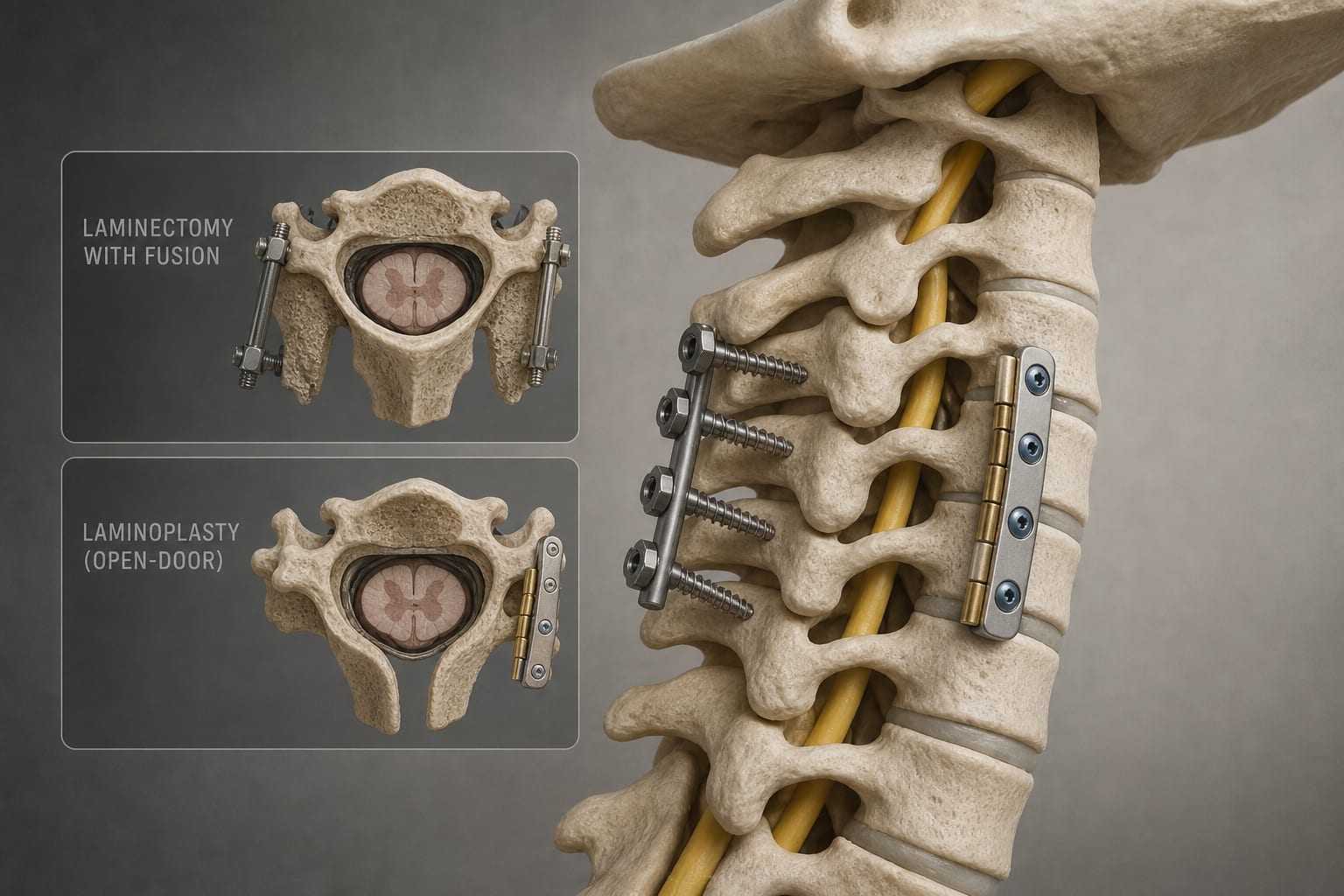
Laminectomy fusion fixation (LF) showed better outcomes compared to single open-door laminoplasty (LP) (source needed).
LF resulted in better final Japanese Orthopaedic Association (JOA) scores and recovery rates (source needed).
Complication rates were similar between LF and LP groups (source needed).
Higher preoperative JOA and intrinsic hand muscle strength (IHMS) were protective factors for recovery (source needed).
LF was particularly beneficial for patients with K-line (-) (source needed).
Guideline-Based Recommendations
Diagnosis
Assess multi-segment cervical canal stenosis via imaging (CT, MRI) and clinical evaluation (source needed).
Management
Consider surgical intervention for CCSWOFD patients with significant neurological symptoms (source needed).
Monitoring & Follow-up
Regular follow-up to evaluate neurological function and radiological outcomes post-surgery (source needed).
Risks
Potential for complications exists but rates are comparable between LF and LP (source needed).
Patient & Prescribing Data
Both LF and LP improve neurological function, pain relief, and motor ability (source needed).
Clinical Best Practices
Utilize LF for better neurological outcomes in multi-segment CCSWOFD (source needed).
Evaluate preoperative JOA and IHMS for predicting recovery potential (source needed).