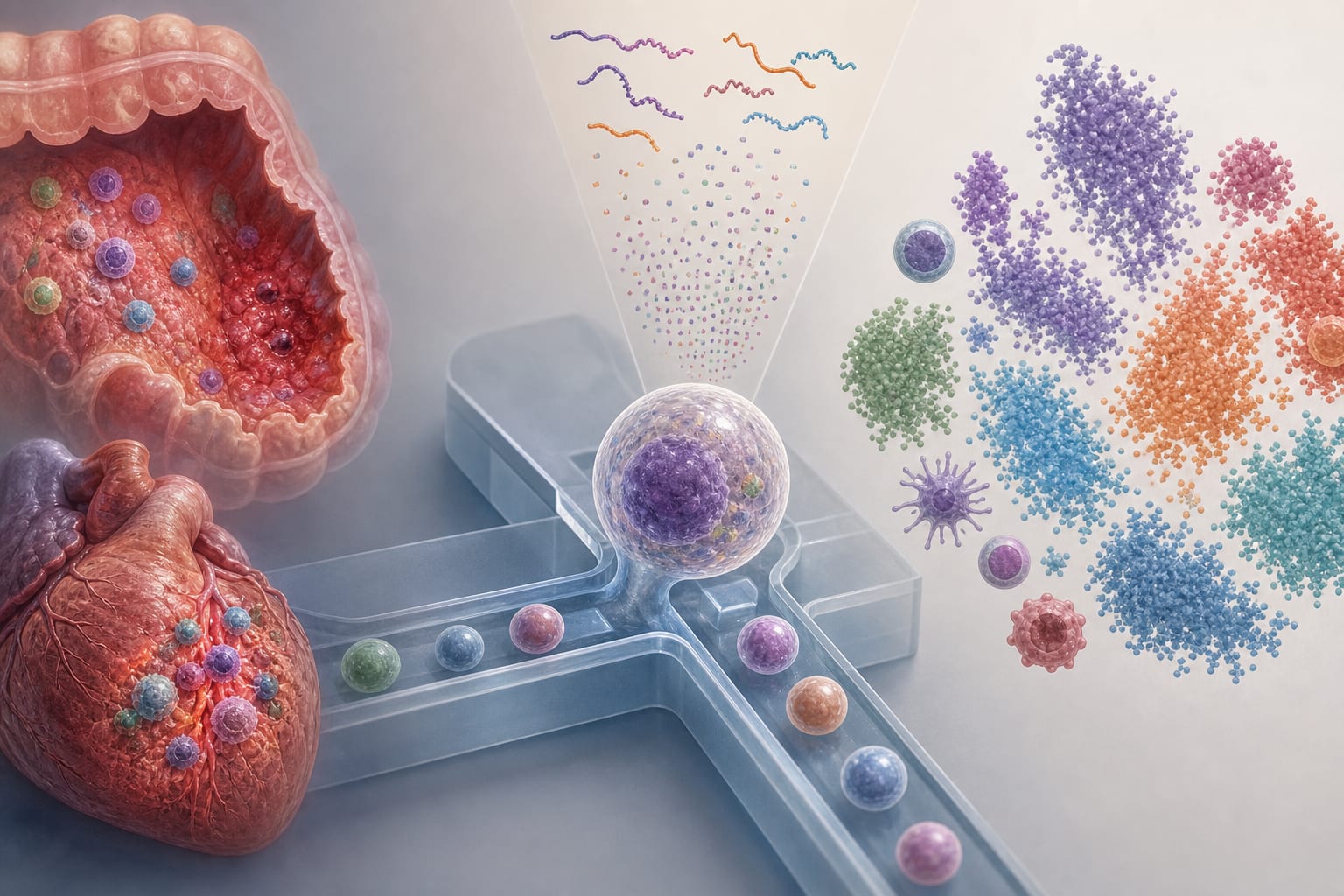
Single-cell transcriptomic insights into the immune heterogeneity of immune checkpoint inhibitors related organ toxicities
-
By
-
Hao Wen
-
Yange Qi
-
Jianbo Song
-
Xia Yan
-
June 9, 2026
-
Clinical Scorecard: Insights from Single-Cell Transcriptomics on Immune Heterogeneity in Organ Toxicities Associated with Immune Checkpoint Inhibitors
At a Glance
| Category | Detail |
|---|
| Condition | Immune-related adverse events (irAEs) associated with immune checkpoint inhibitors (ICIs) |
| Key Mechanisms | T cell clonal expansion, IFN-γ/IL-1β-driven inflammatory circuits, JAK-STAT signaling |
| Target Population | Patients receiving immune checkpoint inhibitors for cancer therapy |
| Care Setting | Oncology clinics and hospitals |
Key Highlights
- ICIs can lead to severe irAEs like colitis and myocarditis.
- Single-cell RNA sequencing (scRNA-seq) provides insights into immune cell heterogeneity.
- Colitis incidence varies with ICI regimen; anti-CTLA-4 has higher risk than anti-PD-1/PD-L1.
- Symptoms of ICI-associated colitis typically arise 4-8 weeks post-treatment initiation.
- Histopathological biopsy is crucial for differentiating ICI-induced colitis from other conditions.
Guideline-Based Recommendations
Diagnosis
- Comprehensive clinical assessment and laboratory evaluations are necessary.
- Colonoscopic examination should reveal mucosal inflammation.
Management
- Monitor gastrointestinal symptoms closely from initial weeks after treatment initiation.
Monitoring & Follow-up
- Long-term follow-up is necessary due to variable onset of symptoms.
Risks
- Advanced age correlates with increased susceptibility to ICI-associated colitis.
Patient & Prescribing Data
Patients undergoing treatment with immune checkpoint inhibitors, particularly those at risk for irAEs.
Combination regimens increase the risk of colitis compared to monotherapy.
Clinical Best Practices
- Utilize scRNA-seq for high-resolution profiling of immune responses.
- Identify distinct immune subsets to inform personalized therapeutic strategies.
Related Resources & Content