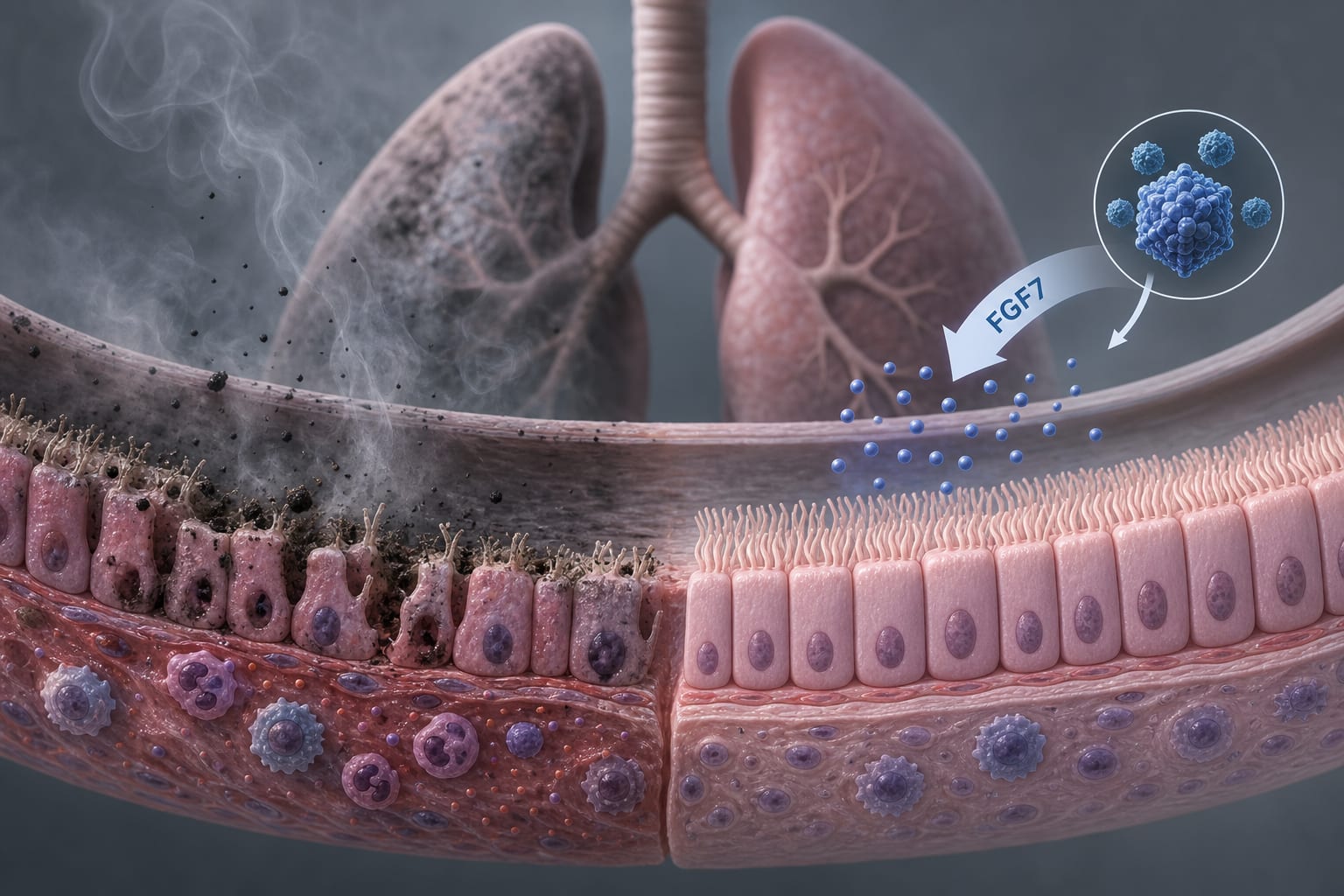
FGF7 mitigates airway inflammation and epithelial injury in cigarette smoke-induced COPD model
-
By
-
Xinji Gong
-
Jingwen Li
-
Haitao Wang
-
Xi Luo
-
Xinying Hu
-
Jie Shen
-
Wenting Jia
-
Qiufeng Wan
-
Shareli Caikai
-
Zhijin Guo
-
Fang Yan
-
Ying Zhang
-
Feng Sun
-
Sicheng Xu
-
June 8, 2026
-
Clinical Scorecard: FGF7 Reduces Airway Inflammation and Epithelial Damage in a COPD Model Induced by Cigarette Smoke
At a Glance
| Category | Detail |
|---|
| Condition | Chronic Obstructive Pulmonary Disease (COPD) |
| Key Mechanisms | FGF7 mitigates airway epithelial damage and inflammation through the ADAM17-dependent EGFR-ERK1/2 axis, p38, and PI3K/AKT pathways. |
| Target Population | Patients with Chronic Obstructive Pulmonary Disease (COPD) |
| Care Setting | Clinical research involving human lung tissues and animal models |
Key Highlights
- Increased FGF7 levels in lung tissues of COPD patients.
- FGF7 administration improved lung function and reduced inflammation in a COPD rat model.
- Knockdown of FGF7 exacerbated airway inflammation and tissue remodeling.
- FGF7 enhances epithelial cell viability and migration in vitro.
- FGF7's protective effects are mediated through specific signaling pathways.
Guideline-Based Recommendations
Diagnosis
- COPD severity classified according to GOLD guidelines.
Management
- Consider FGF7 as a therapeutic target for preventing airway remodeling in COPD.
Monitoring & Follow-up
- Assess lung function and inflammation markers in COPD patients.
Risks
- Cigarette smoke exposure is a primary risk factor for COPD.
Patient & Prescribing Data
Patients with chronic obstructive pulmonary disease (COPD) and airway epithelial injury.
FGF7 may serve as a novel therapeutic agent to reduce airway inflammation and promote epithelial repair.
Clinical Best Practices
- Monitor FGF7 levels in COPD patients for potential therapeutic implications.
- Utilize FGF7 in research to explore its role in airway epithelial repair.
Related Resources & Content