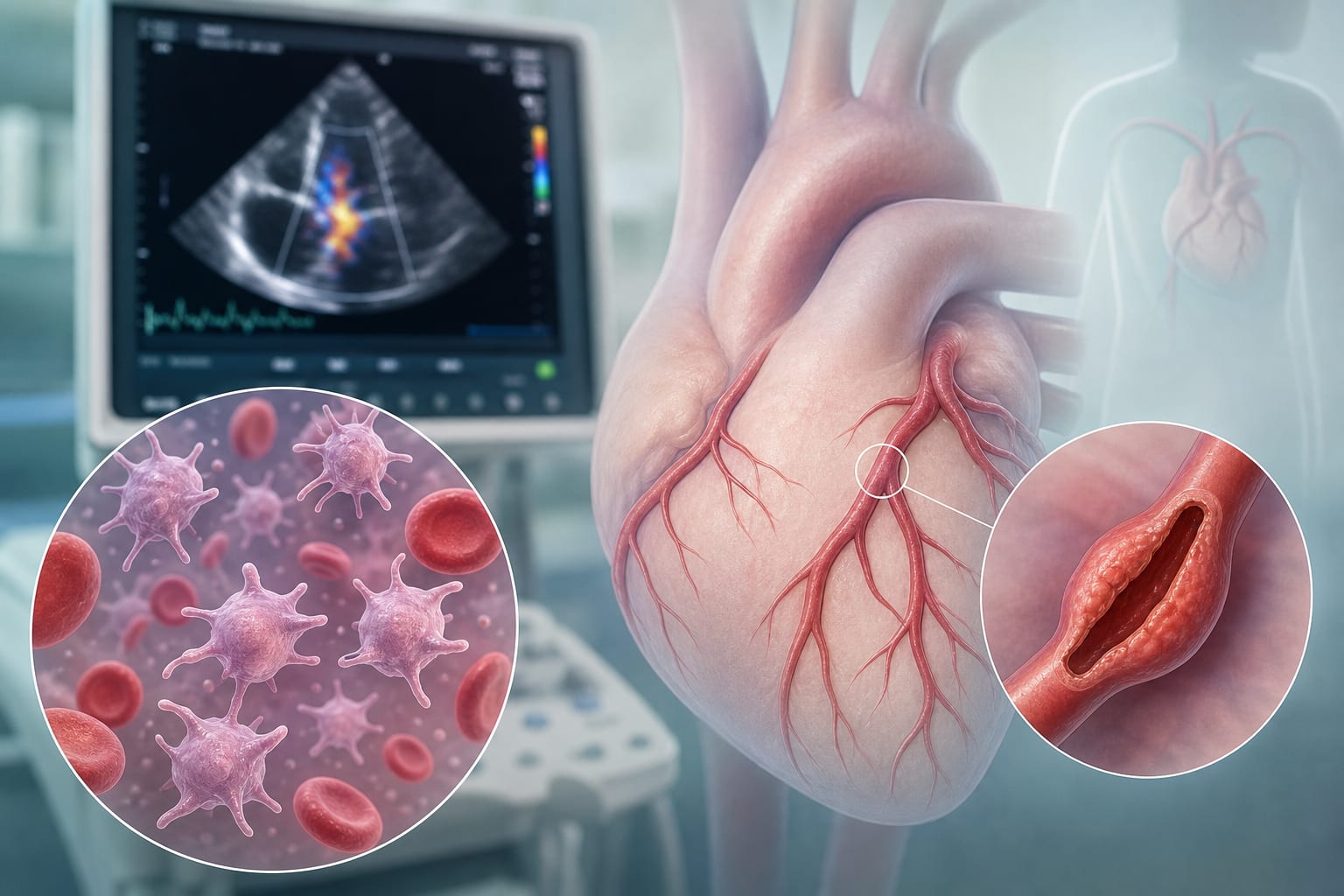
Clinical analysis of drug treatment trends for coronary heart disease in China
-
By
-
Xu Li
-
Junyi Lou
-
Xiaoyu Li
-
Shuang Li
-
Junxian Gu
-
Die Zhang
-
Zining Luo
-
Junjie Cao
-
Jiebin Xie
-
June 9, 2026
-
Clinical Scorecard: Evaluation of Pharmaceutical Treatment Patterns for Coronary Heart Disease in China
At a Glance
| Category | Detail |
|---|
| Condition | Coronary Heart Disease (CHD) |
| Key Mechanisms | Imbalance between myocardial oxygen supply and demand caused by coronary atherosclerosis. |
| Target Population | Chinese adults with coronary heart disease. |
| Care Setting | Clinical settings integrating conventional Western medicine and Traditional Chinese Medicine (TCM). |
Key Highlights
- CHD is the leading cause of mortality in China.
- 76.4% of clinical trials are bioequivalence studies.
- Calcium channel blockers are the largest drug category (45.9%).
- Significant increase in CHD research publications from 41 in 2006 to 353 in 2020.
- High prevalence of CHD among Chinese adults, reaching 758 per 100,000 population.
Guideline-Based Recommendations
Diagnosis
- Utilize evidence-based pharmacotherapies for management.
Management
- Implement drug therapy as a cornerstone of CHD treatment across the continuum of care.
Monitoring & Follow-up
- Assess drug safety and efficacy in patients with comorbidities.
Risks
- High prevalence of comorbidities such as hypertension, diabetes, and chronic kidney disease.
Patient & Prescribing Data
Patients with coronary heart disease in China, particularly those with comorbidities.
Integration of TCM and conventional therapies is essential for comprehensive care.
Clinical Best Practices
- Focus on evidence-based pharmacotherapies to reduce major adverse cardiovascular events.
- Prioritize the modernization of TCM within cardiovascular care.
Related Resources & Content