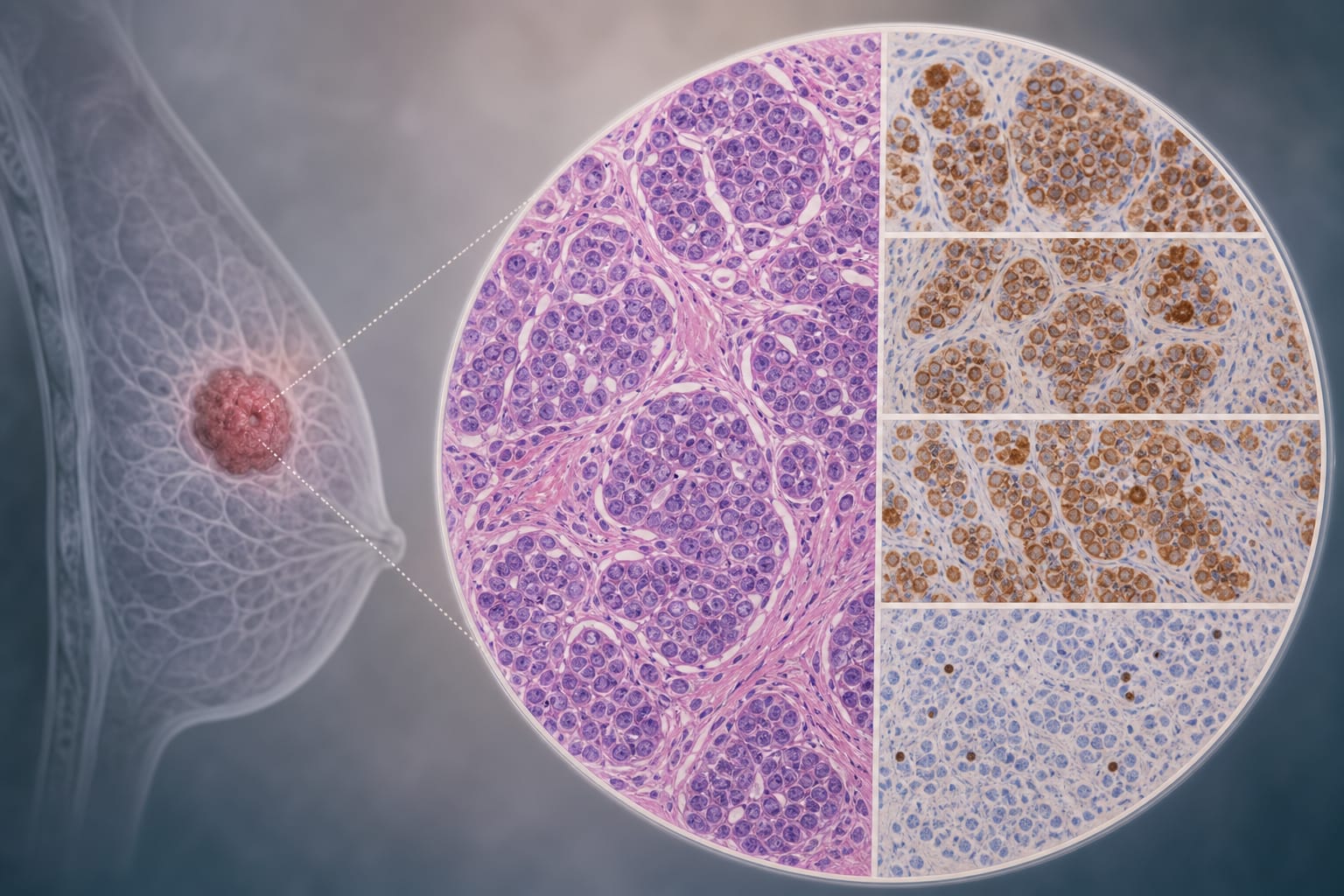
RSPO2-induced ferroptosis via PTBP1-mediated FSP1 mRNA decay suppresses breast cancer progression
-
By
-
Shuyun Jiang
-
Hongwei Ma
-
Zhanwei Du
-
Zhijun Ma
-
Xiaowu Wang
-
June 9, 2026
Objective:
To investigate the role of RSPO2 in breast cancer progression and its relationship with ferroptosis.
Key Findings:
- RSPO2 is downregulated in malignant breast cancer tissues.
- Restoring RSPO2 expression suppresses cell proliferation, migration, and invasion in vitro and inhibits tumor growth in vivo.
- RSPO2 recruits TRIM21 to promote PTBP1 ubiquitination and degradation.
- PTBP1 stabilizes FSP1 mRNA; RSPO2 overexpression reduces PTBP1 levels, leading to decreased FSP1 mRNA stability.
- RSPO2 overexpression triggers ferroptosis, evidenced by ROS accumulation and GSH depletion.
Interpretation:
RSPO2 acts as a tumor suppressor in breast cancer by degrading PTBP1, which in turn reduces FSP1 mRNA stability and promotes ferroptosis.
Limitations:
- The study primarily focuses on in vitro and xenograft models, which may not fully replicate human breast cancer complexity.
Conclusion:
The RSPO2/PTBP1/FSP1 signaling axis is identified as a novel therapeutic target in breast cancer.